West Bengal Budget 2026-27: Professional tax relief, liquor shop curbs, ₹1.3 lakh crore revenue target
Synopsis
West Bengal's first BJP budget doubles the professional tax exemption for salaried workers, scraps a compliance burden on homoeopathy manufacturers, and sets a ₹1.3 lakh crore own-revenue target — a 17% jump over last year's revised estimate. The real test is whether the new thresholds drive formalisation or simply shrink the tax base.
Key Takeaways
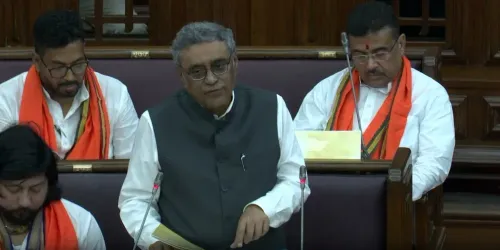
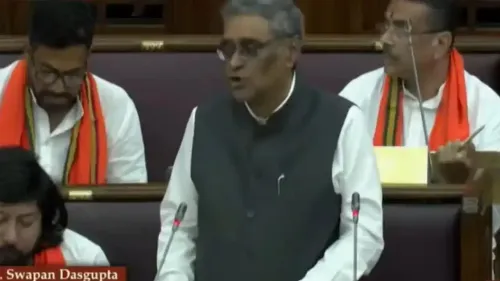
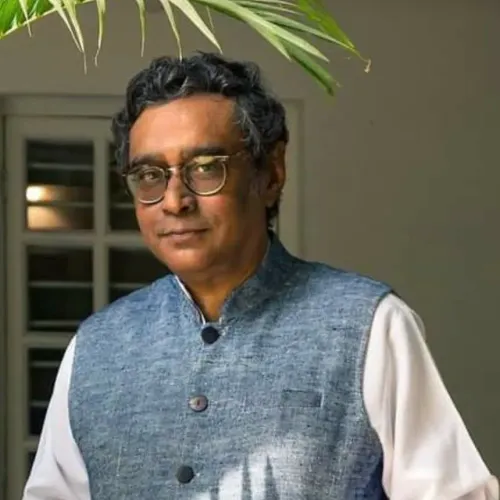
Finance Minister Swapan Dasgupta presented West Bengal's Budget 2026-27 on 22 June 2026 — the first full budget under the state's maiden BJP government.
Monthly professional tax exemption for salaried individuals doubled from ₹10,000 to ₹20,000 ; self-employed annual threshold raised from ₹60,000 to ₹2.5 lakh .
BSF personnel posted in West Bengal granted complete exemption from professional tax.
No new liquor shop licences within 1 km of schools, hospitals, or religious places; 500 metres within Kolkata Municipal Corporation limits.
State's own tax revenue targeted at ₹1,30,669.68 crore , up from revised estimate of ₹1,11,737.13 crore in 2025-26.
SGST projected at ₹61,535 crore and state excise at ₹24,922 crore — the two largest revenue contributors.
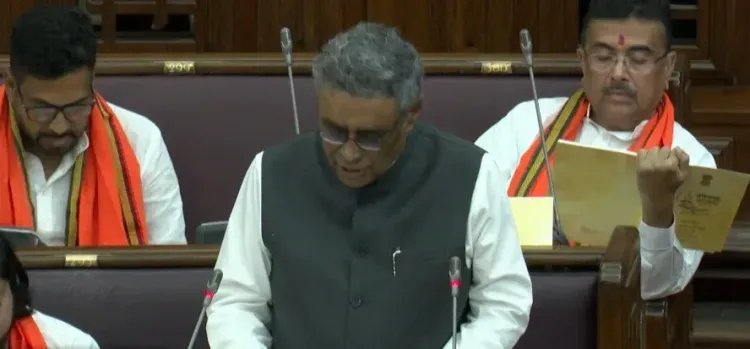
West Bengal Finance Minister Swapan Dasgupta on Monday, 22 June 2026 presented the state's full budget for 2026-27, anchoring it on tax simplification and a projected ₹1,30,669.68 crore in own tax revenue — a sharp jump from the revised estimate of ₹1,11,737.13 crore for 2025-26. The budget is the first full-year financial plan under the Bharatiya Janata Party (BJP)'s maiden government in West Bengal since Independence.
Professional Tax Relief
The most direct relief for working residents comes through a significant widening of professional tax exemption thresholds. For salaried individuals, the monthly exemption limit has been doubled from ₹10,000 to ₹20,000. Self-employed persons will now be exempt up to an annual income of ₹2.5 lakh, up from ₹60,000 previously.
Traders and business establishments will only attract professional tax liability once their annual gross receipts or turnover cross ₹10 lakh, compared to the earlier threshold of ₹5 lakh. Additionally, personnel of the Border Security Force (BSF) currently posted in West Bengal have been granted a complete exemption from professional tax.
Excise Reforms: Easing Homoeopathy, Tightening Liquor
Dasgupta announced amendments to the West Bengal Excise (Procedure for Grant and Functioning of Licence and Payment of Fees of Industrial Spirit) Rules, 2025. Under the existing framework, homoeopathic medicine manufacturers using industrial spirit for potentised medicines are required to obtain licences from the state excise directorate. The minister described this as an avoidable compliance burden on a sector that has contributed meaningfully to employment and economic activity — and said the provision would be scrapped through rule amendments.
On the other side of the excise ledger, the government has tightened norms for new liquor shop licences. No fresh licence will be issued if the proposed premises fall within one kilometre of an educational institution, hospital, or religious place. Within the jurisdiction of the Kolkata Municipal Corporation, the minimum distance requirement is set at 500 metres.
Revenue Projections
State Goods and Services Tax (SGST) is projected to be the single largest contributor at ₹61,535 crore, followed by state excise revenue at ₹24,922 crore. Together, these two streams are expected to account for the bulk of the state's own tax receipts in 2026-27.
The overall own-tax revenue target of ₹1,30,669.68 crore represents a growth of roughly 17% over the revised estimate for the previous year — an ambitious ask that will depend heavily on improved GST compliance and excise collection efficiency.
Context and What's Next
The budget arrives as the BJP-led state government seeks to establish fiscal credibility in its first full year in office. Dasgupta had signalled after assuming charge that the administration would pursue revenue growth without fresh tax burdens on ordinary citizens — a commitment the budget attempts to operationalise. This comes amid broader questions about West Bengal's fiscal consolidation path, given the state's historically high debt levels. How effectively the new exemption thresholds translate into formalisation of the self-employed segment will be a key metric to watch in the months ahead.
Point of View
While welcome, could reduce the number of assessees rather than expand the base. The liquor shop distance norms signal a social-conservative tilt consistent with the party's national positioning, but the more consequential test will be whether the GST administration machinery in the state can deliver the ₹61,535 crore SGST target without the enforcement infrastructure that drove similar numbers in more mature GST states.
NationPress
21 Sept 2026
Frequently Asked Questions
What are the key professional tax changes in West Bengal Budget 2026-27?
The monthly exemption limit for salaried individuals has been raised from ₹10,000 to ₹20,000, and the annual threshold for self-employed persons has been increased from ₹60,000 to ₹2.5 lakh. Traders and businesses are now exempt until their annual turnover crosses ₹10 lakh, up from the earlier ₹5 lakh limit.
What is West Bengal's own tax revenue target for 2026-27?
The state has projected own tax revenue of ₹1,30,669.68 crore for 2026-27, compared to the revised estimate of ₹1,11,737.13 crore for 2025-26 — a growth of approximately 17%. SGST at ₹61,535 crore and state excise at ₹24,922 crore are the two largest contributors.
What are the new liquor shop licence rules in West Bengal?
No fresh liquor shop licence will be issued if the proposed premises are within one kilometre of an educational institution, hospital, or religious place. Within the Kolkata Municipal Corporation area, the minimum distance is 500 metres.
Why has West Bengal removed the excise licence requirement for homoeopathic manufacturers?
Finance Minister Swapan Dasgupta described the existing requirement — which mandated homoeopathic medicine manufacturers using industrial spirit to obtain state excise licences — as an avoidable compliance burden on a sector that contributes to employment and economic activity. The government will amend the West Bengal Excise Rules, 2025 to remove this provision.
Why is this budget historically significant for West Bengal?
It is the first full-year state budget presented under a BJP-led government in West Bengal since Independence. Finance Minister Swapan Dasgupta had committed after taking charge to grow revenues without imposing additional burdens on ordinary taxpayers, and this budget is the first formal test of that pledge.