West Bengal budget 2026-27: ₹4.38 lakh crore with 1 lakh new jobs, Kalyani airport
Synopsis
West Bengal's first BJP government has laid out a ₹4.38 lakh crore budget that attempts to do three things at once: preserve welfare continuity, create 1 lakh government jobs, and launch an infrastructure blitz — all while sitting atop a ₹8.15 lakh crore inherited debt pile. The Kalyani airport and East Midnapore deep-sea port signal an unmistakable pivot toward industrial ambition.
Key Takeaways
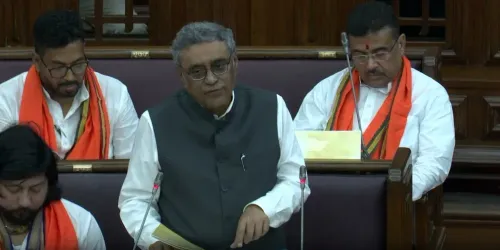
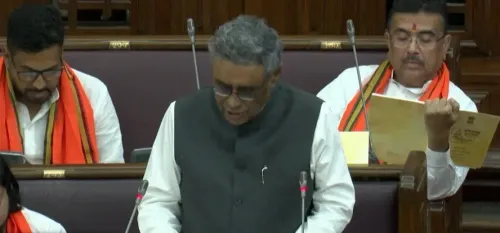
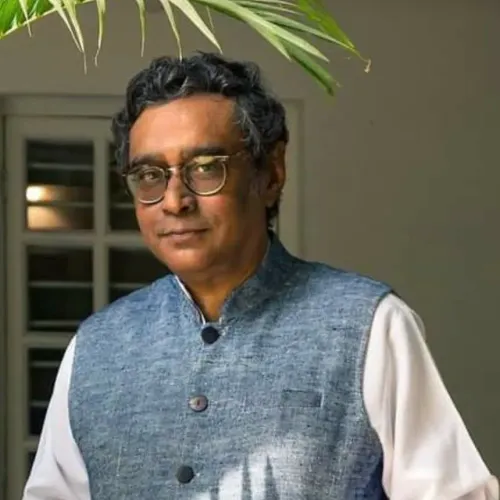
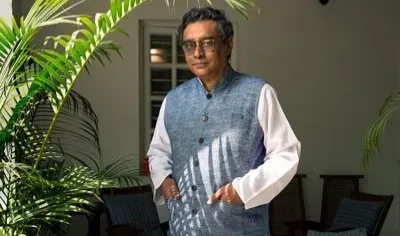
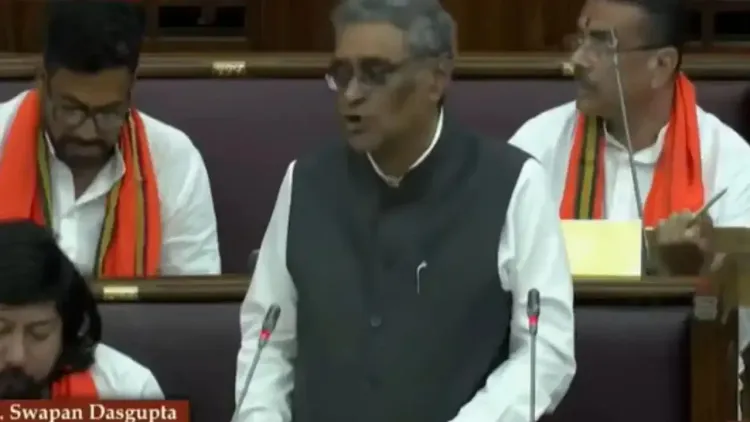
Finance Minister Swapan Dasgupta presented a ₹4.38 lakh crore budget for 2026-27 on 22 June 2026 — West Bengal BJP government's maiden budget.
The state has inherited an accumulated debt of over ₹8.15 lakh crore , Dasgupta disclosed.
1 lakh government posts to be filled: 50,000 in teaching, 20,000 in police, 30,000 in other departments; 33% reserved for women .
Dearness allowance for state employees raised from 18% to 38% , effective 1 October 2026 .
A greenfield airport at Kalyani (1,500 acres) and a deep-sea port at Dadanpatrabar (PPP model) announced as flagship infrastructure projects. ₹3,100 crore allocated for Ayushman Bharat , covering 7 crore beneficiaries; new 'Bhorsa' scheme to provide monthly stipends to unemployed graduates.
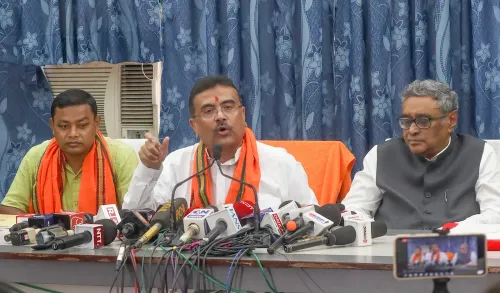
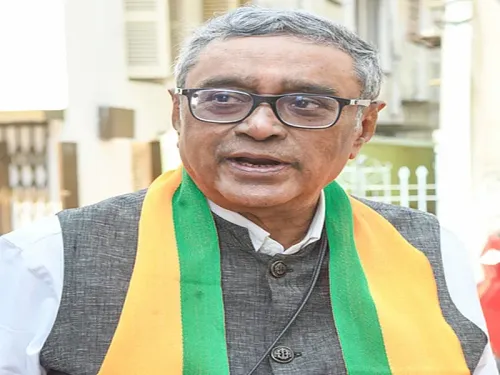
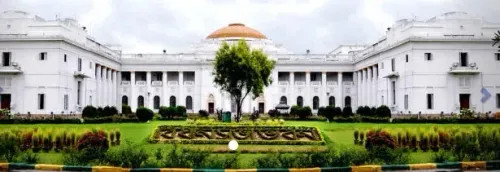
West Bengal Finance Minister Swapan Dasgupta on Monday, 22 June 2026 presented a ₹4.38 lakh crore budget for 2026-27, anchoring the state's fiscal roadmap on twin pillars of social welfare and infrastructure expansion. The budget — the maiden one from the state's first Bharatiya Janata Party (BJP) government since Independence — also revealed that West Bengal has inherited an accumulated debt of over ₹8.15 lakh crore.
Jobs and Government Hiring
Addressing what the Finance Minister described as a pressing unemployment challenge, Dasgupta announced plans to fill 1 lakh vacant posts across state government departments. Of these, 20,000 posts will be in the police department, 50,000 in state-run school teaching staff, and the remaining 30,000 across other departments. A 33 per cent reservation for women in new posts has also been proposed, along with a 10 per cent reservation for Agniveers wherever applicable.
This is a significant early signal from the new government, which came to power on an anti-incumbency wave partly driven by public sector job vacancies that had accumulated over years.
Welfare Measures and Direct Transfers
All existing welfare schemes will continue, Dasgupta said, but with stricter targeting to ensure benefits reach genuine beneficiaries — a pointed departure from the previous administration's approach. Key welfare announcements include:
A ₹3,100 crore allocation for Ayushman Bharat, covering 7 crore beneficiaries. Women aged 25 to 60 will receive direct benefit transfers under the Annapurna Yojana, backed by ₹36 crore. A new 'Bhorsa' scheme will provide unemployed graduates ₹3,000 per month and others ₹2,000 per month, subject to income conditions. College students will receive a one-time grant of ₹25,000 for competitive exam preparation. Victims of political violence will receive financial assistance, and a tribal university at Jhargram will be established with an initial corpus of ₹10 crore.
The rural employment safety net has also been expanded: the 125-day rural work scheme under VB G RAM G will be extended to 25 lakh additional beneficiaries.
Salary and Allowance Relief
State employees and pensioners will see a significant boost: Dasgupta announced a 20 percentage point increase in dearness allowance — from 18 per cent to 38 per cent — effective 1 October 2026. Civic volunteers will receive a monthly hike of ₹2,000. The allocation under MLA-LAD (Member of Legislative Assembly-Local Area Development) funds has been raised from ₹70 lakh to ₹1 crore per constituency.
Infrastructure: Airports, Ports and Freight Corridors
The budget's infrastructure agenda is its most ambitious element. A greenfield airport at Kalyani in Nadia district — to be built on 1,500 acres — has been announced to ease pressure on the Netaji Subhas Chandra Bose International Airport in Kolkata. A deep-sea port at Dadanpatrabar in East Midnapore district will be developed under a public-private partnership (PPP) model. New airports are also planned at Purulia, Malda, and Balurghat, while the existing airport at Cooch Behar will be expanded.
On freight connectivity, Dasgupta said the state government will resolve land acquisition issues for the Dankuni-Ludhiana and Dankuni-Surat dedicated freight corridors. The government will also provide land to support the expansion of Indian Air Force bases at Hasimara in Alipurduar district and Kalaikunda in West Midnapore district.
Ease of Doing Business and Investment Push
To attract industry, all investment proposals of ₹100 crore and above will be cleared through a single-window system, Dasgupta announced. The government also committed to reviewing the Urban Land (Ceiling and Regulation) Act, 1976, to improve land availability for projects. Notably, the Finance Minister also announced support for the revival of the Calcutta Stock Exchange, an institution that has remained largely dormant for years.
With the debt overhang of ₹8.15 lakh crore as backdrop, the new government's ability to fund these commitments without further fiscal stress will be closely watched in the months ahead.
Point of View
And raises the question of how the government plans to consolidate without squeezing capital expenditure. The Kalyani airport and the Dadanpatrabar port are credible long-term bets, but without a clear debt-reduction roadmap, the budget risks being remembered more for its promises than its delivery.
NationPress
21 Sept 2026
Frequently Asked Questions
What is the total size of West Bengal's 2026-27 budget?
West Bengal Finance Minister Swapan Dasgupta presented a ₹4.38 lakh crore budget for 2026-27 on 22 June 2026. It is the first budget of the state's BJP government since Independence and focuses on social welfare and infrastructure.
How many government jobs has the West Bengal budget announced?
The budget proposes filling 1 lakh vacant government posts: 50,000 in state-run school teaching staff, 20,000 in the police department, and 30,000 across other departments. A 33 per cent reservation for women and a 10 per cent reservation for Agniveers have also been proposed.
What are the major infrastructure projects announced in the West Bengal budget?
The budget announced a greenfield airport at Kalyani in Nadia district on 1,500 acres, a deep-sea port at Dadanpatrabar in East Midnapore under a PPP model, and new airports at Purulia, Malda, and Balurghat. The Cooch Behar airport will also be expanded.
What is the 'Bhorsa' scheme announced in the West Bengal budget?
The 'Bhorsa' scheme will provide unemployed graduates ₹3,000 per month and other unemployed individuals ₹2,000 per month, subject to income eligibility conditions. It is aimed at providing financial support while job-seekers pursue employment.
How much debt has West Bengal inherited, according to the new government?
Finance Minister Swapan Dasgupta disclosed that the new BJP government has inherited an accumulated debt of over ₹8.15 lakh crore. This figure is expected to shape fiscal decisions throughout the government's term.