West Bengal BJP government's maiden budget on June 22 under close watch
Synopsis
West Bengal's first-ever BJP government presents its maiden budget on June 22 — a moment that is as much a political test as a fiscal one. Finance Minister Swapan Dasgupta must navigate decades of structural debt, a restless investor community, and a public hungry for relief, all while proving the 'double-engine' government argument is more than a campaign slogan.
Key Takeaways
The West Bengal Assembly Budget Session opened on 18 June with Governor R.N.
Ravi's inaugural address.
State Finance Minister Swapan Dasgupta will deliver the maiden BJP budget speech on 22 June .
West Bengal has been governed by either the Left Front or TMC for roughly five decades before the BJP's election victory.
The state faces structural challenges including high debt, unemployment, infrastructure gaps, and a weakened manufacturing sector.
The budget is expected to signal whether the Adhikari government prioritises investment and infrastructure or continues welfare-heavy fiscal patterns.
PM Modi has linked a strong Bengal to India's developed-nation ambitions, raising the strategic stakes of the budget.
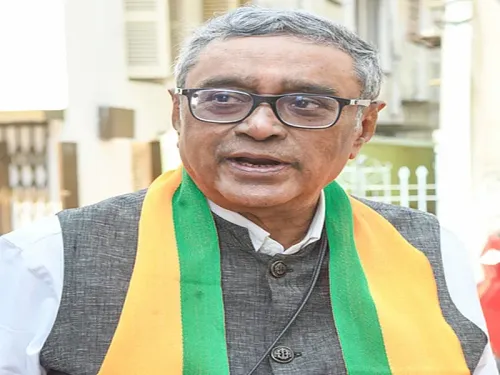
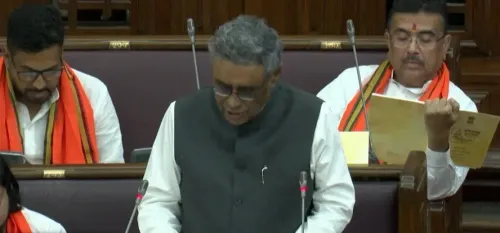
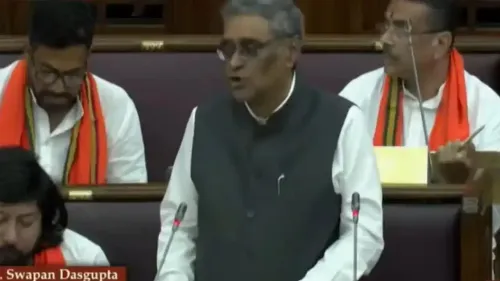
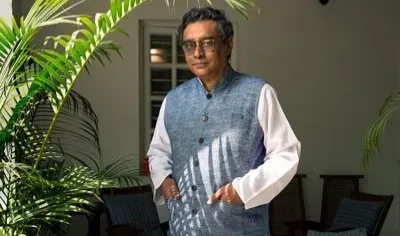
The West Bengal Assembly Budget Session opened on Thursday, 18 June with the inaugural address of Governor R.N. Ravi, setting the stage for the state's first-ever budget under a Bharatiya Janata Party (BJP) government. The maiden budget speech is scheduled for 22 June and will be delivered by state Finance Minister Swapan Dasgupta, a former journalist, political commentator, and Parliamentarian now tasked with translating the BJP's governance agenda into fiscal policy.
The Man Carrying the Budget Brief
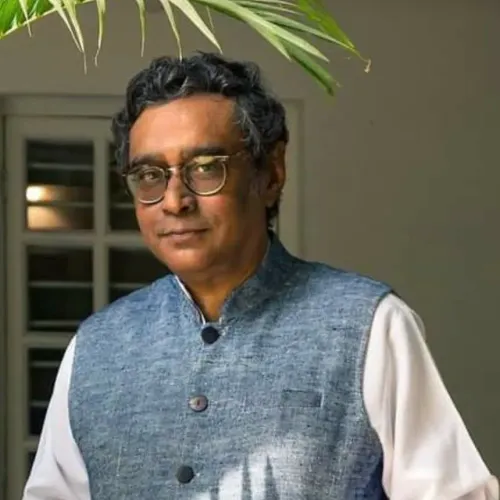
Swapan Dasgupta brings an unusual profile to the Finance Ministry — decades of economic commentary and national policy engagement rather than a conventional administrative career. Analysts expect him to blend fiscal pragmatism with ideological clarity as he frames the budget for Chief Minister Suvendu Adhikari's administration. The budget will be watched as much for its intent as its numbers: whether the new government prioritises infrastructure and investment over welfare-heavy spending, and whether it confronts the state's structural debt head-on or defers difficult choices.
The Economic Inheritance
West Bengal arrives at this budget carrying decades of structural strain. Unemployment remains persistently high, infrastructure bottlenecks persist, and port modernisation and connectivity upgrades have reportedly lagged behind competing eastern states. The state's debt burden is considered a pressing concern, with successive governments — both the Left Front and All India Trinamool Congress (TMC) — relying heavily on borrowing to fund welfare schemes. The manufacturing sector has struggled to recover after a prolonged flight of industries, while agriculture, though still the primary livelihood for millions, suffers from below-potential productivity and inadequate irrigation coverage.
What Different Stakeholders Want
Across social strata, expectations are running high. Ordinary citizens are looking for relief from food and fuel inflation that has squeezed household budgets, alongside improved healthcare and education delivery — particularly in semi-urban and rural areas where state services remain uneven. Traders and the business community want simplified tax structures, reduced compliance costs, and better logistics. Industrialists are seeking transparent land acquisition policies, competitive power tariffs, and sector-specific incentives. The trading community has long complained about bureaucratic hurdles and inconsistent rule enforcement.
The 'Double-Engine' Test
With both the state and the Centre now governed by the BJP, the so-called 'double-engine' government argument — long used by the party in election campaigns — faces its first real accountability moment in West Bengal. Prime Minister Narendra Modi has repeatedly stressed that a strong Bengal, alongside Bihar and Odisha, is essential for India's ambition to become a developed nation. The region's potential as a gateway to Southeast Asia adds strategic weight to the budget's investment signals. Critics and opposition leaders will be watching to see whether Centre-state alignment translates into tangible fiscal dividends or remains a political talking point.
What Comes Next
The budget speech on 22 June will mark the first concrete policy statement of the Adhikari administration's economic direction. Having defeated Mamata Banerjee's TMC — which had governed the state since 2011 — the BJP government must now demonstrate governing competence beyond the election mandate. The allocations, deficit figures, and policy priorities announced next week will set the tone for West Bengal's economic trajectory and the credibility of the BJP's governance pitch in a state it has never before governed.
Point of View
Untested on delivery. The 'double-engine' argument has won elections across states but has rarely produced the step-change in investment that was promised. Bengal's structural problems — industry flight, debt dependence, agricultural stagnation — are deep enough that one budget cannot fix them, but it can credibly signal direction. That signal is what every stakeholder will be reading on June 22.
NationPress
19 Sept 2026
Frequently Asked Questions
When is West Bengal's maiden BJP budget being presented?
West Bengal Finance Minister Swapan Dasgupta is scheduled to deliver the state's first BJP budget speech on 22 June, during the Assembly Budget Session that commenced on 18 June with Governor R.N. Ravi's inaugural address.
Who is Swapan Dasgupta and why is he presenting the budget?
Swapan Dasgupta is a veteran journalist, political commentator, and former Parliamentarian who was appointed Finance Minister in Chief Minister Suvendu Adhikari's BJP government. He is expected to bring a blend of macroeconomic understanding and policy clarity to the budget speech.
What are the key economic challenges facing West Bengal?
West Bengal carries a significant debt burden, high unemployment, infrastructure bottlenecks, lagging port modernisation, below-potential agricultural productivity, and a manufacturing sector that has struggled to recover after decades of industry flight. Successive governments have relied heavily on borrowing to fund welfare schemes.
Why is this budget considered a political test for the BJP?
The BJP won West Bengal after roughly five decades of Left Front and TMC rule, campaigning heavily on a 'double-engine' government promise of better Centre-state coordination. The maiden budget is the first concrete measure of whether that promise translates into fiscal policy, making it as much a political statement as an economic document.
What are different sections of West Bengal society expecting from the budget?
Citizens want relief from food and fuel inflation and better public services. Traders seek simplified taxes and lower compliance costs. Industrialists are looking for transparent land acquisition, competitive power tariffs, and investment incentives. All groups are watching whether the government prioritises growth-oriented measures or defaults to welfare-heavy spending.