West Bengal Cabinet: Two journalist-politicians get Finance, Higher Education portfolios
Synopsis
Two former journalists now hold West Bengal's most consequential reform portfolios. Swapan Dasgupta inherits a cash-strapped exchequer and must deliver a full budget by 21 June, while Jagannath Chattopadhyay takes on a higher education system scarred by years of recruitment corruption. Both men set unusually specific agendas within hours of taking charge — a signal that the new government intends to move fast.
Key Takeaways
Swapan Dasgupta sworn in as West Bengal Finance Minister on 10 June , pledging to raise state tax revenues without increasing tax rates.
The full state budget is scheduled for 21 June ; the budget session opens on 18 June .
West Bengal has been on a vote-on-account since 5 February , when the interim budget was presented by Chandrima Bhattacharya .
Jagannath Chattopadhyay takes charge as Higher Education Minister , targeting corruption in recruitment through the School Service Commission and College Service Commission .
Chattopadhyay also committed to implementing the National Education Policy (NEP) and enforcing attendance discipline in higher education institutions.
Both ministers are former journalists with investigative backgrounds, entering some of the state's most reform-heavy portfolios.
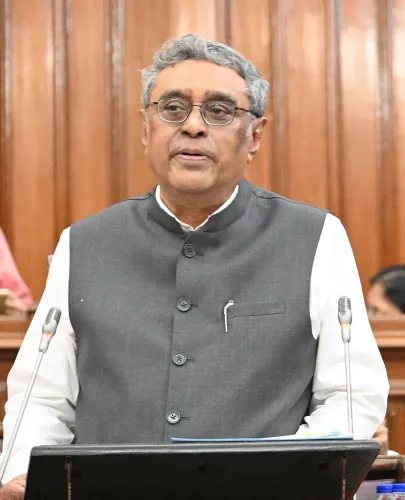
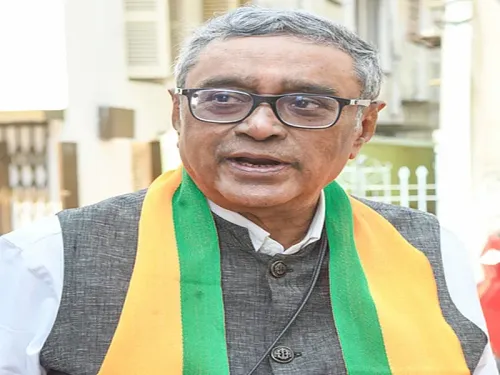
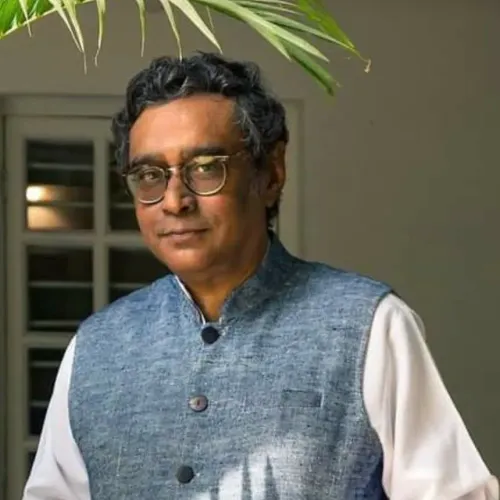
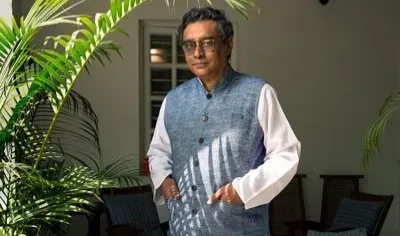
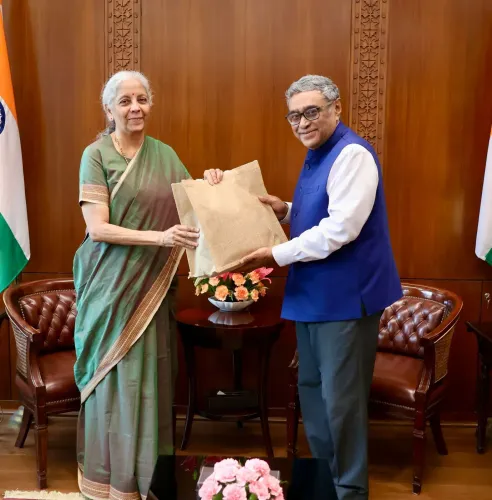
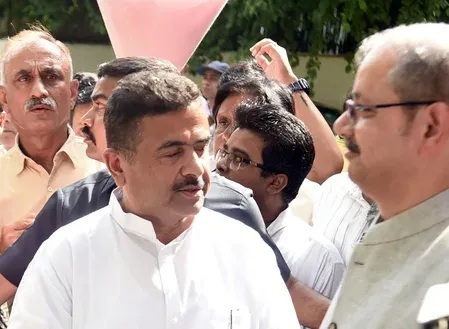
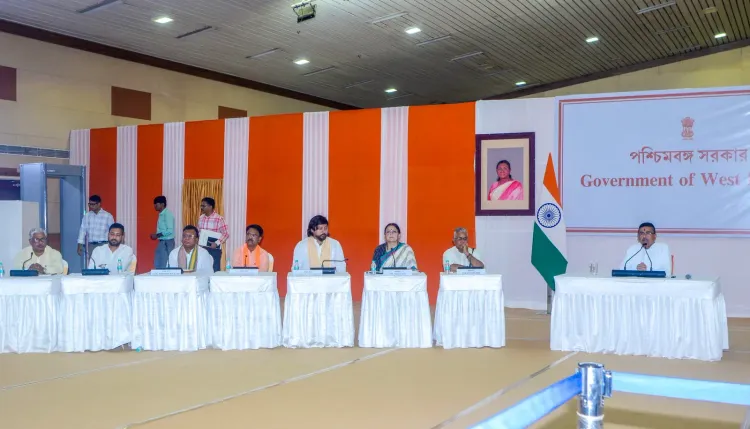
Swapan Dasgupta and Jagannath Chattopadhyay, both former journalists who transitioned into politics, were allotted key cabinet portfolios in the new West Bengal government on Wednesday, 10 June, and wasted no time in laying out their immediate priorities after the portfolio distribution was announced.
Dasgupta's Fiscal Agenda as Finance Minister
Taking charge as the new Finance Minister of West Bengal, Dasgupta signalled a departure from conventional revenue thinking. His stated goal is to grow the state's own tax revenues without burdening citizens through higher tax rates.
'There is no logic that the state's own tax revenue can be increased just by increasing the tax rates. At times, even a reduction in the tax rate can increase tax revenue. So, my prime target is to increase the state's own tax revenue collection but without an upward revision in the existing tax rates,' Dasgupta said after assuming charge.
The remarks directly address a long-standing concern among economists: under the previous Mamata Banerjee-led government, West Bengal's own tax generation was heavily concentrated in just two heads — State Goods and Services Tax (SGST) and state excise — leaving the state exchequer vulnerable. Rising accumulated debt and ballooning non-plan expenditure have compounded the fiscal stress.
Budget Session on the Horizon
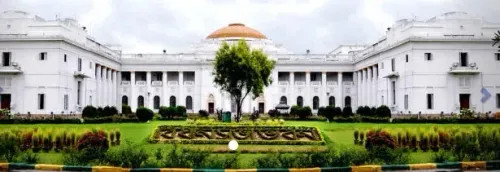
The West Bengal Assembly budget session is scheduled to commence on 18 June, with Dasgupta set to present the full budget on 21 June. The state has been operating on an interim basis since 5 February, when the then Minister of State for Finance (Independent Charge), Chandrima Bhattacharya, presented a vote-on-account budget. A full budget could not be tabled at the time due to the West Bengal Assembly elections, which were held on 4 May.
Chattopadhyay Targets Corruption in Higher Education
For Jagannath Chattopadhyay, who earned a strong reputation as an investigative journalist before entering politics, the Higher Education portfolio comes with an explicit mandate to clean up systemic corruption. He identified multi-pronged graft — which he said became rampant under the previous Trinamool Congress (TMC) regime — as the primary problem to be dismantled.
'West Bengal needs to be taken further forward in the field of education. We will work as a team. The goal is to restore Bengal's excellence in higher education. From now on, recruitment will be conducted regularly through the School Service Commission and the College Service Commission. And those recruitment processes will be absolutely transparent and free of corruption. My goal is to clean up corruption from the system and make West Bengal number one in the country in the field of education,' Chattopadhyay said.
National Education Policy and Institutional Discipline
Beyond anti-corruption measures, Chattopadhyay outlined two additional priorities: implementing the National Education Policy (NEP) in the state's higher education institutions, and enforcing 'punctuality in attendance' across colleges and universities. The twin focus signals an intent to address both structural reform and day-to-day institutional discipline — areas that critics say deteriorated significantly in recent years.
What to Watch
With the full budget just days away and a new Higher Education Minister signalling sweeping reforms, the coming weeks will test whether the new West Bengal cabinet can translate these stated agendas into credible policy action. The budget session beginning 18 June will be the first real measure of Dasgupta's fiscal vision.
Point of View
But the state's fiscal hole is deep enough that incremental gains may not satisfy bond markets or the Centre. Chattopadhyay's corruption-clean-up rhetoric is politically popular, but the School Service Commission and College Service Commission scandals involved systemic complicity — dismantling that will require institutional courage, not just ministerial intent. The budget on 21 June is the first real test: if Dasgupta tables a credible consolidation path, it signals the new government is serious. If it defers hard choices, the journalist instinct for inconvenient truths will need to turn inward.
NationPress
26 Oct 2026
Frequently Asked Questions
Who are Swapan Dasgupta and Jagannath Chattopadhyay?
Both are former journalists who transitioned into politics and were allotted key cabinet portfolios in the new West Bengal government on 10 June. Swapan Dasgupta has been appointed Finance Minister, while Jagannath Chattopadhyay, known for his investigative journalism career, has been appointed Higher Education Minister.
What is Swapan Dasgupta's priority as West Bengal Finance Minister?
Dasgupta has stated his prime target is to increase the state's own tax revenue collection without imposing additional burden on citizens through higher tax rates. He has suggested that broadening the tax base, rather than raising rates, is the path forward for a state dealing with rising debt and limited revenue streams.
When will the West Bengal full budget be presented?
The West Bengal Assembly budget session is scheduled to begin on 18 June, with Finance Minister Swapan Dasgupta set to present the full budget on 21 June. The state has been running on a vote-on-account since February, as elections prevented the earlier presentation of a full budget.
What are Jagannath Chattopadhyay's plans for higher education in West Bengal?
Chattopadhyay has outlined three priorities: eliminating corruption from the recruitment process through the School Service Commission and College Service Commission, implementing the National Education Policy, and enforcing attendance discipline in higher education institutions. He has said his goal is to make West Bengal 'number one in the country in the field of education.'
Why was a full budget not presented earlier in West Bengal?
The full budget could not be presented in February because West Bengal Assembly elections were scheduled, with polling held on 4 May. Instead, Minister of State for Finance Chandrima Bhattacharya presented an interim vote-on-account budget on 5 February to authorise government spending until the elections were concluded.