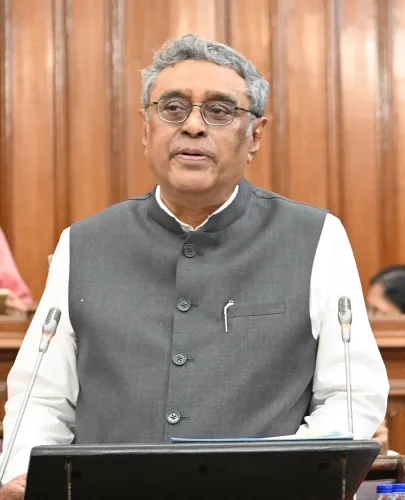
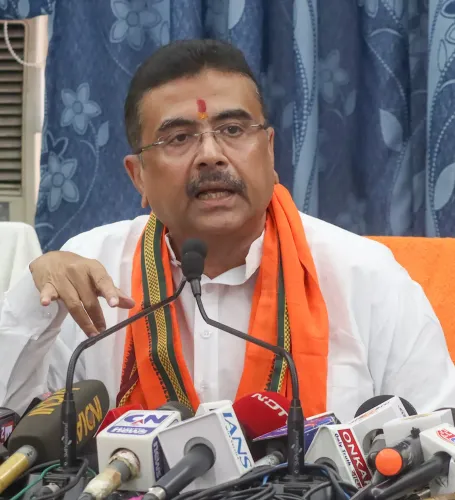
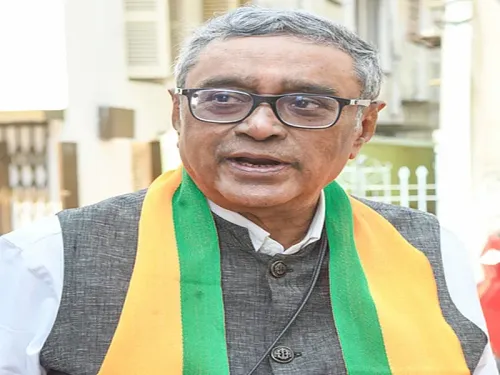
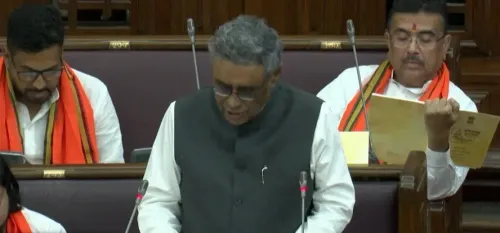
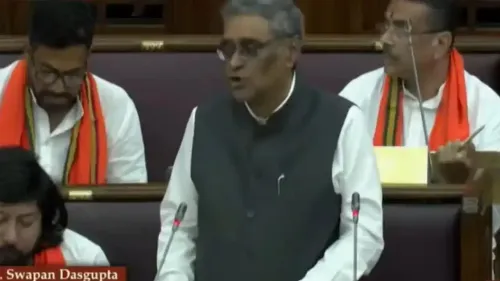
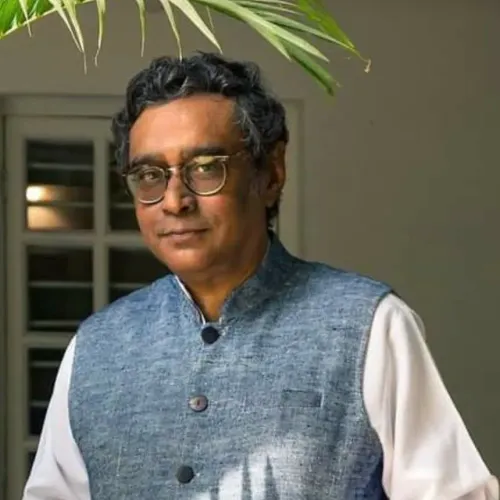
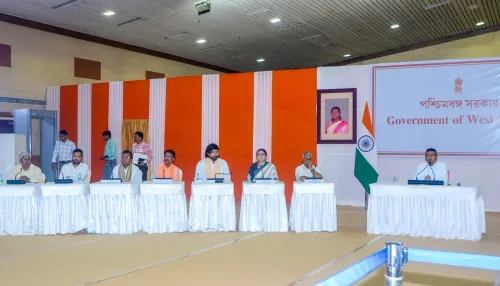
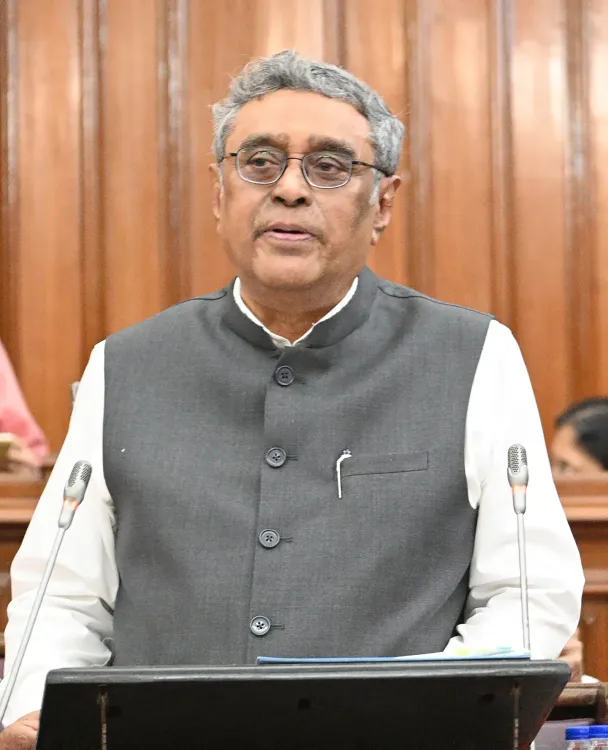
Bengal FM Swapan Dasgupta vows to plug tax leakages, boost state revenue
Synopsis
West Bengal's new BJP Finance Minister Swapan Dasgupta has put tax-leakage detection at the centre of the state's fiscal strategy — using the example of Birbhum stone quarries, where tax was collected on just one in eight trucks under the previous regime. With a 24x7 economy push, land law overhaul, and a pivot toward Centre-state cooperation, the new government is signalling a sharp break from 15 years of TMC rule.
Key Takeaways
West Bengal Finance Minister Swapan Dasgupta pledged to raise state tax revenue by eliminating corruption in the collection system, without new levies on citizens.
Chief Minister Suvendu Adhikari highlighted a revenue surge from Birbhum stone quarries within two months of the BJP government taking charge — previously, tax was collected on just 1 in 8 trucks.
The government plans to review or scrap the Urban Land (Ceiling and Regulation) Act, 1976 to free up land for industrial development.
Dasgupta aims to reduce the state's dependence on excise revenue and manage a 'huge accumulated debt burden' inherited from the previous TMC regime.
Shops and establishments will be permitted to operate 24x7 as part of a push toward an 'aggressively market economy.' The new government has vowed close coordination with the Union government , reversing what Dasgupta called 15 years of adversarial Centre-state relations.
West Bengal's new Bharatiya Janata Party (BJP) Finance Minister Swapan Dasgupta, a journalist-turned-politician, has said the state government's foremost fiscal priority is to raise its own tax revenue by rooting out corruption in the collection machinery — without imposing fresh burdens on ordinary citizens. The remarks came in an interview on 24 June from Kolkata, weeks after the BJP formed the government in the state.
Tax Leakages and the Stone Quarry Example
Dasgupta pointed to a striking illustration offered by Chief Minister Suvendu Adhikari: revenue from stone quarries in Birbhum district had surged dramatically in less than two months since the new administration took charge. The reason, according to Dasgupta, was systemic evasion — tax was reportedly being collected on just one out of every eight trucks carrying stones.
'Out of eight trucks carrying stones, tax was collected from just one truck. Now we are trying to detect these loopholes leading to tax collection leakages and thus improve the state's own tax revenue generation, but without burdening the common people,' Dasgupta said.
This comes amid a broader push by the new government to audit legacy revenue channels that critics say were riddled with irregularities under the previous administration.
Land Policy Overhaul and Industrial Push
Dasgupta signalled that a new industrial policy for West Bengal is imminent, accompanied by significant changes to land regulations. The government has already announced a review of the Urban Land (Ceiling and Regulation) Act, 1976, which Dasgupta described as 'an archaic act' and 'a relic of the old socialist days.'
'There is land which is not being used which was earlier given for industries. Why do we construct shopping malls on these lands meant for industry? It is better to use that for industrial development,' he said, calling for the law to be scrapped entirely.
The move is aimed at freeing up underutilised land parcels for industrial and infrastructure projects, a longstanding demand of investor groups operating in the state.
Reducing Excise Dependence and Managing Debt
On the revenue mix, Dasgupta said a key goal is to reduce the state's reliance on excise collections — typically alcohol-linked levies — as a proportion of its own tax revenue. He also acknowledged the scale of the fiscal challenge: the new government has inherited what he described as a 'huge accumulated debt burden' from the previous regime.
Notably, this dual pressure — diversifying revenue while servicing legacy debt — will define the government's budget choices in the near term. No specific debt figure was cited in the interview.
Centre-State Coordination as a Policy Cornerstone
Dasgupta was pointed in his criticism of the previous All India Trinamool Congress (TMC) government's relationship with the Union government, arguing that adversarial Centre-state dynamics had cost West Bengal access to Central scheme benefits over 15 years.
'The previous regime was always at loggerheads with the Union government, which is not at all a healthy policy in a system of democratic federalism,' he said. 'The state government bypassed Central projects one after another, as a result of which the benefits of the Central projects did not reach the people of the state.'
The new BJP government, he said, intends to work in 'close coordination' with the Centre to accelerate economic development and welfare delivery.
24x7 Economy and Kolkata's Transformation
Dasgupta outlined an ambition to shift West Bengal toward what he called an 'aggressively market economy,' including allowing shops and merchant establishments to operate on a 24x7 basis. He argued this would simultaneously boost revenue collection and generate employment.
'Kolkata will be a very different city henceforth,' he said. The government is expected to formalise these policy directions through its forthcoming industrial policy framework, the timeline for which has not yet been specified.
Point of View
If accurate, illustrates how informal evasion networks can hollow out state finances without any formal policy failure. The harder test is whether the BJP can institutionalise these gains or whether enforcement surges prove episodic. The pledge to scrap the Urban Land (Ceiling and Regulation) Act is significant: it signals a genuine ideological break, but land reform in West Bengal has historically generated fierce political resistance. And the 24x7 economy promise, while revenue-positive on paper, depends on labour law amendments that have not yet been tabled. The Centre-state cooperation framing is the easiest win — Central fund flows are largely administrative — but converting that into visible welfare delivery before the next electoral cycle is a different challenge altogether.
NationPress
23 Sept 2026
Frequently Asked Questions
What is West Bengal Finance Minister Swapan Dasgupta's main fiscal priority?
Dasgupta's primary goal is to increase the state's own tax revenue by eliminating corruption and plugging leakages in the tax collection system, without imposing additional burdens on ordinary citizens. He cited the example of stone quarries in Birbhum district, where revenue surged after the new government tightened oversight.
What is the Birbhum stone quarry example that was highlighted?
Chief Minister Suvendu Adhikari pointed out that tax was previously being collected on just one out of every eight trucks carrying stones from Birbhum district quarries. Revenue from the sector rose sharply within two months of the BJP government taking charge, illustrating the scale of prior evasion.
What changes to land policy has the West Bengal government announced?
The government has announced a review of the Urban Land (Ceiling and Regulation) Act, 1976, with Dasgupta calling it an archaic law that should be scrapped. The aim is to free up underutilised land for industrial and infrastructure development rather than commercial construction.
How does the new government plan to change West Bengal's relationship with the Centre?
Dasgupta said the BJP government will work in close coordination with the Union government, a sharp departure from what he described as 15 years of the TMC bypassing Central schemes. He argued that adversarial Centre-state relations had denied West Bengal the benefits of several Union government projects.
What does the 24x7 economy proposal mean for West Bengal?
The government plans to allow shops and merchant establishments to operate around the clock, which Dasgupta said would boost revenue collection and generate employment. He described the broader goal as building an 'aggressively market economy,' with Kolkata positioned as a key beneficiary.