West Bengal tax revenue up ₹23 crore as Suvendu Adhikari govt plugs mining leakages
Synopsis
West Bengal's new Suvendu Adhikari government has delivered an early fiscal proof point: stone quarry revenue jumped to ₹83 crore in weeks since May 9 — against a ₹60 crore annual average under TMC — by dismantling e-challan forgery networks in sand-mining. The real budget story isn't in the speech; it's in the crackdown.
Key Takeaways
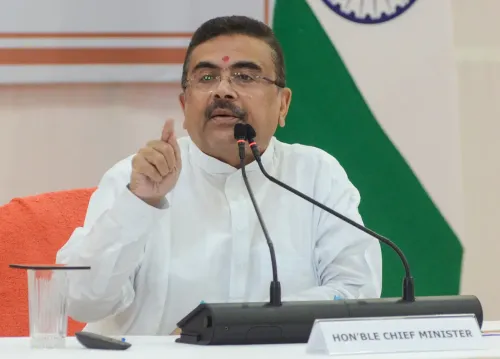
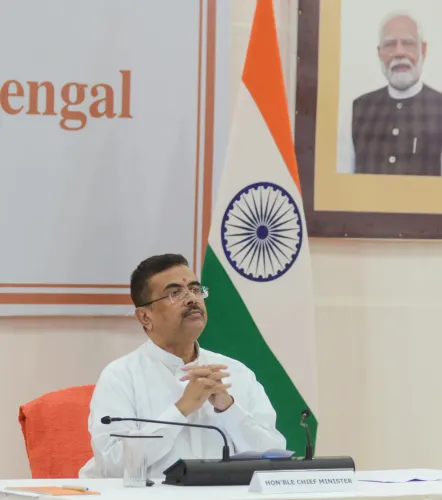
Chief Minister Suvendu Adhikari disclosed in the West Bengal Assembly that stone quarry revenue has risen to ₹83 crore since 9 May , against an annual average of ₹60 crore under the previous TMC regime.
The state finance department has launched a probe to identify officials involved in e-challan forgery at sand-mining check-posts.
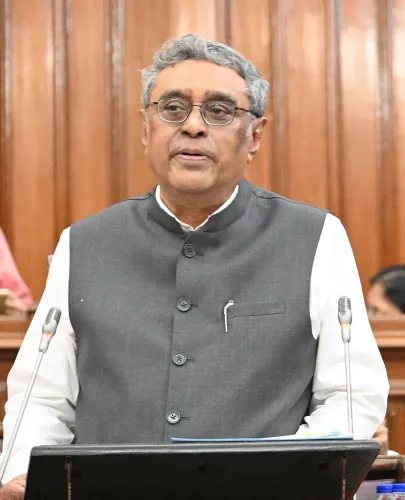
Finance Minister Swapan Dasgupta presented the 2026-27 budget on 22 June , with revenue improvement strategy focused on plugging leakages rather than raising tax rates.
A single-window clearance system for investment proposals of ₹100 crore and above has been announced to ease compliance and curb bribery in multi-department approvals.
The government maintains that improved collection can be achieved without burdening taxpayers with higher slabs.
The Suvendu Adhikari government in West Bengal is targeting a significant improvement in the state's own tax revenue by closing systemic loopholes — particularly in the stone quarry and sand-mining sectors — rather than raising tax rates. According to a senior official in the state finance department, early results from these anti-leakage measures are already visible in revenue collection figures presented before the West Bengal Assembly during the ongoing budget session.
Mining Revenue Surges After Loophole Crackdown
Chief Minister Suvendu Adhikari disclosed in the Assembly on Tuesday that stone quarry revenue — largely concentrated in Birbhum district — averaged around ₹60 crore per year under the previous All India Trinamool Congress (TMC) regime. Since the new cabinet assumed charge on 9 May, the same source has already yielded ₹83 crore, a jump of over ₹23 crore within weeks.
The state government has attributed this surge directly to reforms in the e-challan system used at check-posts to levy taxes on trucks carrying sand from river beds. According to the finance department official, forgery in these e-challans was rampant under the previous administration, allowing mining and trading operators to avoid legitimate taxes by paying bribes to complicit officials instead.
E-Challan Forgery in Focus
The process to identify government officials involved in e-challan forgery has been initiated, the finance department insider said, and those found culpable will be replaced by officers with 'impeccable' track records. The e-challans, issued at check-posts to trucks transporting river sand, appeared legitimate on the surface but were reportedly manipulated to understate quantities or values, enabling systematic tax evasion.
'Now with such plugging of the loopholes it will be like killing two ducks with one stone. On one hand, the chain of illegal collection in the form of bribes in the system will be snapped, and at the same time the flow of revenue in the state's own tax system will automatically increase,' the state finance department official said.
Budget Proposals and the Single-Window Push
State Finance Minister Swapan Dasgupta presented the budget for 2026-27 on 22 June, which critics from certain quarters described as lacking specific directions on revenue improvement. However, the finance department insider argued that the real strategy is embedded in operational decisions taken since the cabinet's first day — not in headline budget announcements.
One significant policy move announced during the budget speech is the introduction of a single-window clearance system for all investment proposals of ₹100 crore and above. The stated aim is to ease the compliance burden on investors, but officials also see it as a mechanism to eliminate bribery that previously flourished in a fragmented, multi-department clearance process.
'There have been instances in the past of corruption in the process of getting multiple clearances to start a new business from various departments in a decentralised clearing system. However, when all clearances are granted through a single-window system, such scope for corruption will be eliminated,' the official said.
Broader Implications for West Bengal's Fiscal Health
West Bengal has historically struggled to grow its own tax revenue — the portion of collections that remain with the state rather than being shared with the Centre. By targeting leakages rather than rate hikes, the Adhikari administration is making a political as well as fiscal argument: that the previous TMC government allowed structural corruption to erode the exchequer.
This comes amid the ongoing budget session of the Assembly, where the government's fiscal credibility is under scrutiny. If the early gains in mining revenue are sustained and extended to other leakage-prone sectors, the approach could offer a template for states seeking to expand their fiscal base without imposing fresh burdens on taxpayers. The next few months will test whether these early numbers hold.
Point of View
However striking, are not a revenue strategy; they are an opening argument. West Bengal's fiscal challenges run deeper than sand-mining check-posts, and the single-window clearance system, while structurally sound, has been promised by multiple state governments before without eliminating rent-seeking. The Adhikari administration needs to demonstrate that these gains scale beyond Birbhum and beyond the political honeymoon period.
NationPress
22 Sept 2026
Frequently Asked Questions
How much has West Bengal's stone quarry revenue increased under the Suvendu Adhikari government?
Stone quarry revenue has risen to ₹83 crore since the new cabinet took charge on 9 May, compared to an annual average of around ₹60 crore under the previous TMC administration. Chief Minister Suvendu Adhikari shared these figures in the West Bengal Assembly during the ongoing budget session.
What is e-challan forgery and how did it cause tax leakage in West Bengal?
E-challans are digital receipts issued at check-posts to trucks transporting river sand, used to levy state taxes on mining activity. According to state finance department officials, these challans were reportedly manipulated under the previous regime, allowing operators to understate quantities and pay bribes instead of legitimate taxes — resulting in significant revenue loss for the state exchequer.
What is the single-window clearance system announced in the West Bengal budget 2026-27?
Finance Minister Swapan Dasgupta announced on 22 June that all investment proposals of ₹100 crore and above will receive all required government clearances through a single-window system. The move is designed to improve ease of doing business and, according to officials, also aims to eliminate bribery that previously arose from fragmented multi-department approval processes.
Why did critics say the West Bengal budget 2026-27 lacked direction on revenue?
Some observers reportedly felt that Finance Minister Swapan Dasgupta's budget speech for 2026-27 did not lay out specific measures to grow the state's own tax revenue. However, the state finance department has argued that the real revenue strategy lies in operational decisions — such as the e-challan crackdown — taken since the cabinet's first day, rather than in explicit budget line items.
Which district is at the centre of West Bengal's stone quarry revenue improvement?
Stone quarries in Birbhum district are the primary source cited by the state government. Revenue from these quarries has surged since the Adhikari government took charge in May, and the e-challan reform targeting sand-mining check-posts is the key mechanism credited for the improvement.