CM Sawant Highlights Goan Woman Entrepreneur Under Rojgar Yojana

Synopsis
Goa Chief Minister Pramod Sawant on 1 June 2026 highlighted Dipika Shetty, a local woman entrepreneur, as a beneficiary of the Chief Minister's Rojgar Yojana. Sawant praised her as a Nari Shakti inspiration who is now employing local Goans, linking her success to the state's Swayampurna Goa and national Atmanirbhar Bharat goals.
Key Takeaways
CM Pramod Sawant on 1 June 2026 publicly spotlighted Dipika Shetty as a success story of the Chief Minister's Rojgar Yojana .
Dipika Shetty is described as running a 'unique enterprise' and employing local Goan workers through scheme support.
The post links her story to three policy frameworks: Swayampurna Goa , Atmanirbhar Bharat , and Nari Shakti .
The Chief Minister's Rojgar Yojana has been supporting local startups and self-employment in Goa since at least 2019 .
The state's beneficiary-spotlight strategy mirrors similar approaches across other BJP -ruled states to demonstrate scheme delivery.
Aggregated outcomes and employment numbers for the Rojgar Yojana are expected to feature in the next Goa budget review.
Goa Chief Minister Pramod Sawant on Monday, 1 June 2026, spotlighted Dipika Shetty, a Goan woman entrepreneur, as a success story of the state government's Chief Minister's Rojgar Yojana, calling her a 'true inspiration for Nari Shakti' and crediting the scheme for enabling her to build an enterprise that now employs local Goans.
Context
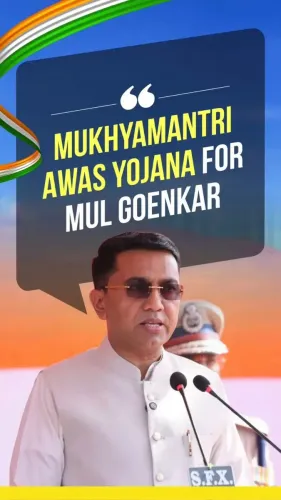
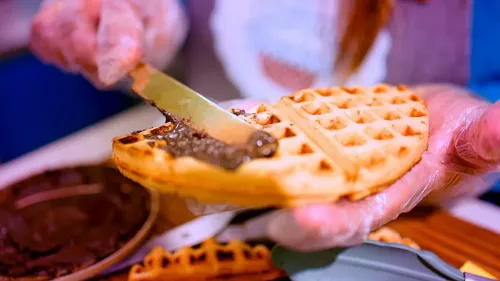
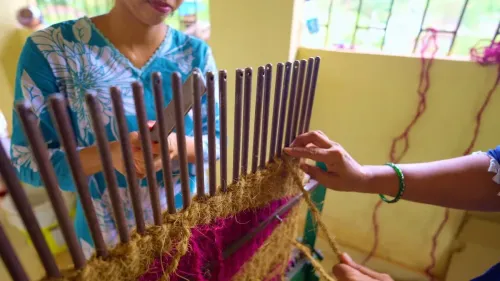
CM Sawant shared that Dipika Shetty is 'successfully running her unique enterprise with the support of the Chief Minister's Rojgar Yojana.' The post described her as embodying 'passion, determination, and entrepreneurial spirit' and praised her for 'paving the way for many other women to dream big, pursue their passions, and become Swayampurna.' The post was accompanied by a video, providing a visual profile of her journey.
The Chief Minister tagged the post with #SwayampurnaGoa, #AtmanirbharBharat, and #NariShakti — three interlocking themes that define both the state and central government's messaging on women-led self-employment.
Policy Backdrop
The Chief Minister's Rojgar Yojana has been operational in Goa since at least 2019, providing financial and institutional support to local startups and self-employment ventures. It sits within the broader architecture of the Swayampurna Goa initiative, a state programme designed to promote self-reliance, women's empowerment, and local entrepreneurship.
At the national level, the Atmanirbhar Bharat Abhiyan, announced in May 2020 by the central government, set the overarching framework for reducing import dependence and boosting domestic enterprise — including support for MSMEs and self-employment. Goa's state-branded yojanas are positioned as ground-level delivery vehicles for these national goals.
The practice of highlighting individual beneficiary stories is a deliberate communications strategy adopted across BJP-ruled states to demonstrate tangible outcomes of welfare and employment schemes, particularly those targeting women under the Nari Shakti banner.
Stakeholders and Impact
The immediate beneficiary is Dipika Shetty, whose enterprise — while specific details remain unverified in public record — is presented as generating employment for local Goan workers, creating a multiplier effect beyond her own self-employment. Her story is being positioned as a model for other aspiring women entrepreneurs in the state.
Women entrepreneurs and local Goan workers form the core stakeholder group for both the Chief Minister's Rojgar Yojana and the wider Swayampurna Goa programme. By amplifying individual success narratives, the state government signals to prospective beneficiaries that the scheme is functional and accessible.
What's Next
The spotlight on Dipika Shetty is likely a precursor to broader outreach around the Swayampurna Goa targets, with the state government expected to announce further beneficiary profiles and scheme outcomes ahead of the next Goa budget review. Analysts watching CM Sawant's governance record will track whether the Rojgar Yojana releases aggregated data on employment generated and enterprises supported. The convergence of state and national self-reliance narratives suggests that Goa will continue using women entrepreneurship stories as a central pillar of its political and policy communication through 2026.
Point of View
The post simultaneously serves state branding (Swayampurna Goa), national alignment (Atmanirbhar Bharat), and identity politics (Nari Shakti). This approach is increasingly standard in BJP-governed states, where individual success narratives are deployed as soft proof-of-delivery ahead of budget cycles or elections. The absence of verifiable numbers — employment figures, loan amounts, enterprise category — is a recurring limitation of this genre, leaving the political optics stronger than the policy accountability trail.
NationPress
20 Sept 2026
Frequently Asked Questions
What is the Chief Minister's Rojgar Yojana in Goa?
The Chief Minister's Rojgar Yojana is a Goa government scheme that provides financial and institutional support to local entrepreneurs and self-employment ventures. It has been operational since at least 2019 and is a key component of the broader Swayampurna Goa initiative.
Who is Dipika Shetty and why is she in the news?
Dipika Shetty is a Goan woman entrepreneur highlighted by Chief Minister Pramod Sawant on 1 June 2026 as a success story of the Chief Minister's Rojgar Yojana. She is being celebrated for building her own enterprise and employing local Goans.
What is Swayampurna Goa?
Swayampurna Goa is a state government initiative aimed at promoting self-reliance, women's empowerment, and local entrepreneurship in Goa . It operates in alignment with the national Atmanirbhar Bharat Abhiyan launched in May 2020.
How does Atmanirbhar Bharat relate to Goa's state schemes?
The Atmanirbhar Bharat Abhiyan , launched by the central government in May 2020 , provides the national framework for self-reliance and MSME support. Goa's Chief Minister's Rojgar Yojana and Swayampurna Goa serve as state-level delivery mechanisms aligned with these national goals.
What is Nari Shakti and how is it connected to this story?
Nari Shakti, meaning 'women's power,' is a central theme in both BJP-led state and central government communications around women's empowerment and entrepreneurship. CM Sawant invoked it to frame Dipika Shetty's story as part of a larger movement of women becoming economically self-reliant across India .