CM Sawant spotlights Goan youth who quit job for farming
Synopsis
Goa CM Pramod Sawant has spotlighted Rahul Dhond, a young Goan who left salaried employment to farm a one-hectare plot with state department support, framing the story as proof that the Swayampurna Goa self-reliance mission is generating real-world traction among the state's youth.
Key Takeaways
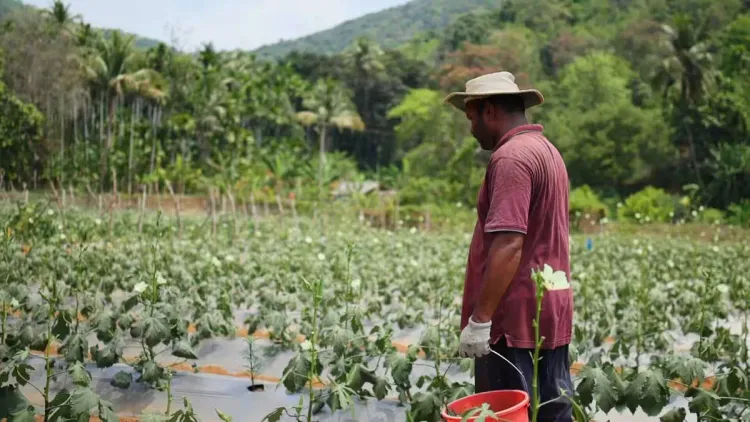
Rahul Dhond , a young Goan, left salaried employment to cultivate a one-hectare farm, supported by his father and state departments.
Goa's Agriculture and Horticulture Departments provided institutional backing for Dhond's transition to farming.
Swayampurna Goa is the state's self-reliance mission that frames agricultural entrepreneurship as a priority for youth.
CM Pramod Sawant shared the story on October 18, 2026 , using it as a public demonstration of scheme uptake.
Goa has historically depended on neighbouring states for food supply; youth-led farming is positioned as a solution.
The move aligns with the Centre's Atmanirbhar Bharat framework of reducing dependency and boosting local production.
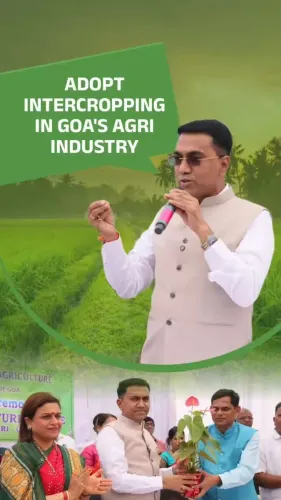
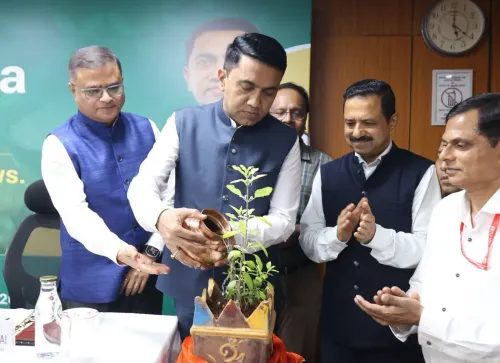
A government salary, a steady routine, a predictable future — Rahul Dhond walked away from all of it to put his hands in the soil. Goa Chief Minister Pramod Sawant on Sunday, October 18, 2026, shared Dhond's story on X, holding it up as a living example of the agricultural entrepreneurship that his government is actively trying to seed across the state.
From office chair to one-hectare farm
Dhond's pivot is the kind of story policymakers dream of illustrating on a poster — and CM Sawant has done exactly that. With encouragement from his father and on-the-ground support from Goa's Agriculture and Horticulture Departments, Dhond is now working a one-hectare farm, converting what was once a personal passion into a productive livelihood. The post does not specify the crops being cultivated, but the direction is unambiguous: young, educated Goans are being nudged — and supported — toward the field.
Swayampurna Goa and the self-reliance push
Swayampurna Goa — the state's self-reliance mission — is the policy scaffolding behind stories like Dhond's. The scheme promotes local entrepreneurship across sectors, with agriculture as a key pillar, directly echoing the Centre's broader Atmanirbhar Bharat framework. Goa has historically depended on neighbouring states for a significant share of its food supply, and state governments have periodically tried to reverse that equation by encouraging educated youth to take up cultivation rather than migrate toward service-sector careers.
The Agriculture and Horticulture Departments are the delivery arms of that ambition — providing subsidies, technical training, and handholding for new entrants into farming. Dhond's case, as framed by Sawant, represents exactly the kind of scheme uptake the government wants to publicise to create a demonstration effect among other young Goans considering a similar leap.
Why a personal story is the sharpest policy tool
Chief ministers don't amplify individual farmer journeys by accident. The choice to spotlight Rahul Dhond — named, specific, relatable — rather than cite aggregate data is a deliberate communication strategy. A real person with a real farm on a real hectare of Goan land is more persuasive to a 25-year-old weighing career options than any scheme brochure. Sawant's post lands that message without once mentioning a budget line or a policy circular.
The question for watchers of Goa's agricultural economy is whether the anecdote reflects a genuine trend. State budget allocations for youth-focused farming schemes and any uptick in land-use registrations for agriculture will be the harder data points to track — but for now, the signal from the Chief Minister's office is clear: Goa wants its youth in the field, not just in the office.
Point of View
The messaging attempts to make agriculture aspirational for educated Goan youth — a demographic typically drawn toward tourism, services, or migration. Whether the state can back the narrative with scaled budgetary support and land-access solutions will determine if Dhond's story becomes a pattern or remains a photo-op.
NationPress
18 Oct 2026
Frequently Asked Questions
Who is Rahul Dhond and what did he do?
Rahul Dhond is a young Goan who left a salaried job to pursue farming on a one-hectare plot, supported by his father and Goa's Agriculture and Horticulture Departments.
What is Swayampurna Goa?
Swayampurna Goa is a state-level self-reliance mission that promotes local entrepreneurship, including in agriculture, to reduce Goa's dependence on imports from neighbouring states.
What support does Goa provide to young farmers?
Goa's Agriculture and Horticulture Departments offer subsidies, technical training, and handholding to new entrants into farming, including youth transitioning from other careers.
Why is CM Pramod Sawant promoting farming among Goa's youth?
Goa depends heavily on neighbouring states for food, and the state government under CM Sawant is using the Swayampurna Goa mission to encourage educated youth to take up agriculture and boost local production.
How does Goa's farming push connect to Atmanirbhar Bharat?
Goa's youth-focused agriculture drive aligns with the Centre's Atmanirbhar Bharat framework, which promotes self-reliance and diversification into sectors like farming to reduce dependency on external supply chains.