Giriraj Singh defends voter roll revision, cites 1952 precedent
Synopsis
Union Textiles Minister Giriraj Singh defended the Election Commission's Special Summary Revision of electoral rolls on 18 October 2026, stating the process has precedent in eight similar exercises conducted between 1952 and 2005 and is rooted in the Representation of the People Act, 1950.
Key Takeaways
Giriraj Singh posted on 18 October 2026 defending the Election Commission's Special Summary Revision of voter rolls.
He claimed the exercise has been conducted eight times between 1952 and 2005 , framing it as a routine constitutional process. (Note: this specific count is drawn from Singh's post and has not been independently verified.) The Representation of the People Act, 1950 provides the legal basis for preparation, revision and maintenance of electoral rolls in India.
Singh accused unnamed critics of 'spreading confusion' by ignoring the historical record of such revisions.
The Election Commission of India is constitutionally mandated to maintain the accuracy and integrity of electoral rolls.
Parliamentary or judicial scrutiny of the current revision process remains a key development to watch.
Eight times since Independence, India has put its voter lists under an intensive microscope — and Union Textiles Minister Giriraj Singh wants critics of the current exercise to remember that. On Sunday, 18 October 2026, the senior BJP leader and Lok Sabha MP from Begusarai, Bihar took to X to push back against what he called deliberate misinformation about the Election Commission of India's Special Summary Revision of electoral rolls.
Posting in Hindi, Singh declared: 'SIR कोई नई प्रक्रिया नहीं है' — 'This is not a new process at all.' He argued that a special intensive revision of the voter list has been conducted eight times between 1952 and 2005, framing the current exercise as a routine constitutional duty of the Election Commission rather than any novel or politically motivated intervention. Calling criticism of the process a distortion of historical fact, he wrote that such statements 'spread confusion among the public by ignoring the historical record.'A process rooted in the Representation of the People Act
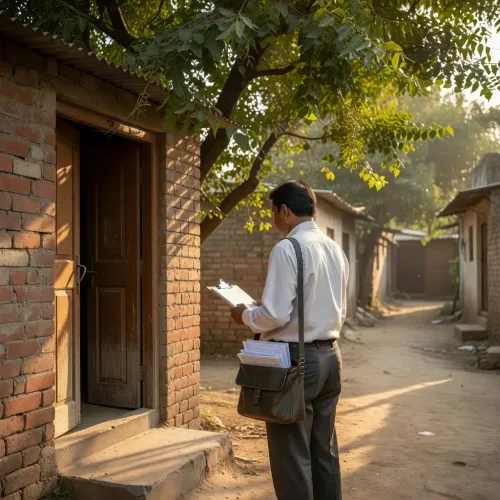
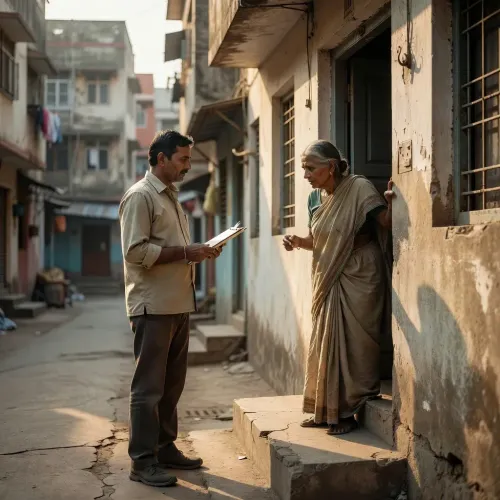
The legal scaffolding for exactly this kind of revision has been in place since 1950. The Representation of the People Act, 1950 gave the Election Commission the authority — and the responsibility — to prepare, revise and maintain accurate electoral rolls across the country. Periodic special intensive revisions are the mechanism through which that mandate is fulfilled: dead entries are removed, new eligible citizens are added, and address changes are captured. The goal, as Singh put it, is to ensure the 'purity and credibility' of the voter list.Why the revision is drawing political fire
Singer's post lands squarely in a well-worn arena of Indian electoral politics. Opposition parties have historically scrutinised the timing and methodology of voter-list updates, raising concerns about deletions that could disenfranchise specific communities or inflate rolls in ways that favour incumbents. Singh's counter-argument — essentially, 'this has been done before, repeatedly, by every government' — is a standard defensive posture that frames the revision as administrative rather than political. He stopped short of naming any specific party or critic, directing his remarks at an unnamed 'SIR,' a colloquial address that signals a reply to a broader current of criticism rather than a single individual. What is not in dispute is the Election Commission's constitutional independence and its track record of conducting such exercises across decades and across political regimes. Whether the current revision's scope or timing differs meaningfully from historical precedents is a question that parliamentary scrutiny and judicial oversight — both cited as things to watch — will likely have to answer.Point of View
He shifts the burden of proof onto critics to explain why this instance is different rather than just unprecedented. The broader arc here is the BJP's sustained effort to position the Election Commission's administrative exercises as neutral and apolitical, insulating them from opposition scrutiny. The tactic is revealing — the fact that such a defence is deemed necessary suggests the revision has become a live political flashpoint, likely linked to an approaching state or national election cycle. How effectively the historical precedent argument holds will depend on whether specifics of the current revision — scale, timing, affected demographics — eventually surface in public or judicial forums.
NationPress
18 Oct 2026
Frequently Asked Questions
What is a Special Summary Revision of electoral rolls in India?
A Special Summary Revision is an intensive exercise conducted by the Election Commission of India to update voter lists — adding newly eligible voters, removing deceased or relocated voters, and correcting errors — to ensure the accuracy and credibility of electoral rolls before elections.
Has this kind of voter list revision happened before in India?
According to Giriraj Singh's post, special intensive revisions of the voter list have been conducted eight times between 1952 and 2005. The legal basis for such revisions is the Representation of the People Act, 1950, which empowers the Election Commission to prepare and revise electoral rolls. NationPress has not independently verified the count of eight revisions.
Why is Giriraj Singh talking about electoral rolls?
Singh posted on 18 October 2026 to counter criticism — likely from opposition parties — that the current voter-list revision is a new or politically motivated process. He argued the criticism ignores decades of historical precedent and spreads public confusion.
What law governs voter list revisions in India?
The Representation of the People Act, 1950 is the primary legislation that establishes the legal framework for the preparation, revision and maintenance of electoral rolls by the Election Commission of India.
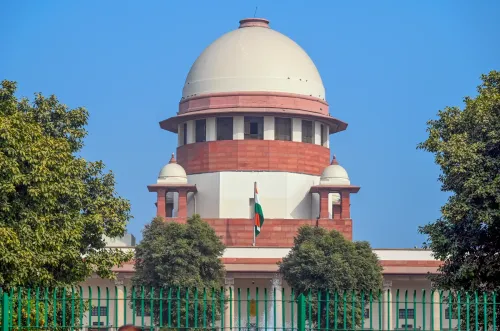
Can the Election Commission's voter list revision be challenged in court?
Yes. Electoral roll revisions are subject to parliamentary scrutiny and can also be challenged in the High Courts and the Supreme Court of India if there is evidence of procedural irregularity, arbitrary deletions, or violations of the Representation of the People Act, 1950.