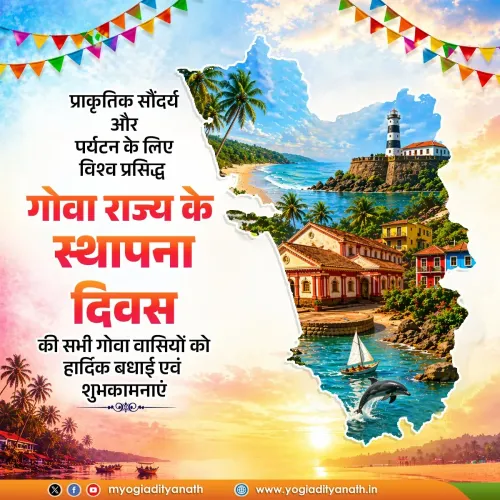
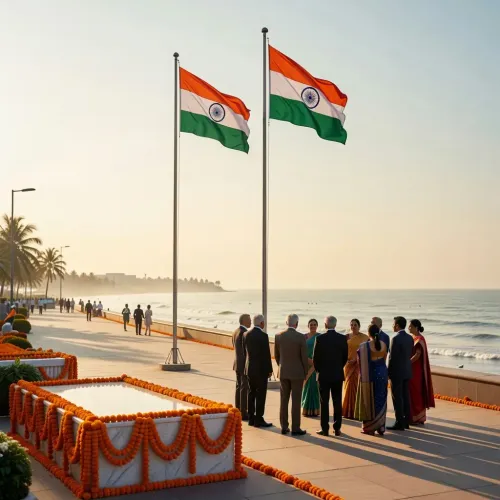
CM Sawant Marks Goa Statehood Day, Flags Self-Reliance Push
Synopsis
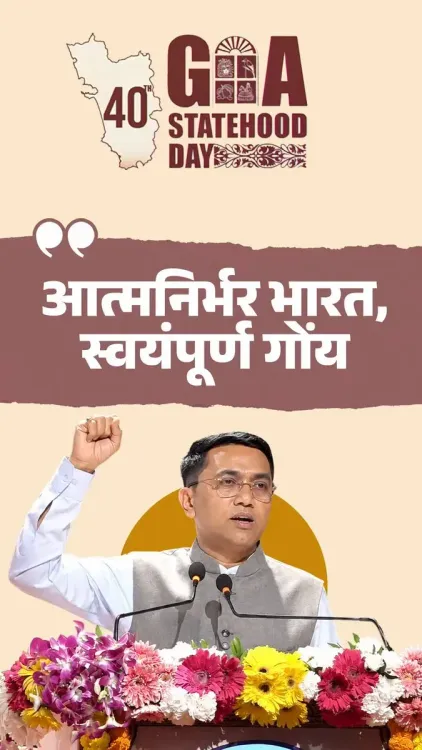
On Goa Statehood Day 2026, Chief Minister Pramod Sawant reaffirmed the state's Swayampurna Goa drive for self-reliance in agriculture, animal husbandry, and fisheries, and congratulated youth who received government appointment letters at the occasion.
Key Takeaways
Goa Statehood Day is observed on 30 May each year, marking the state's elevation from union territory to full statehood in 1987 .
CM Pramod Sawant reiterated the government's commitment to the Swayampurna Goa scheme targeting agriculture, animal husbandry, and fisheries.
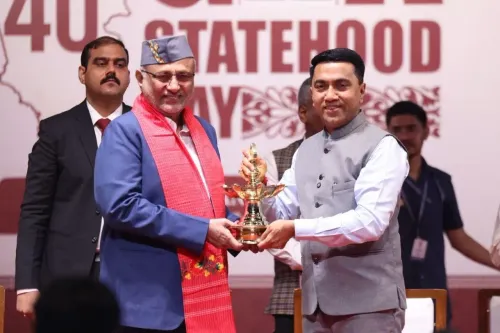
Youth who received appointment letters were felicitated at the Statehood Day event, underlining the government's employment focus.
The Swayampurna Goa initiative aligns with the national Atmanirbhar Bharat framework launched in 2020 .
Goa's economy has historically depended on tourism and mining; the scheme represents a push to diversify into sustainable primary sectors.
Budget allocations in the next legislative session will be a key indicator of the government's follow-through on these commitments.
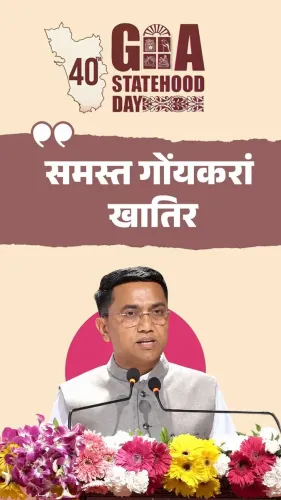
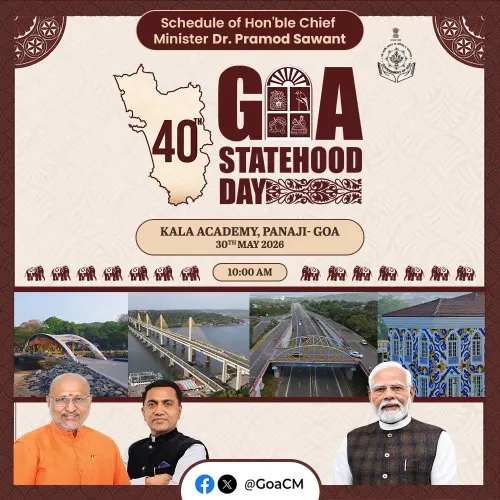
Goa Chief Minister Pramod Sawant used the occasion of Goa Statehood Day on 30 May 2026 to reaffirm the state government's commitment to achieving self-reliance in agriculture, animal husbandry, and fisheries, while also congratulating youth who received appointment letters at a state function.
Context
Goa marks its Statehood Day on 30 May every year, commemorating the day in 1987 when the state was elevated from a union territory to a full-fledged state after decades as a Portuguese colony and a transitional period under central administration. The occasion is a recurring platform for the Chief Minister to outline governance priorities and celebrate milestones.
In his post, Sawant wrote: 'We are continuously striving to make Goa Swayampurna in sectors such as agriculture, animal husbandry, and fisheries.' He also extended congratulations to 'all the youth who have received appointment letters today,' signalling an employment-focused dimension to the day's events.
Policy Backdrop
The Swayampurna Goa scheme is a state-level self-reliance initiative targeting primary sectors — agriculture, animal husbandry, and fisheries — aligned with the broader national Atmanirbhar Bharat framework launched in 2020. The scheme aims to reduce dependence on imports and outside supply chains by developing local resources and building capacity among Goan farmers, livestock keepers, and fishing communities.
Historically, Goa's economy has leaned heavily on tourism and mining. The pivot toward sustainable agriculture and fisheries represents a deliberate effort to diversify the state's economic base and create livelihoods that are resilient to sector-specific downturns.
Stakeholders and Impact
Goan youth are a central focus of the Statehood Day messaging, with appointment letters distributed as a tangible demonstration of the government's employment agenda. Youth unemployment and the availability of stable government and private-sector jobs have been persistent concerns in the state, particularly as the mining sector has faced regulatory challenges in recent years.
Farmers, fisherfolk, and animal husbandry practitioners stand to benefit from continued scheme implementation, with the government signalling ongoing investment in these sectors. BJP-ruled states have broadly tied primary-sector self-sufficiency to post-pandemic recovery and youth entrepreneurship narratives, and Goa is following a similar template.
What's Next
Attention will turn to the state's upcoming legislative session and budget allocations for agriculture, fisheries, and youth employment programmes to assess whether the Statehood Day commitments translate into measurable funding and policy action. The government's ability to scale the Swayampurna Goa scheme and deliver on entrepreneurship opportunities will be closely watched by opposition parties and civil society groups in the state.
With Goa approaching its 39th year of statehood, the Chief Minister's framing of self-reliance and youth employment as twin pillars of governance suggests these themes will anchor the BJP's political messaging in the state through the next electoral cycle.
Point of View
Reflecting a calculated effort to broaden the BJP's appeal beyond Goa's traditional tourism and mining constituencies. The Swayampurna Goa framing mirrors a wider pattern among BJP-governed states of anchoring local schemes within the Atmanirbhar Bharat narrative, lending them national ideological coherence. The distribution of appointment letters on a symbolic state occasion is a well-worn governance optic, but it also signals that the government is aware of the electoral salience of visible job creation. How the scheme performs on measurable outcomes — crop yields, fishing community incomes, youth absorption rates — will determine whether the self-reliance narrative holds through the next assembly election.
NationPress
13 Oct 2026
Frequently Asked Questions
What is Swayampurna Goa?
Swayampurna Goa is a state government scheme aimed at achieving self-reliance in agriculture, animal husbandry, and fisheries by developing local resources and reducing dependence on external supply chains.
When is Goa Statehood Day celebrated?
Goa Statehood Day is celebrated on 30 May every year, marking the date in 1987 when Goa was granted full statehood after serving as a union territory following its liberation from Portuguese rule.
Who is the Chief Minister of Goa?
Pramod Sawant of the BJP has been the Chief Minister of Goa since 2019 .
What did CM Sawant say on Goa Statehood Day 2026?
CM Sawant said the government is 'continuously striving to make Goa Swayampurna' in agriculture, animal husbandry, and fisheries, and congratulated youth who received appointment letters at the event.
How does Swayampurna Goa relate to Atmanirbhar Bharat?
Swayampurna Goa is aligned with the national Atmanirbhar Bharat framework launched in 2020 , which encouraged states to pursue sector-specific self-reliance goals as part of post-pandemic economic recovery.