CM Sawant Highlights Education Gains on Goa Statehood Day

Synopsis
On Goa Statehood Day 2026, Chief Minister Pramod Sawant highlighted the state's expanded educational infrastructure under PM Modi's leadership, pointing to premier central institutions such as IIT Goa and NIT Goa as milestones in building human resource capacity and broadening opportunities for Goan youth.
Key Takeaways
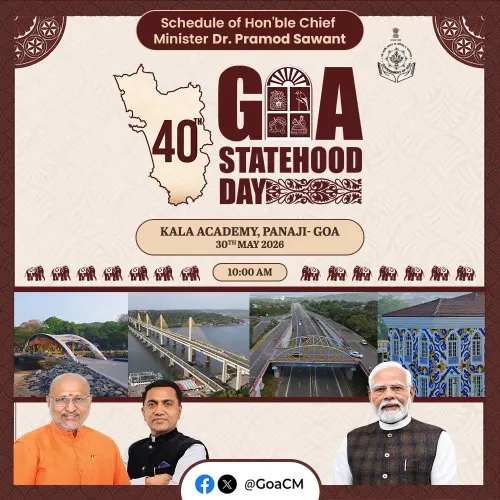
CM Pramod Sawant marked Goa Statehood Day, 30 May 2026 , by highlighting educational infrastructure gains under PM Narendra Modi .
IIT Goa was established in 2016 under the 12th Five-Year Plan expansion of the national IIT network.
NIT Goa provides undergraduate and postgraduate technical education, giving the state two central institutions of national importance.
Central funding through RUSA (launched 2013) supported upgrades to colleges and creation of model degree colleges in Goa.
The post-2014 Union government strategy explicitly targeted states lacking premier institutions to reduce regional education imbalances.
Future budget allocations for campus expansion and research parks in Goa remain a key area to watch.
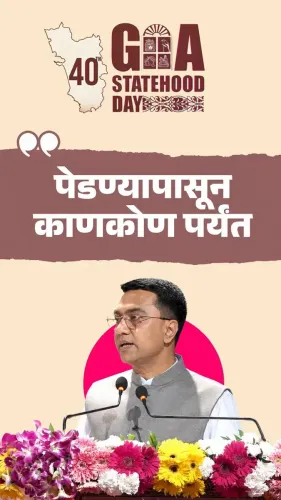
Goa Chief Minister Pramod Sawant marked Goa Statehood Day on 30 May 2026 by crediting Prime Minister Narendra Modi's leadership for strengthening educational infrastructure in the state and attracting national-level premier institutions, framing the gains as a foundation for youth opportunity and human resource development.
Context
Goa Statehood Day commemorates the state's attainment of full statehood on 30 May 1987, making it an occasion for stock-taking on development. Chief Minister Sawant used the occasion to highlight what his administration, working alongside the Union government, considers a flagship achievement: the expansion of higher education infrastructure in a state that historically relied on students migrating to larger metros for quality technical education.
In his post, Sawant stated that under Modi's guidance, Goa has 'strengthened educational infrastructure' and 'welcomed national-level premier institutions to the state, ensuring human resource development and greater opportunities for our youth.'
Policy Backdrop
IIT Goa was established in 2016 under the Institutes of Technology (Amendment) Act as part of the central government's 12th Five-Year Plan expansion of the IIT network. NIT Goa similarly provides undergraduate and postgraduate technical education, giving the state two centrally-funded institutions of national importance that were absent a decade ago.
The Union government's broader post-2014 strategy has prioritised placing new IITs, NITs, and other central institutions in states that previously lacked them, explicitly targeting regional imbalances in access to quality higher education. Central funding through the Rashtriya Uchchatar Shiksha Abhiyan (RUSA), launched in 2013, also supported upgrades to existing colleges and the creation of new model degree colleges across states including Goa.
The National Education Policy 2020 further reinforced this direction, emphasising multidisciplinary institutions and skilling — goals that align with Sawant's stated emphasis on 'human resource development.'
Stakeholders and Impact
The primary beneficiaries are Goan students, who now have access to premier technical institutions within the state rather than competing for limited seats in distant cities. Families across Goa's coastal and interior districts stand to benefit from reduced relocation costs and greater local employment of educated graduates.
The presence of IIT Goa and NIT Goa also creates an ecosystem for research, startups, and skilled employment that can attract investment to the state. For the BJP-led state government, the education narrative serves as a tangible governance record ahead of future electoral cycles.
What's Next
Observers will watch for further state or central budget allocations directed at expanding existing campuses, establishing research parks, or adding specialised institutions in Goa. Any parliamentary discussion during the upcoming monsoon session on education-grant utilisation and RUSA outcomes will provide a clearer picture of how central funds have translated into ground-level outcomes.
With Goa Statehood Day serving as an annual accountability moment, the Sawant administration's continued focus on education as a development pillar suggests the sector will remain central to the state's political and policy conversation in the months ahead.
Point of View
A pattern common among BJP chief ministers seeking to align local achievements with the Centre's development narrative. The choice of education as the headline theme reflects a broader BJP strategy of pointing to tangible infrastructure — campuses, buildings, enrolment numbers — as proof of governance delivery in smaller states. At the same time, Goa's relatively small student population means the political dividend from IIT and NIT presence is as much symbolic as numerical. The forward reference to 'human resource development' signals that the Sawant government intends to keep education central to its pre-election positioning.
NationPress
17 Sept 2026
Frequently Asked Questions
When did Goa become a full state?
Goa attained full statehood on 30 May 1987 , which is commemorated annually as Goa Statehood Day.
Which premier institutions are located in Goa?
IIT Goa , established in 2016, and NIT Goa are the two major centrally-funded institutions of national importance located in the state.
What is RUSA and how did it help Goa?
The Rashtriya Uchchatar Shiksha Abhiyan (RUSA) , launched in 2013, is a central scheme that provided funding to states including Goa for upgrading existing colleges and creating new model degree colleges.
What did CM Pramod Sawant say on Goa Statehood Day 2026?
CM Pramod Sawant said that under PM Modi's guidance, Goa has strengthened educational infrastructure and welcomed national-level premier institutions, ensuring human resource development and greater opportunities for youth.
How has the central government reduced regional education imbalances in India?
Since 2014, the Union government has prioritised establishing new IITs, NITs , and other central institutions in states that previously lacked them, directly targeting regional gaps in access to quality higher education.