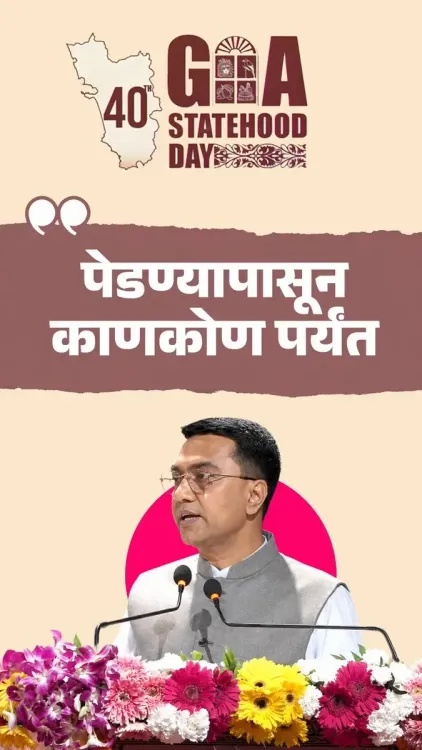
CM Sawant Hails Double Engine Sarkar on Goa Statehood Day
Synopsis
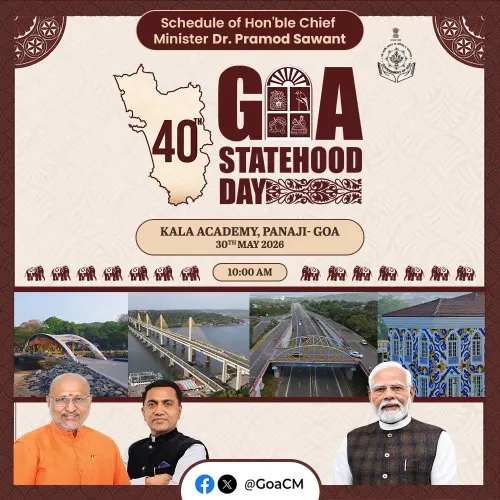
On Goa Statehood Day, 30 May 2026, Chief Minister Pramod Sawant credited PM Modi's Double Engine Sarkar for speeding up infrastructure, education, and healthcare projects in Goa, reinforcing the BJP's central-state alignment narrative on the state's 39th statehood anniversary.
Key Takeaways
Goa Statehood Day is observed on 30 May annually, marking the state's transition from Union Territory to full statehood in 1987 .
CM Pramod Sawant attributed accelerated development in infrastructure, education, and healthcare to the BJP's 'Double Engine Sarkar' model.
The Double Engine Sarkar concept, active since 2014 , emphasises policy coordination between the BJP-led Centre and BJP-governed states.
Goa has been governed by the BJP since 2017 , enabling alignment with central schemes such as Ayushman Bharat and PM Gati Shakti .
The messaging follows an established BJP communication pattern used on statehood and foundation days across multiple states.
Rollout of centrally sponsored projects in Goa's annual budget will be the next key indicator of Double Engine delivery on the ground.
Goa Chief Minister Pramod Sawant on Saturday, 30 May 2026, marked Goa Statehood Day by crediting the BJP's 'Double Engine Sarkar' model for accelerating infrastructure, education, and healthcare development projects across the state under the leadership of Prime Minister Narendra Modi.
Context
Goa observes its statehood anniversary on 30 May each year, marking the day in 1987 when the state attained full statehood under the Constitution (Fifty-sixth Amendment) Act, having previously been a Union Territory. The occasion has become a regular platform for the state government to review and showcase developmental milestones. CM Sawant, who has led the state since 2019, used the anniversary to reaffirm the alignment between the state and central governments.
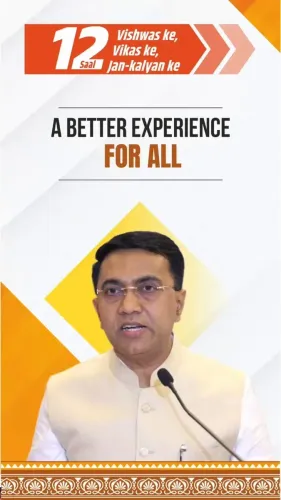
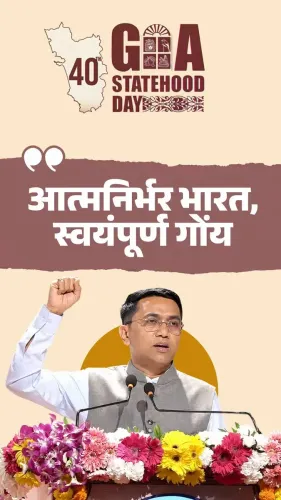
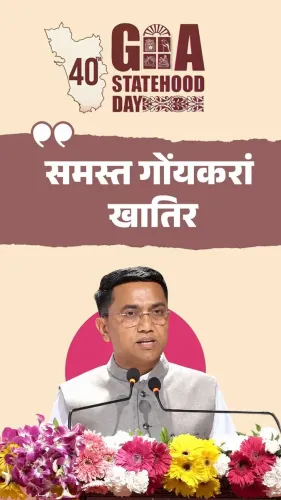
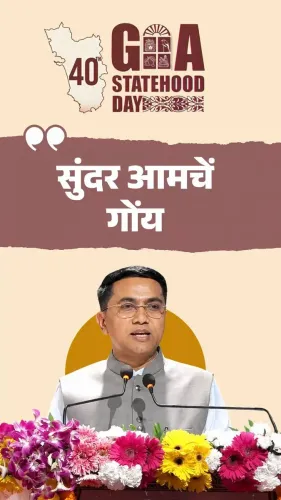
In his post on X, Sawant wrote: 'Under the leadership of Hon'ble Prime Minister Shri Narendra Modi ji the Double Engine Sarkar has accelerated numerous infrastructure, education, and healthcare development projects across Goa.' The message was accompanied by a video, underscoring the government's intent to communicate development outcomes to a wider audience on this symbolic date.
Policy Backdrop
The 'Double Engine Sarkar' framing was introduced by the Bharatiya Janata Party following its 2014 national election victory to highlight the policy and administrative coordination possible when the same party governs at both the Centre and in a state. The concept argues that aligned governance removes friction in fund flows, project approvals, and scheme implementation. Goa has been a BJP-governed state since 2017, enabling this alignment at both levels.
Central schemes such as Ayushman Bharat in healthcare and the National Education Policy 2020 provided overarching frameworks that the Goa government adopted for its own sectoral programmes. Infrastructure coordination was further strengthened when the state aligned its development plans with the PM Gati Shakti national master plan in 2019, targeting multimodal connectivity and logistics improvements.
Stakeholders and Impact
The three sectors cited — infrastructure, education, and healthcare — directly affect the daily lives of Goa's roughly 15 lakh residents. Students and parents stand to benefit from school modernisation and higher-education investments linked to central policy frameworks, while patients across the state have access to expanded coverage under centrally sponsored health schemes. Infrastructure upgrades, spanning roads, ports, and urban amenities, also have downstream effects on Goa's tourism-dependent economy.
The BJP's communication strategy on such occasions is consistent across states where it holds power at both levels — including Uttar Pradesh, Gujarat, and Madhya Pradesh — where statehood or foundation days are used to reinforce the narrative of central-state synergy. For Goa, a small state with significant central fund dependence relative to its size, the messaging resonates with voters who track infrastructure delivery and public service quality.
What's Next
Attention will now turn to the rollout status of centrally sponsored projects listed in Goa's annual budget and whether any new memoranda of understanding or project announcements are made at upcoming central review meetings. Observers will also watch for project completion timelines in infrastructure and health infrastructure to assess whether the 'Double Engine' coordination translates into on-ground delivery. The next major accountability moment is likely to be the state's budget presentation and any central-state review scheduled ahead of the next statehood anniversary.
Point of View
A pattern the party has consistently deployed across BJP-governed states since 2014 to consolidate both central and state electoral credit. For Goa, a small state heavily reliant on central transfers, the messaging is strategically rational: it positions the state government as an effective conduit for Modi-era schemes. The real test, however, will be whether specific project completions in infrastructure, education, and healthcare are cited in subsequent accountability forums, or whether the anniversary rhetoric remains at the level of broad sectoral claims.
NationPress
13 Sept 2026
Frequently Asked Questions
When is Goa Statehood Day and why is it celebrated?
Goa Statehood Day is celebrated on 30 May every year to mark the day in 1987 when Goa was granted full statehood under the Constitution (Fifty-sixth Amendment) Act, having previously been a Union Territory after its liberation from Portuguese rule in 1961.
What is the Double Engine Sarkar model in Indian politics?
The 'Double Engine Sarkar' is a BJP governance concept introduced after 2014 that argues for faster development when the same party governs both at the Centre and in a state, enabling smoother fund flows, faster project approvals, and coordinated implementation of central schemes.
What development sectors did CM Sawant highlight on Goa Statehood Day 2026?
CM Pramod Sawant highlighted progress in three sectors — infrastructure, education, and healthcare — crediting the Double Engine Sarkar under PM Modi for accelerating projects across Goa .
Which central schemes has Goa adopted under the BJP government?
Goa has adopted central frameworks including Ayushman Bharat for healthcare coverage, the National Education Policy 2020 for education reforms, and aligned its infrastructure planning with the PM Gati Shakti national master plan since 2019 .
How long has Pramod Sawant been Chief Minister of Goa?
Pramod Sawant has served as Chief Minister of Goa since 2019 , when he assumed office following the death of former CM Manohar Parrikar, and was re-elected to the post after the 2022 Goa assembly elections.