Maharashtra MLC election results: MVA sweeps 3 Graduate seats, Mahayuti wins both Teacher constituencies

Synopsis
Maharashtra's MLC elections delivered a split verdict — MVA swept all three Graduate seats, including BJP's Nagpur stronghold, while Mahayuti held both Teacher constituencies. A bizarre anomaly of 9,000 invalid BJP votes in Nagpur, where supporters marked '2' instead of '1', may have swung the result, and the question of whether it was tactical or accidental is now haunting the ruling coalition.
Key Takeaways
MVA swept all three Graduate constituencies — Nagpur , Pune , and Chhatrapati Sambhajinagar — in the Maharashtra MLC elections declared on Thursday .
Mahayuti won both Teacher constituencies in Pune and Amravati .
Congress candidate Abhijit Wanjari defeated BJP's Sudhakar Kohale by 3,271 votes in the Nagpur Graduate seat after a 45-hour count.
Around 9,000 votes for Kohale were declared invalid because voters marked '2' instead of '1' as their primary preference.
NCP(SP) 's Dr Pratapsinh Patil ended an 18-year BJP-aligned dominance in the Chhatrapati Sambhajinagar Graduate seat by over 13,000 votes .
BJP 's Kaustubh Gawade , aged 30 , reclaimed the Pune Teacher seat for the party after an 18-year gap.
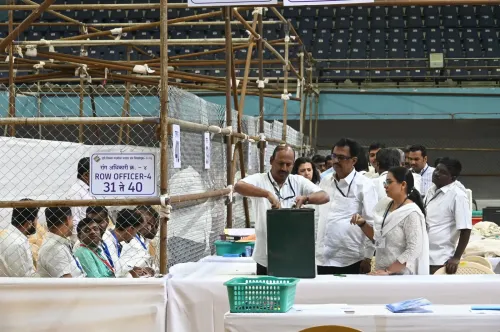
The opposition Maha Vikas Aghadi (MVA) and the ruling Mahayuti coalition have shared a divided mandate in the Maharashtra Legislative Council (MLC) elections, with results declared early Thursday morning after an exhausting 45-hour counting process. The MVA swept all three Graduate constituencies — Nagpur, Pune, and Chhatrapati Sambhajinagar — while the Mahayuti alliance held firm in both Teacher constituencies, winning in Pune and Amravati.
MVA Dominates Graduate Constituencies
Congress candidate and sitting MLC Abhijit Wanjari successfully defended the Nagpur Graduate seat, defeating Bharatiya Janata Party (BJP) rival Sudhakar Kohale by a margin of 3,271 votes. Wanjari secured 67,231 votes against Kohale's 63,960, with the result hinging on a decisive shift during second-preference vote counting. Independent candidate Nitesh Karale, who polled 25,909 votes, played a pivotal role in the elimination and preference-transfer stages.
In the Pune Graduate seat, Nationalist Congress Party (Sharadchandra Pawar faction) candidate Harshada Deshmukh-Jadhav defeated BJP's Smita Jadhav by 9,928 votes after a gruelling 44-round elimination process. The Chhatrapati Sambhajinagar Graduate seat went to NCP(SP) candidate Dr Pratapsinh Patil, who ended an 18-year dominance held by sitting MLA Satish Chavan of the Ajit Pawar-led NCP camp, winning by a margin of over 13,000 votes.
Mahayuti Holds Teacher Seats
In the Pune Teacher seat, BJP's Kaustubh Gawade, aged 30, reclaimed the constituency for his party after an 18-year gap, defeating Shinde Sena-backed Independent candidate Sachin Sane. Gawade emerged as one of the youngest victors across these polls. In the Amravati Teacher seat, Shiv Sena (Eknath Shinde faction) candidate Kiran Sarnaik prevailed after a 32-hour vote-counting marathon, overcoming MVA-backed Professor Aditi Pohare in the final elimination rounds to retain the seat for the alliance.
The Nagpur Anomaly: 9,000 Invalid Votes
A significant counting irregularity in the Nagpur Graduate seat drew widespread attention. Approximately 9,000 votes cast for Sudhakar Kohale were declared invalid because voters marked the numeral '2' instead of '1' as their primary preference — a clerical error that, according to analysts, may have been decisive. Had these votes carried the correct first preference, Kohale would reportedly have cleared the winning margin.
Kohale, reacting to his defeat, said: 'Our senior leadership will analyse this result in detail. Around 9,000 votes meant for the BJP were rendered invalid, which pushed us back and ultimately caused our defeat. To those BJP voters who wrote '2' instead of '1' against my preference column, I request that casting votes in this manner is not healthy for democracy.' Political observers are divided on whether the mass error reflected deliberate tactical voting or widespread voter confusion over the preferential ballot system.
Political Significance and Analyst Readings
The defeat in Nagpur is particularly stinging for the ruling alliance, given that the city is considered a BJP stronghold. Chief Minister Devendra Fadnavis, Union Minister Nitin Gadkari, and BJP State President Chandrashekhar Bawankule all campaigned aggressively in the final stretch, yet the party fell short. This also marks the BJP's successive defeat in the Nagpur Graduate seat following its 2020 state council loss.
Political analysts note a clear cleavage in voter preference: graduate-level constituencies appeared to lean toward the opposition on issues of employment, higher education, and economic concerns, while teacher constituencies gravitated toward the stability and local representation offered by the ruling Mahayuti coalition. This comes amid broader questions about the coalition's political momentum following its 2024 Maharashtra Assembly victory. The split verdict suggests that even within professional voter segments, the political landscape in Maharashtra remains deeply contested and neither side can claim a wholesale mandate.
Point of View
The BJP's home turf with Fadnavis, Gadkari, and Bawankule all on the campaign trail — signals that the ruling coalition's 2024 assembly mandate has not translated into durable professional-class loyalty. The 9,000 invalid votes in Nagpur deserve scrutiny beyond internal blame: if the preferential ballot system is generating this scale of spoilage, the Election Commission has a voter education failure on its hands, not just a party one. Meanwhile, the MVA's clean sweep in Graduate seats hands it a credible counter-narrative heading into future electoral cycles, even as Mahayuti's grip on Teacher constituencies signals that its ground-level institutional networks remain intact.
NationPress
29 Oct 2026
Frequently Asked Questions
What were the results of the Maharashtra MLC elections?
The MVA won all three Graduate constituencies — Nagpur, Pune, and Chhatrapati Sambhajinagar — while the Mahayuti coalition secured both Teacher constituencies in Pune and Amravati. Results were declared early Thursday after 45 hours of counting.
Who won the Nagpur Graduate MLC seat?
Congress candidate Abhijit Wanjari won the Nagpur Graduate seat with 67,231 votes, defeating BJP's Sudhakar Kohale (63,960 votes) by a margin of 3,271. The result was settled during the second-preference vote transfer stage.
Why were 9,000 votes in Nagpur declared invalid?
Around 9,000 votes intended for BJP candidate Sudhakar Kohale were rendered invalid because voters marked '2' instead of '1' as their primary preference on the ballot. Under the preferential voting system, only a correctly marked first preference counts as a primary vote.
Who won the Pune Teacher and Amravati Teacher MLC seats?
BJP's Kaustubh Gawade, aged 30, won the Pune Teacher seat, reclaiming it for the party after 18 years. Shiv Sena (Eknath Shinde faction) candidate Kiran Sarnaik won the Amravati Teacher seat after a 32-hour counting process.
What do these results mean for Maharashtra politics?
The split verdict suggests graduate voters leaned toward the opposition on concerns over employment and education, while teacher constituencies backed the ruling Mahayuti coalition. Political analysts view the Graduate sweep — especially in BJP stronghold Nagpur — as a significant symbolic setback for the ruling alliance.