Maharashtra MLC polls 2026: Voting on for 5 seats, Mahayuti and MVA both claim victory
Synopsis
Both Mahayuti and MVA are claiming all five Maharashtra MLC seats even as voting is still ongoing — but the real story is in Nagpur, where Congress has flagged 8,744 duplicate voter entries and alleged that over 20,000 registrations were linked to a single mobile number, setting up a potential post-result legal flashpoint.
Key Takeaways
Polling for 5 Maharashtra MLC seats (3 graduate, 2 teacher constituencies) is underway on 23 October , with 182 candidates across 2,419 polling stations .
Counting is scheduled for 27 October ; polling runs from 8 am to 4 pm .
Union MoS Murlidhar Mohol and Education Minister Chandrakant Patil predicted a clean sweep for Mahayuti ; Congress leader Vijay Wadettiwar claimed all five for MVA .
Congress alleged 8,744 duplicate voter entries in the Nagpur Graduate constituency and claimed ~ 20,000–22,000 registrations were linked to a single mobile number.
Voters with duplicate listings were required to submit a written declaration before being allowed to vote.
The Pune Graduate constituency has the largest voter base (~ 3.88 lakh ); Amravati Teacher has the smallest (~ 35,000 ).
Polling for five Maharashtra Legislative Council (MLC) seats — spanning three graduate and two teacher constituencies — is underway on Friday, 23 October, with 182 candidates contesting across 2,419 polling stations statewide. Both the ruling Mahayuti alliance and the opposition Maha Vikas Aghadi (MVA) have claimed they will sweep all five seats, even as allegations of voter roll irregularities cast a shadow over the exercise.
Constituencies and Voter Turnout Base
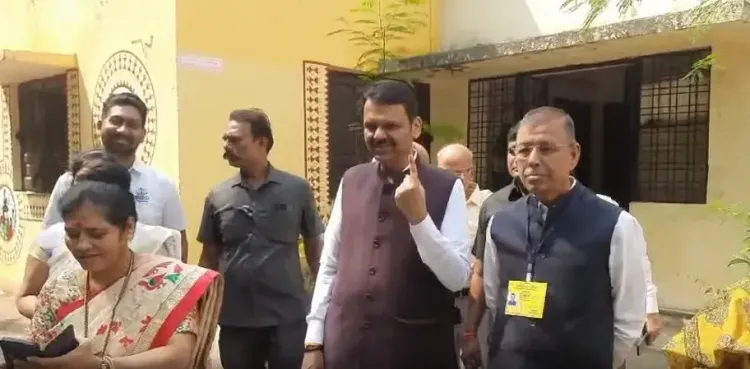
Polling, which began at 8 am and is scheduled to close at 4 pm, is being conducted in the Pune Teachers and Pune Graduate constituencies, Amravati Teacher Constituency, and the Nagpur and Chhatrapati Sambhajinagar Graduate Constituencies. Rebel candidates have complicated the contest for both alliances in several of these seats.
The Pune Graduate constituency records the largest voter base at approximately 3.88 lakh voters, while the Amravati Teacher constituency has the smallest, with roughly 35,000 voters. Votes will be counted on 27 October.
Mahayuti Confident of a Clean Sweep
Union Minister of State Murlidhar Mohol cast his vote at Dindayal Upadhyaya School in Kothrud, Pune, and expressed firm confidence in the coalition's prospects. He said graduate and teacher voters are 'educated and analytical' and assess national progress, global developments, and the pace of state development under Prime Minister Narendra Modi and the state's Chief Minister and Deputy Chief Ministers before voting.
Mohol specifically backed candidates Smita Jadhav and Kaustubh Gawde, asserting that alliance-supporting voters would stand firmly behind the coalition. Higher and Technical Education Minister Chandrakant Patil also declared that Mahayuti would win all five seats.
MVA Levels Serious Voter Roll Allegations
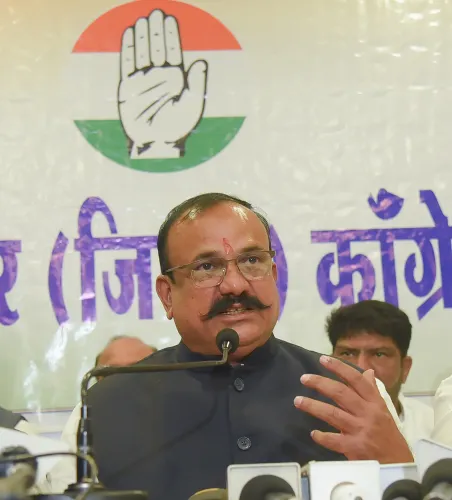
Congress Legislature Party leader Vijay Wadettiwar countered by predicting MVA victories across all five seats — including the Nagpur Graduate, both Pune seats, Chhatrapati Sambhajinagar, and Amravati. Wadettiwar alleged that flawed voter lists represent a critical integrity issue, and claimed the Bharatiya Janata Party (BJP) resorts to manipulation of voter rolls because it cannot win elections fairly.
The Nagpur Graduate constituency saw particular friction. Congress candidate Abhijit Wanjari and party leaders flagged concerns over 8,744 duplicate voter entries spread across multiple polling booths. Congress state chief spokesperson Atul Londhe alleged at a press conference that approximately 20,000 to 22,000 voter registrations were processed using a single mobile number — 5432154321 — and questioned the transparency of the verification process.
A formal letter demanding an inquiry was submitted to the divisional commissioner by Congress leader Prafulla Goodhe. Following the complaints, election authorities at affected booths required voters with duplicate listings to submit a short written declaration confirming they were voting at only one designated location.
Voter Identification and Process
To ensure ballot validity, voters were required to present one of several approved identity documents, including Aadhaar cards, driving licences, PAN cards, Indian passports, government or semi-government service ID cards, MP/MLA/MLC official IDs, educational institution service IDs, or original university degree and diploma certificates.
What Happens Next
With counting set for 27 October, the results of these five seats are being watched as an early indicator of ground-level sentiment ahead of the next state assembly elections. The voter roll controversy in Nagpur, in particular, could become the basis for formal legal challenges if the margin in that seat is narrow.
Point of View
But the Nagpur voter roll allegations deserve scrutiny beyond the usual partisan noise. If Congress's claim — that over 20,000 registrations were processed through a single mobile number — is substantiated, it points to a systemic failure in the Election Commission's verification process, not merely a local irregularity. These are graduate and teacher constituency elections, where the voter base is small and educated; a few thousand manipulated entries could swing a seat. The real test comes after 27 October, when the losing side in a close contest will have documented grounds to challenge results in court.
NationPress
23 Oct 2026
Frequently Asked Questions
Which seats are up for election in the Maharashtra MLC polls today?
Five Maharashtra Legislative Council seats are being contested: Pune Teachers, Pune Graduate, Amravati Teacher, Nagpur Graduate, and Chhatrapati Sambhajinagar Graduate constituencies. Polling is taking place on 23 October 2026, with counting scheduled for 27 October.
What are the voter roll allegations in the Nagpur Graduate constituency?
Congress candidate Abhijit Wanjari and party leaders flagged 8,744 duplicate voter entries across multiple polling booths. Congress spokesperson Atul Londhe further alleged that approximately 20,000 to 22,000 registrations were processed using a single mobile number (5432154321), and a formal complaint was submitted to the divisional commissioner.
When will the Maharashtra MLC election results be declared?
Counting for all five Maharashtra MLC seats is scheduled for 27 October 2026.
Who are some of the key candidates in the Maharashtra MLC elections?
Union Minister of State Murlidhar Mohol specifically backed Mahayuti candidates Smita Jadhav and Kaustubh Gawde. On the MVA side, Congress candidate Abhijit Wanjari is contesting the Nagpur Graduate constituency.
How large are the voter bases in the five MLC constituencies?
The Pune Graduate constituency has the largest voter base at approximately 3.88 lakh voters, while the Amravati Teacher constituency is the smallest with roughly 35,000 voters. In total, 182 candidates are contesting across 2,419 polling stations.