ECI schedules Maharashtra Legislative Council polls for 17 seats; voting on June 18
Synopsis
The ECI has finally scheduled Maharashtra's long-pending MLC elections — 17 Local Authorities' seats vacant in some cases since January 2022 go to polls on June 18. With Mahayuti dominant across civic bodies and 10 new members already sworn in, a clean sweep could hand the Fadnavis government full legislative control of the Council.
Key Takeaways
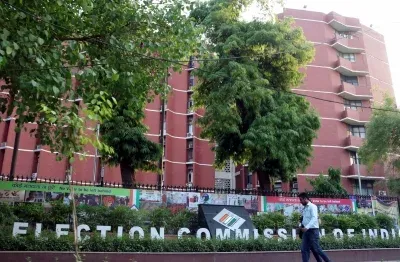
The Election Commission of India (ECI) announced biennial elections for 17 Maharashtra Legislative Council seats on 18 May 2025 .
Polling is scheduled on June 18 ; vote counting on June 22 ; the full cycle concludes on June 25 .
Vacancies in several constituencies date back to January 2022 , with elections delayed due to unmet 75 per cent local body functionality and elector thresholds.
The Nagpur seat fell vacant on November 23, 2024 , after BJP MLC Chandrashekhar Bawankule resigned to contest and win the Assembly election from Kamthi .
The Mahayuti alliance holds a structural advantage given its dominance in recent local body elections across key constituencies.
The Model Code of Conduct (MCC) is in force immediately across all 17 constituencies until June 25 .
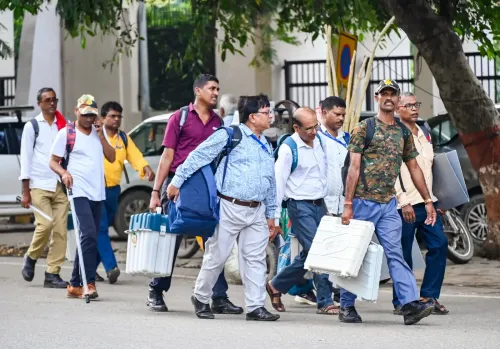
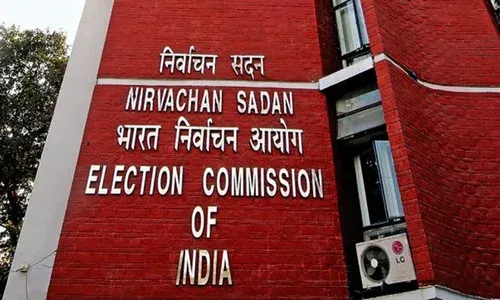
The Election Commission of India (ECI) on Monday, 18 May 2025, announced the schedule for long-delayed biennial elections to the Maharashtra Legislative Council (MLC) from 17 Local Authorities' Constituencies. Polling is set for June 18, with vote counting on June 22, bringing an end to vacancies that have accumulated since early 2022.
Key Dates and Electoral Timeline
The ECI has outlined a tight but structured timeline for the entire process. The official notification will be issued on May 25, with the last date for filing nominations on June 1. Scrutiny of nominations is scheduled for June 2, and the last date for withdrawal of candidatures is June 4. The full election cycle concludes on June 25, by which date the Model Code of Conduct (MCC) will also stand lifted.
The 17 Constituencies and Vacant Seats
The constituencies going to polls include Solapur, Ahmednagar, Thane, Jalgaon, Sangli-cum-Satara, Nanded, Yavatmal, Pune, Bhandara-cum-Gondia, Raigad-cum-Ratnagiri-cum-Sindhudurg, Nashik, Wardha-cum-Chandrapur-cum-Gadchiroli, Amravati, Osmanabad-cum-Latur-cum-Beed, Parbhani-cum-Hingoli, and Aurangabad-cum-Jalna. Several members in these constituencies retired as far back as January 2022, leaving their seats unrepresented for over three years.
The 17th seat, from the Nagpur Local Authorities' Constituency, fell vacant on November 23, 2024, after Bharatiya Janata Party (BJP) legislator Chandrashekhar Bawankule resigned to contest the state Assembly elections. Bawankule, who was due to retire on January 1, 2028, subsequently won from the Kamthi constituency.
Why Elections Were Delayed
Under standard ECI guidelines, elections for a Local Authorities' constituency can only be held if at least 75 per cent of the local bodies within that constituency are actively functioning and at least 75 per cent of the registered electors within those bodies are in position. Widespread delays in holding local body elections — covering municipal corporations, municipal councils, and zilla parishads — across Maharashtra meant these thresholds were not met for an extended period.
The Chief Electoral Officer (CEO) of Maharashtra recently informed the Commission that both the functionality and elector criteria have now been fulfilled across all 17 affected constituencies, clearing the path for elections to resume. The MCC has come into force with immediate effect in all concerned constituencies, restricting fresh policy announcements, administrative transfers, and major government advertisements in the polling zones until the cycle concludes on June 25.
Political Landscape: Mahayuti Holds the Edge
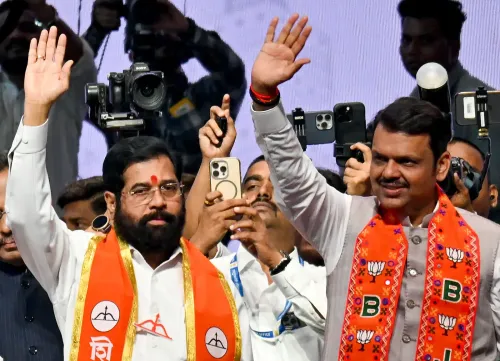
The Mahayuti alliance — comprising the BJP, Eknath Shinde's Shiv Sena, and Ajit Pawar's Nationalist Congress Party (NCP) — is widely expected to dominate these polls, given its sweeping performance in recent local self-government elections. Major hubs including Pune, Thane, Nashik, Sangli-Satara, and Yavatmal are currently dominated by ruling alliance councillors, who form the electorate for these MLC seats.
The BJP is banking on its consolidated control of civic bodies like Pune and Solapur to claim a significant share of the 17 seats. Shiv Sena, backed by a strong showing in the Thane Municipal Corporation and parts of the Mumbai Metropolitan Region, is reportedly pushing for seats in regional strongholds such as Thane-Palghar and Raigad-Ratnagiri-Sindhudurg.
Opposition MVA Faces an Uphill Battle
For the Maha Vikas Aghadi (MVA) — comprising the Indian National Congress (Congress), Uddhav Thackeray's Shiv Sena (UBT), and Sharad Pawar's NCP (SP) — the terrain is challenging. Unlike Assembly-elected MLC seats, where proportional representation tracks MLA numbers, Local Authorities' seats operate on a winner-takes-all basis determined by the absolute count of local councillors.
'The reality of the local bodies' tier is that your strength on paper mirrors your strength on the ground,' a political analyst noted. 'Since the MVA took a severe beating in the municipal corporation elections across the state, their capability to defend historical strongholds in places like Nashik, Jalgaon, or Kolhapur will be tested to the limit.' Pockets of resistance remain — Kolhapur, where Congress retains a foothold through its cooperative network, and parts of Marathwada, where Shiv Sena (UBT) maintains an active cadre base.
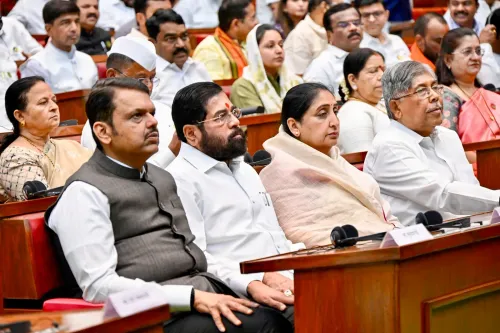
With 10 newly sworn-in members — including six from the BJP — the ruling alliance is reportedly on the cusp of an absolute majority in the Council. A strong showing across these 17 seats could hand Chief Minister Devendra Fadnavis-led Mahayuti complete legislative dominance, easing passage of infrastructure approvals, industrial policies, and administrative reforms in the months ahead.
Point of View
Leaving 17 constituencies unrepresented in the upper house for periods ranging from one to three-plus years. The ECI's 75 per cent threshold rule, designed as a safeguard, effectively became a mechanism for prolonged disenfranchisement when state governments allowed civic body terms to lapse without renewal. Now that elections are finally called, the political arithmetic overwhelmingly favours Mahayuti — but the deeper question is whether the Council, once reconstituted, will function as a genuine check on the lower house or simply rubber-stamp a government with unchallenged legislative numbers.
NationPress
7 Oct 2026
Frequently Asked Questions
Why were the Maharashtra Legislative Council elections delayed for so long?
Elections were delayed because the ECI requires at least 75 per cent of local bodies within each constituency to be actively functioning and 75 per cent of electors to be in position before polling can be held. Widespread delays in conducting local body elections — for municipal corporations, councils, and zilla parishads — across Maharashtra meant these thresholds were not met until recently.
When is the voting for the 17 Maharashtra MLC seats?
Voting is scheduled for June 18, 2025, with counting of votes on June 22. The full election cycle, including the lifting of the Model Code of Conduct, concludes on June 25.
Why is the Nagpur MLC seat also going to polls?
The Nagpur Local Authorities' Constituency seat fell vacant on November 23, 2024, after BJP legislator Chandrashekhar Bawankule resigned to contest the Maharashtra Assembly elections. He won from the Kamthi constituency; his MLC term was originally due to end on January 1, 2028.
Who are the voters in these Maharashtra Legislative Council elections?
Unlike direct elections, these MLC seats are elected by local body councillors — members of municipal corporations, municipal councils, and zilla parishads — within each constituency, not by the general public.
What is the political significance of these 17 MLC seats?
Winning the bulk of these seats could give the Mahayuti alliance — comprising BJP, Shiv Sena, and NCP — an absolute majority in the Maharashtra Legislative Council, enabling the Devendra Fadnavis government to pass legislation without opposition resistance. The MVA faces a structural disadvantage as it lost control of most civic bodies in recent local elections.