CM Sawant Felicitates Rural Homestay and Waste Management Champions in Panaji
Synopsis
Goa CM Pramod Sawant felicitated participants of a first-of-its-kind Rural Accelerator Program on Homestay Tourism and Waste Management at Kala Academy, Panaji, backed by Airbnb, FIDR, and GLF, targeting rural entrepreneurs and hinterland communities across Goa.
Key Takeaways
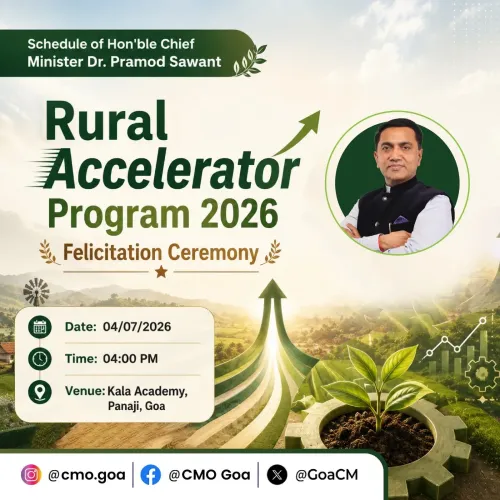
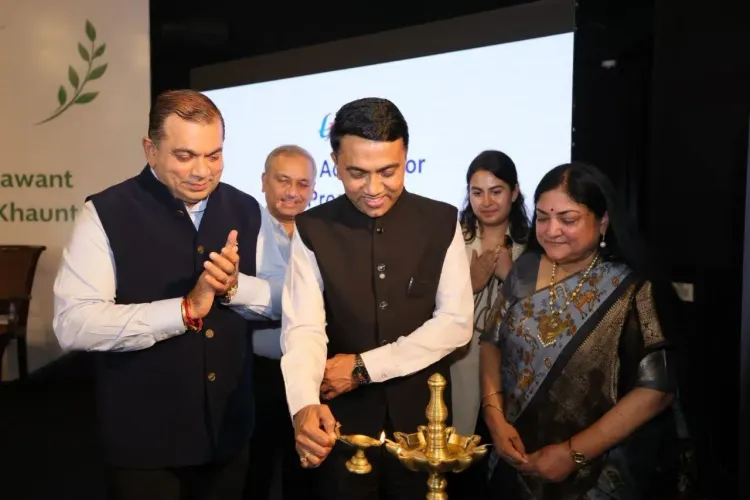
Goa CM Pramod Sawant attended and felicitated participants of the Rural Accelerator Program on Homestay Tourism and Waste Management at Kala Academy, Panaji on 4 July 2026 .
Airbnb , in partnership with FIDR and GLF , supported the first-of-its-kind initiative focused on Goa 's hinterland regions.
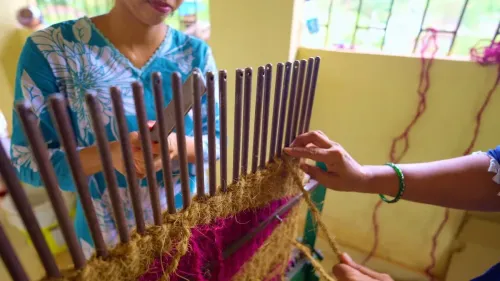
The programme delivers skill development, mentorship, and grant support to rural homestay operators, entrepreneurs, and waste management champions.
IT and Tourism Minister Rohan Khaunte was present at the felicitation event alongside other dignitaries.
The initiative aligns with Goa 's stated goal of becoming a global model for responsible tourism and rural entrepreneurship.
Scaling to additional talukas and new state tourism incentives are anticipated in upcoming budget sessions.
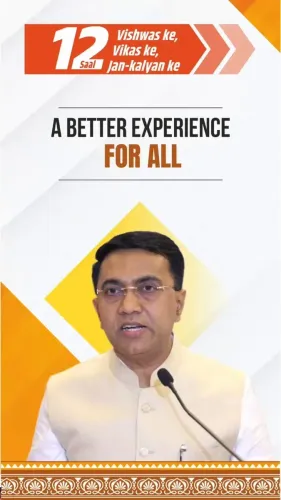
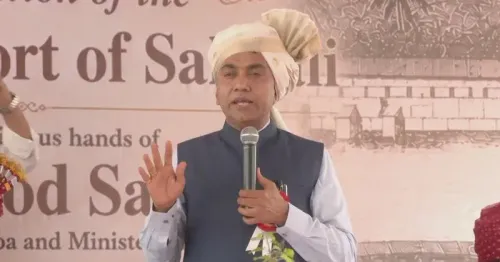
Goa Chief Minister Pramod Sawant on Saturday, 4 July 2026, attended and felicitated participants of the Rural Accelerator Program on Homestay Tourism and Waste Management at Kala Academy, Panaji, marking a first-of-its-kind initiative backed by global hospitality platform Airbnb in partnership with state authorities.
Context
IT and Tourism Minister Rohan Khaunte and other dignitaries joined Chief Minister Sawant at the event, which brought together rural entrepreneurs, homestay operators, tourism innovators, and waste management champions from across Goa, with a particular focus on hinterland regions. The programme was delivered in collaboration with organisations FIDR and GLF, alongside Airbnb. Sawant described the initiative as 'empowering rural entrepreneurs' and contributing to 'a cleaner, greener, self-reliant, and sustainable Goa.'
The event at Kala Academy — Panaji's prominent cultural venue — served as a platform to recognise participants who completed training in skill development, mentorship, and grant support under the accelerator framework.
Policy Backdrop
Goa's push toward community-based and homestay tourism has been a stated policy priority since the mid-2010s, with the state seeking to channel tourist footfall beyond its coastal belt into rural and interior talukas. These efforts have run parallel to the national Swachh Bharat Mission, launched in 2014, which linked waste management targets with local tourism promotion at the panchayat level.
Across India, multiple states have entered public-private partnerships with tourism platforms to deliver structured skill training and direct grant support to rural communities. The Rural Accelerator Program represents Goa's entry into this model, aligning state tourism policy with both livelihood generation and environmental responsibility in a single programmatic framework.
Stakeholders and Impact
The programme's primary beneficiaries are rural homestay operators and entrepreneurs from Goa's hinterland regions — communities that have historically received less tourism investment than the state's coastal zones. By combining skill development with mentorship and grant support, the initiative aims to build sustainable, community-led livelihoods rather than dependence on seasonal coastal tourism alone.
Airbnb's involvement brings the global platform's experience in community homestay training to a state-level context, while FIDR and GLF contribute on-ground implementation capacity. Waste management champions recognised at the event signal the programme's dual mandate: economic empowerment alongside responsible environmental practice — both central to Goa's positioning as a tourism destination.
What's Next
Chief Minister Sawant framed the programme as part of Goa's broader ambition to become 'a global model for responsible tourism and rural entrepreneurship.' This signals potential scaling of the accelerator format to additional talukas and deeper integration with state tourism policy in upcoming budget sessions.
Observers will watch whether Goa's next budget introduces dedicated incentives for rural homestay operators, and whether the Airbnb-state partnership expands its geographic footprint or adds new thematic tracks such as agri-tourism or cultural heritage conservation.
Point of View
The government signals intent to institutionalise community tourism rather than leave it to ad hoc private enterprise. The dual focus on waste management alongside homestay development is politically astute: it ties livelihood gains to environmental responsibility, addressing growing concerns about Goa's ecological carrying capacity. If the model scales, it could serve as a replicable template for other small Indian states seeking to extract more equitable value from their tourism sectors.
NationPress
3 Oct 2026
Frequently Asked Questions
What is the Rural Accelerator Program on Homestay Tourism in Goa?
It is a first-of-its-kind initiative supported by Airbnb, FIDR, and GLF that provides skill development, mentorship, and grant support to rural entrepreneurs, homestay operators, and waste management champions across Goa, particularly in hinterland regions.
Who attended the Rural Accelerator Program event at Kala Academy Panaji?
Goa Chief Minister Pramod Sawant and IT and Tourism Minister Rohan Khaunte attended the felicitation event at Kala Academy, Panaji, on 4 July 2026, along with other dignitaries.
What is Airbnb's role in Goa's rural tourism programme?
Airbnb is a key partner in the Rural Accelerator Program, supporting training and capacity-building for homestay operators and rural entrepreneurs in Goa's hinterland areas.
How does Goa plan to promote responsible tourism?
Goa is pursuing community-led development, skill training, and waste management initiatives through public-private partnerships, with the Rural Accelerator Program being a flagship example of this approach.
What is Kala Academy in Panaji?
Kala Academy is a prominent cultural complex in Panaji, Goa's capital city, frequently used as a venue for official state events and cultural programmes.