Goa CM Sawant to Attend Rural Accelerator 2026 Felicitation
Synopsis
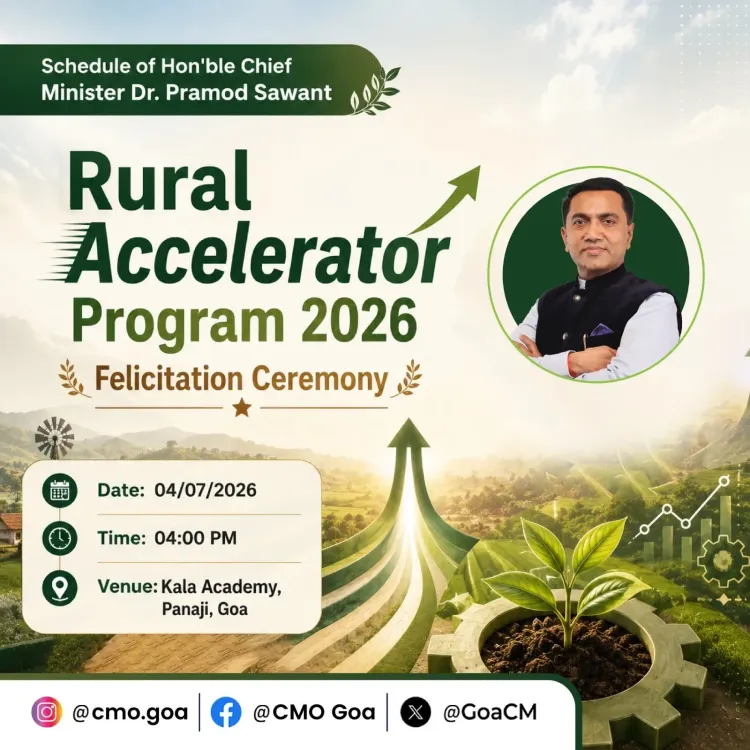
Chief Minister Dr. Pramod Sawant will attend the Rural Accelerator Program 2026 Felicitation Ceremony at Kala Academy, Panaji, on 4 July 2026, honouring rural entrepreneurs and innovators advancing Goa's sustainable development goals.
Key Takeaways
Pramod Sawant will attend the Rural Accelerator Program 2026 Felicitation Ceremony on 4 July 2026 .
The event is hosted at Kala Academy , a state-owned cultural complex in Panaji , Goa's capital.
The ceremony will honour rural entrepreneurs and innovators contributing to Goa's sustainable development.
The program aligns with Goa's Startup Policy of 2017 and broader national priorities on rural self-reliance.
Goa's administration has pursued rural entrepreneurship as a strategy to diversify the economy beyond tourism and mining .
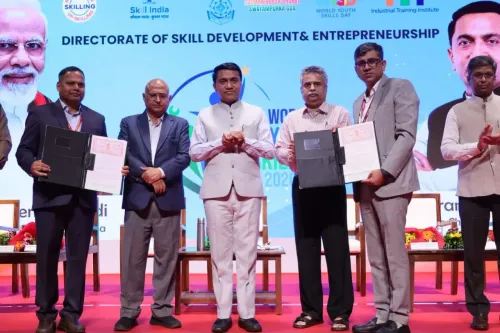
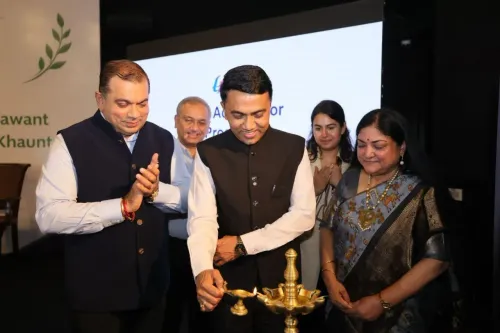
The Chief Minister's Office of Goa announced on 3 July 2026 that Chief Minister Dr. Pramod Sawant will attend the Rural Accelerator Program 2026 Felicitation Ceremony at Kala Academy, Panaji, on 4 July 2026. The event will honour rural entrepreneurs and innovators who have contributed to the state's sustainable development.
Context
The felicitation ceremony is scheduled at Kala Academy, the state-owned cultural complex in Panaji that regularly serves as the venue for major government functions in Goa's capital. Chief Minister Dr. Pramod Sawant, who has led the BJP government in Goa since 2019, is expected to personally recognise the achievements of participants who have advanced rural enterprise and innovation across the state.
The event underscores the Goa government's continued focus on rural communities as drivers of economic activity beyond the state's dominant tourism and mining sectors. By holding the ceremony at a prominent public venue, the administration signals the importance it places on grassroots entrepreneurship.
Policy Backdrop
Goa's interest in structured support for entrepreneurs dates to its Startup Policy of 2017, which laid the groundwork for institutional backing of innovation and enterprise in the state. The Rural Accelerator Program 2026 fits within this broader arc of policy effort aimed at building a more diversified economic base.
Nationally, programs promoting rural self-reliance and sustainable development have gained prominence since 2014, with state governments aligning their own schemes to complement central priorities. Goa's approach reflects that convergence, directing attention toward innovators in villages and smaller communities who are often outside the reach of mainstream startup ecosystems.
Stakeholders and Impact
The primary beneficiaries of the felicitation are rural entrepreneurs and local innovators whose work has been recognised under the Rural Accelerator Program 2026. Public recognition at an official ceremony attended by the Chief Minister provides these individuals with visibility that can translate into further opportunities, partnerships, and access to government support mechanisms.
For the broader rural economy of Goa, such programs serve as signals of government intent to invest in non-urban growth corridors. Stakeholders including panchayat bodies, self-help groups, agri-entrepreneurs, and rural artisans stand to benefit from the policy attention that events of this nature generate.
What's Next
The 4 July 2026 ceremony is expected to draw attention to the measurable outcomes of the Rural Accelerator Program, including the number of participants supported, sectors represented, and any follow-on commitments from the state administration. Observers will watch for announcements regarding budget allocations or expanded mandates for rural entrepreneurship schemes in the next Goa Legislative Assembly session.
As Goa continues to seek economic diversification, the Rural Accelerator Program's results could inform the design of future iterations of similar initiatives, with implications for how the state balances growth between its coastal urban centres and interior rural regions.
Point of View
Moving beyond the state's traditional dependence on tourism and mining. Chief Minister Sawant's personal attendance at the ceremony is a deliberate political signal — lending executive weight to grassroots innovators at a time when rural economies across India are under the spotlight of both state and central policy. The event also fits a broader pattern of BJP-led state governments staging high-visibility recognition events that tie local schemes to national narratives of self-reliance and sustainable development. Whether the program translates into lasting structural support for rural entrepreneurs will depend on the follow-through in budget allocations and legislative commitments in the months ahead.
NationPress
2 Oct 2026
Frequently Asked Questions
What is the Rural Accelerator Program 2026 in Goa?
The Rural Accelerator Program 2026 is a Goa government initiative that supports and recognises rural entrepreneurs and innovators contributing to the state's sustainable development. The program's felicitation ceremony is scheduled for 4 July 2026 at Kala Academy, Panaji.
Where is the Rural Accelerator Program 2026 Felicitation Ceremony being held?
The ceremony is being held at Kala Academy in Panaji, the capital of Goa. Kala Academy is a state-owned cultural complex that regularly hosts major government and public events.
Who is attending the Rural Accelerator Program 2026 event?
Chief Minister Dr. Pramod Sawant is scheduled to attend the felicitation ceremony on 4 July 2026, as announced by the Chief Minister's Office of Goa.
What is Goa's policy on rural entrepreneurship?
Goa introduced a Startup Policy in 2017 to encourage entrepreneurship and innovation. The state has since pursued rural entrepreneurship programs as part of efforts to diversify its economy beyond tourism and mining.
What is Kala Academy in Panaji?
Kala Academy is a state-owned cultural complex and auditorium located in Panaji, Goa. It is one of the primary venues for official government ceremonies and public cultural events in the state capital.