CM Sawant Chairs Finance Review Meet at Porvorim Mantralaya
Synopsis
Goa Chief Minister Pramod Sawant chaired a Finance Review Meeting at Mantralaya, Porvorim on 13 July 2026, covering fiscal performance, borrowings, CSS implementation, CSR authority, climate resilient funding, and infrastructure projects. Sawant highlighted that Goa avoided Open Market Borrowings in Q1 of FY 2025-26, signalling fiscal discipline.
Key Takeaways
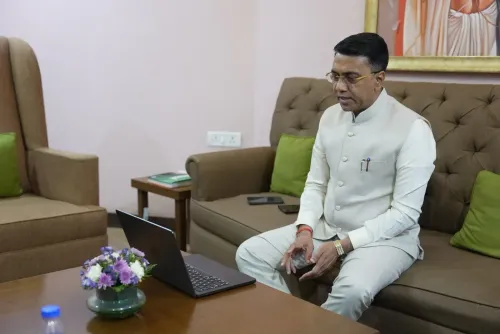
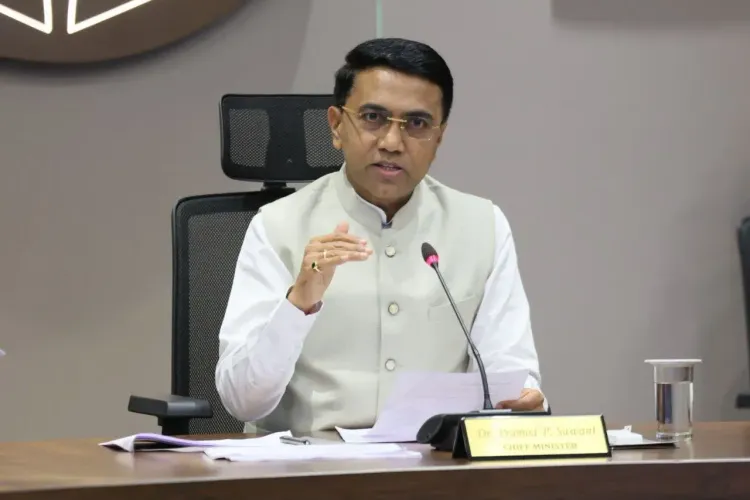
CM Pramod Sawant chaired a Finance Review Meeting at Mantralaya, Porvorim on 13 July 2026 .
Goa recorded zero Open Market Borrowings in the first quarter of FY 2025-26 , which Sawant termed a sign of 'robust fiscal consolidation.' The review covered seven areas including NABARD borrowings, Centrally Sponsored Schemes, Goa State CSR Authority , and Climate Resilient Funding.
Officials were directed to ensure 100% saturation of all Government of India initiatives.
Strengthened inter-departmental coordination and efficient online delivery of public services were among the key directives issued.
Major infrastructure projects of the state government were also brought under review at the meeting.
Goa Chief Minister Pramod Sawant chaired a comprehensive Finance Review Meeting at Mantralaya, Porvorim on Monday, 13 July 2026, bringing together the Chief Secretary, departmental Secretaries, Collectors, and Heads of Departments to assess the state's fiscal health and scheme implementation progress.
Context
The meeting reviewed seven key areas spanning Goa's fiscal performance in FY 2025-26, state borrowings through Open Market and NABARD, implementation of Centrally Sponsored Schemes, the Goa State CSR Authority, Climate Resilient Funding projects, major infrastructure progress, and saturation of Government of India initiatives. CM Sawant noted it was 'encouraging that Goa has not resorted to Open Market Borrowings in the first quarter of the financial year,' describing it as a sign of 'robust fiscal consolidation and prudent financial management.'
Open Market Borrowings are a standard mechanism through which state governments raise funds from financial markets to bridge revenue gaps. Avoiding them in the first quarter signals that Goa entered FY 2025-26 with sufficient liquidity and restrained expenditure, a pattern that aligns with broader post-pandemic debt consolidation efforts seen across Indian states.
Policy Backdrop
The review sits within the framework established by the Fifteenth Finance Commission, which set state borrowing limits and linked performance incentives to fiscal discipline and scheme utilisation. States that demonstrate prudent borrowing behaviour and high CSS saturation rates are better positioned to access additional central grants and infrastructure funding windows.
NABARD, India's apex development bank for rural credit and infrastructure financing, remains a key channel for state-level capital expenditure, particularly for rural infrastructure and agricultural projects. The meeting's inclusion of NABARD borrowings under review indicates Goa is actively monitoring the cost and deployment of all long-term liabilities.
Since 2021, the Government of India has pushed states toward 100% saturation of flagship schemes such as PM Awas Yojana and Jal Jeevan Mission. CM Sawant directed officials to ensure full saturation of all such central initiatives alongside efficient online delivery of public services.
Stakeholders and Impact
The review directly concerns all state government departments and, by extension, Goa's citizens who are beneficiaries of Centrally Sponsored Schemes covering welfare, infrastructure, and rural development. The emphasis on the Goa State CSR Authority and Climate Resilient Funding signals an effort to diversify financing beyond conventional borrowings and leverage private-sector contributions for public good.
Strengthened inter-departmental coordination, as directed by CM Sawant, is intended to prevent siloed functioning that typically delays scheme implementation and leads to under-utilisation of central funds — a recurring challenge for smaller states with limited administrative bandwidth.
What's Next
Officials have been directed to regularly review infrastructure project progress and report on CSS saturation targets in subsequent quarters. Supplementary budget sessions in the Goa Legislative Assembly and periodic CSS utilisation reports will serve as the next formal checkpoints for the state's fiscal trajectory. The direction to ensure 100% online delivery of public services also signals a push toward digital governance benchmarks ahead of the next annual review cycle.
Point of View
Positioning the state as a model of post-pandemic debt discipline within the BJP-governed states narrative. The seven-point review agenda reflects a centralised oversight approach that the Fifteenth Finance Commission framework incentivises — states that demonstrate CSS saturation and borrowing restraint gain leverage in negotiations for additional central grants. The inclusion of Climate Resilient Funding and the CSR Authority in the same review as traditional fiscal metrics indicates a broadening of Goa's financing strategy beyond budgetary channels. Whether inter-departmental coordination directives translate into measurable improvements in scheme delivery will be the real test when Q2 data is presented.
NationPress
12 Oct 2026
Frequently Asked Questions
What was reviewed at the Goa Finance Review Meeting on 13 July 2026?
The meeting reviewed seven areas: Goa's fiscal performance in FY 2025-26, state borrowings via Open Market and NABARD, Centrally Sponsored Schemes implementation, the Goa State CSR Authority, Climate Resilient Funding projects, major infrastructure project progress, and saturation of Government of India initiatives.
Did Goa take any Open Market Borrowings in Q1 of FY 2025-26?
No. CM Pramod Sawant stated at the meeting that Goa had not resorted to Open Market Borrowings in the first quarter of FY 2025-26, describing it as evidence of robust fiscal consolidation and prudent financial management.
What is NABARD and why was it discussed at the Goa finance review?
NABARD is the National Bank for Agriculture and Rural Development, India's apex development bank for rural credit and infrastructure financing. It was reviewed as a key borrowing channel through which the Goa state government funds rural and infrastructure projects.
What are Centrally Sponsored Schemes and what is the 100% saturation target?
Centrally Sponsored Schemes are jointly funded programmes by the central and state governments covering sectors like welfare, infrastructure, and rural development. The Government of India has since 2021 directed states to achieve 100% saturation — meaning full coverage of all eligible beneficiaries — for flagship schemes such as PM Awas Yojana and Jal Jeevan Mission.
Where is Mantralaya Porvorim, and why is it significant?
Mantralaya in Porvorim, North Goa, is the secretariat and administrative headquarters of the Goa state government, where the Chief Minister and senior bureaucrats are based. It is the primary venue for high-level government meetings and policy decisions.