Khattar meets Goa CM Sawant, reviews power and urban schemes
Synopsis
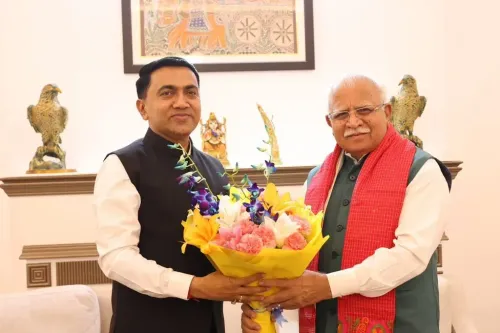
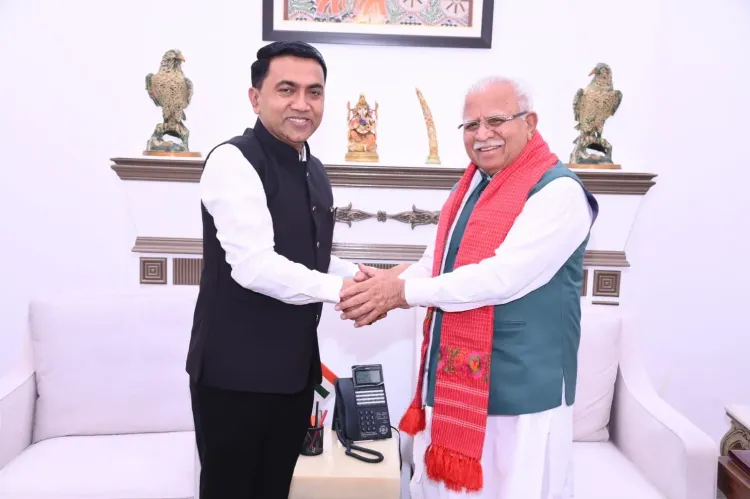
Union Power Minister Manohar Lal Khattar met Goa Chief Minister Dr Pramod Sawant on June 10, 2026, reviewing ongoing power transmission projects, RDSS implementation, and Urban Challenge Fund priorities in the state.
Key Takeaways
Union Power Minister Manohar Lal Khattar held a meeting with Goa Chief Minister Dr Pramod Sawant on June 10, 2026 .
Discussions covered ongoing power transmission projects in Goa and their implementation status.
The Revamped Distribution Sector Scheme (RDSS) , backed by a Rs 3 lakh crore national outlay, was a central agenda item for Goa's grid modernisation.
Key matters related to the Urban Challenge Fund (UCF) under the Housing and Urban Affairs ministry were also discussed.
Khattar holds the combined portfolio of Power and Housing and Urban Affairs , enabling integrated oversight of both schemes.
Next milestones include quarterly RDSS review reports and potential UCF project sanctions in the 2026-27 budget cycle.
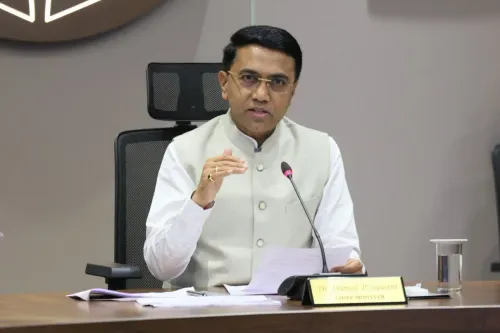
Union Power Minister Manohar Lal Khattar met Goa Chief Minister Dr Pramod Sawant on Wednesday, June 10, 2026, for a wide-ranging discussion on the state's ongoing power transmission projects, implementation of the Revamped Distribution Sector Scheme (RDSS), and key matters related to the Urban Challenge Fund (UCF).
Context
Khattar shared details of the meeting on X, describing it as a productive exchange. In his post, he wrote: 'गोवा के ऊर्जावान एवं कर्मठ मुख्यमंत्री श्रीमान @DrPramodPSawant जी से आज सुखद भेंट हुई' — 'Had a pleasant meeting today with the energetic and hardworking Chief Minister of Goa, Dr Pramod Sawant.' He noted that discussions covered power transmission projects under progress in the state, RDSS project execution, and important subjects connected to the Urban Challenge Fund.
Dr Pramod Sawant has led the BJP government in Goa since 2019, with a focus on state infrastructure development and maintaining Goa's reputation as a high-demand destination for power supply driven by tourism and industry.
Policy Backdrop
The Revamped Distribution Sector Scheme, launched in 2021 with a total outlay of Rs 3 lakh crore, is the central government's flagship programme to modernise electricity distribution networks across states, reduce aggregate technical and commercial (AT&C) losses, and accelerate smart metering rollouts. Goa, as a coastal state with a high tourism-driven power load, has been identified as a priority state for reliable supply under the scheme.
The Urban Challenge Fund (UCF), introduced in the 2023-24 budget cycle under the Ministry of Housing and Urban Affairs, incentivises urban local body reforms and supports targeted urban infrastructure projects. With Khattar holding the combined portfolio of Power and Housing and Urban Affairs, meetings of this nature reflect an integrated approach to transmission, distribution, and city-level infrastructure.
Stakeholders and Impact
Goa's power consumers, state electricity distribution companies, and urban local bodies stand to benefit directly from accelerated project implementation under both schemes. The state's dependence on central scheme funding for grid upgrades makes high-level review meetings a critical step in unblocking capital expenditure and addressing implementation gaps.
Central-state coordination on power and urban schemes has intensified since 2021, as the government seeks to close the gap between project sanctions and on-ground execution. Goa's relatively compact geography and strong economic profile make it a useful test case for demonstrating scheme outcomes before the next quarterly review cycle.
What's Next
Observers will watch for the next quarterly RDSS progress report from Goa and any formal sanction orders for UCF projects in the 2026-27 central budget cycle. Accelerated disbursements or project approvals following this meeting would signal that the review translated into concrete administrative action.
With the Union Budget cycle and state-level capital expenditure targets converging, the pace at which Goa draws down its allocations under both schemes will be a key indicator of the meeting's practical impact on the ground.
Point of View
Allowing transmission, distribution, and city-level funding to be addressed in a single sitting. For Goa, whose grid and urban infrastructure are disproportionately stressed by tourism cycles, timely scheme execution carries direct economic consequences. The meeting signals that the Centre is maintaining pressure on states to convert scheme sanctions into physical progress ahead of the next budget review.
NationPress
26 Oct 2026
Frequently Asked Questions
Why did Manohar Lal Khattar meet Goa CM Pramod Sawant?
Khattar met Sawant on June 10, 2026, to review the progress of power transmission projects in Goa, implementation of the RDSS scheme, and key issues related to the Urban Challenge Fund.
What is the RDSS scheme and how does it affect Goa?
The Revamped Distribution Sector Scheme, launched in 2021 with a Rs 3 lakh crore national outlay, aims to modernise electricity distribution networks and reduce losses. Goa is a priority state under the scheme due to its high tourism-driven power demand.
What is the Urban Challenge Fund (UCF)?
The Urban Challenge Fund is a central government fund introduced in the 2023-24 budget cycle under the Ministry of Housing and Urban Affairs. It supports urban local body reforms and targeted urban infrastructure projects in states.
What portfolio does Union Minister Manohar Lal Khattar hold?
Manohar Lal Khattar is the Union Minister for Power and Housing and Urban Affairs, a combined portfolio that allows integrated oversight of electricity and city infrastructure schemes.
What are the next steps after the Khattar-Sawant meeting on power schemes?
The key milestones to watch are the next quarterly RDSS progress report from Goa and any Urban Challenge Fund project sanction orders in the 2026-27 central budget cycle.