Vivek Ramaswamy bets on trades over college degrees
Synopsis
Entrepreneur Vivek Ramaswamy pledged on 26 October 2026 to create a state model offering young Americans skilled-trades training as a debt-free alternative to four-year college, amid a $1.7 trillion student loan crisis and documented shortages in construction and manufacturing.
Key Takeaways
Vivek Ramaswamy pledged on 26 October 2026 to build a state model giving young people debt-free access to skilled-trades careers.
US student loan debt exceeds $1.7 trillion , making the four-year college path financially punishing for millions.
The pledge fits a broader conservative policy thread running through the Trump-era Department of Labor apprenticeship push and state-level CTE expansions.
Ramaswamy is the founder of Strive Asset Management , a former DOGE co-lead, and a 2024 Republican presidential candidate .
No specific state, program name, or legislative vehicle has yet been identified in the announcement.
Trades employers and workforce advocates will watch for concrete funding mechanisms, apprenticeship incentives, and certification frameworks.
A trillion-dollar debt crisis and a desperate shortage of skilled workers — entrepreneur Vivek Ramaswamy says he has the answer, and it does not involve a four-year campus. On Monday, 26 October 2026, Ramaswamy posted a bold pledge to build a state where young people can chase the American Dream through the trades, debt-free.
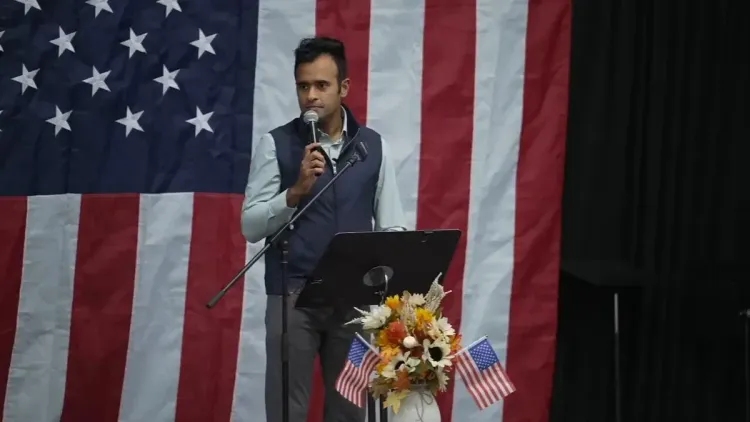
Writing on X, Ramaswamy declared: 'We're going to create a state where young people can fully live the American Dream without 4-year college debt and pursue meaningful careers in the trades, with the training they need to succeed.' The post, accompanied by a video, stops short of naming a specific state or program — but the direction is unmistakable.
The $1.7 trillion weight behind the pledge
The backdrop to this statement is staggering. US student loan debt has surpassed $1.7 trillion, a figure that has made the four-year college route feel less like a ladder and more like a trap for millions of young Americans. At the same time, construction, manufacturing, and the skilled trades are bleeding talent — job vacancies that a generation of degree-seekers was never trained to fill.
This is not a new conversation in American politics, but it is an increasingly urgent one. The first Trump administration (2017–2021) pushed registered apprenticeships and Department of Labor workforce-training initiatives via executive order, explicitly framing the trades as a dignified and financially sound alternative to traditional higher education. Ramaswamy's framing lands squarely in that lineage.
Career-technical education: from fringe to policy mainstream
Across the country, state legislatures have been quietly running the experiment Ramaswamy is now promising to scale. Career-technical education (CTE) expansions, revised high school graduation requirements, and new apprenticeship funding mechanisms have been gaining ground from the South to the Midwest. The question is whether a single state can crystallise these scattered pilots into something comprehensive enough to shift the national default away from the four-year degree.
Ramaswamy — the founder and executive chairman of Strive Asset Management, a former co-lead of the Department of Government Efficiency (DOGE) advisory effort, and a 2024 Republican presidential candidate — brings both entrepreneurial credibility and political infrastructure to the pitch. Whether that translates into legislation, executive action, or a funding mechanism remains the critical open question.
What trades advocates are watching next
The immediate test will be specificity. Advocates for workforce development want to see what 'the training they need to succeed' actually means in law and budget lines — apprenticeship funding formulas, employer tax incentives, certifications that carry real labour-market weight, and pathways that do not quietly disadvantage workers who later want a degree.
For young workers and trade employers alike, the promise is exactly what they have been asking for. The proof will arrive when a state session opens, an executive order is signed, or a line item appears in an appropriations bill.
America's skilled-trades shortage is not waiting for the perfect policy — and neither, it appears, is Ramaswamy.
Point of View
He is trying to move a cultural debate into an institutional one — from rhetoric to replicable policy. The real test of credibility will be whether the proposal survives contact with legislative arithmetic, particularly on funding apprenticeship pipelines at the scale needed to close documented trades shortfalls. If it does, it could set a template that other Republican governors and state legislatures rush to adopt ahead of the next electoral cycle.
NationPress
26 Oct 2026
Frequently Asked Questions
What did Vivek Ramaswamy say about college debt and the trades?
Ramaswamy pledged to create a state model where young people can pursue skilled-trades careers with proper training and without taking on four-year college debt, framing it as a modern path to the American Dream.
Which state is Vivek Ramaswamy talking about for his trades education plan?
Ramaswamy has not named a specific state in his announcement. The post describes a vision without identifying a particular state or legislative vehicle.
How big is the US student loan debt problem?
US student loan debt has surpassed $1.7 trillion , making it one of the largest categories of household debt in the country and a central issue in debates over higher education reform.
What is Vivek Ramaswamy's background in government and business?
Ramaswamy is the founder and executive chairman of Strive Asset Management, a former co-lead of the Department of Government Efficiency (DOGE) advisory effort under the Trump administration, and a 2024 Republican presidential candidate.
Why are skilled trades jobs important in the US economy right now?
Construction, manufacturing, and other skilled trades sectors face documented worker shortages, partly because a generation of students was steered toward four-year degrees rather than vocational or apprenticeship pathways, leaving critical infrastructure and industry roles unfilled.