Ramaswamy: Trade Schools and Top Universities Can Coexist
Synopsis
Entrepreneur Vivek Ramaswamy, former DOGE co-lead, posted on May 20, 2026, that building top four-year universities and expanding trade schools for electricians, welders, plumbers, and carpenters are complementary goals — rejecting the idea that the two educational pathways are in competition.
Key Takeaways
Ramaswamy posted on May 20, 2026 , arguing that elite university expansion and skilled-trades training are not competing priorities.
The post specifically names electricians, welders, plumbers, and carpenters as skilled trades the country needs more schools to train.
The Workforce Innovation and Opportunity Act of 2014 and 2017 Trump executive orders form the existing federal framework for apprenticeships and vocational credentials.
Labour shortages in construction and manufacturing and rising student debt levels underpin the renewed policy urgency around vocational pathways.
Potential changes to Pell Grant eligibility for short-term trade programmes in upcoming budget legislation are a key policy variable to watch.
Ramaswamy's stance reflects a broader conservative policy argument that credential inflation has left trade vacancies unfilled while burdening graduates with debt.
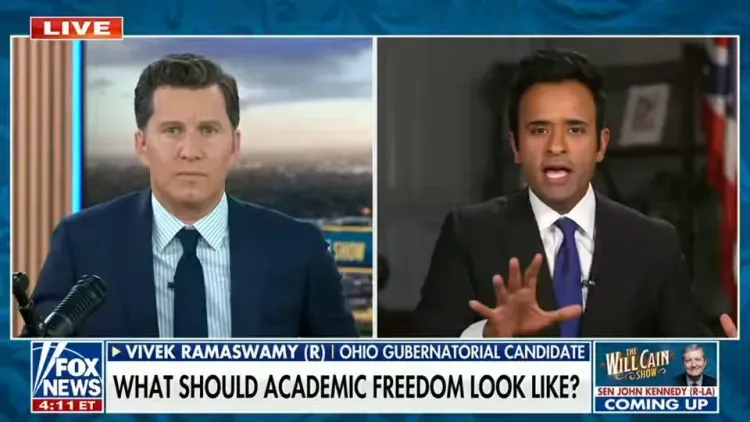
Entrepreneur Vivek Ramaswamy, founder and executive chairman of Strive Asset Management and former co-lead of the Department of Government Efficiency (DOGE) advisory effort, argued on Wednesday, May 20, 2026, that expanding elite four-year universities and growing vocational training programmes are complementary goals, not competing ones.
In the post, Ramaswamy wrote: 'We want the best 4-year universities in the country, and we also want more schools to train students in the skilled trades — to be electricians, welders, plumbers, and carpenters. Those goals aren't in tension, they actually go together.'
Context
The statement enters a long-running US education policy debate over whether federal and state investment in academic higher education comes at the expense of vocational pathways. Ramaswamy's framing rejects that either-or logic, positioning both tracks as mutually reinforcing pillars of workforce development.
The remark comes amid documented labour shortages in construction and manufacturing sectors across the United States, alongside rising student debt levels that have renewed public scrutiny of the return on investment from four-year degrees.
Policy Backdrop
Federal support for skilled-trades training has a legislative foundation in the Workforce Innovation and Opportunity Act of 2014, which reauthorised workforce development programmes including apprenticeships and industry-recognised credentials. During the first Trump administration in 2017, executive orders directed the expansion of apprenticeships as explicit alternatives to four-year degrees.
State-level initiatives have increasingly mirrored this dual-track approach, channelling funds toward community colleges and registered apprenticeships while maintaining support for research universities. Critics of the existing federal higher-education framework — a group that includes several conservative policy voices — argue that credential inflation has devalued degrees while leaving trade vacancies unfilled.
Stakeholders and Impact
High school graduates stand at the centre of this debate, facing a choice between university enrolment and vocational certification at a time when both pathways carry significant financial and career implications. Trade employers in construction, electrical, and plumbing industries have consistently flagged recruitment gaps that vocational expansion could address.
University administrators, meanwhile, watch federal funding signals closely. Any shift in Pell Grant eligibility to cover short-term trade programmes — a possibility flagged in ongoing budget discussions — could alter enrolment dynamics and institutional revenue streams across the country.
What's Next
Observers are watching for potential changes to federal student-aid rules and Pell Grant eligibility for short-term vocational programmes in upcoming budget or reconciliation legislation. State governments may also respond to any new federal guidance on workforce credentials or K-12 career-technical education standards.
Ramaswamy's public positioning on education, coming from a figure with a background in both corporate leadership and federal advisory work, adds a prominent voice to calls for a policy framework that funds both academic and vocational excellence without treating them as rivals.
Point of View
He aligns with a bipartisan strand of workforce-development thinking while lending it a conservative economic-efficiency gloss. The post is notable for what it does not say: it stops short of endorsing specific funding mechanisms or criticising existing university spending, keeping the message broadly appealing. In the context of ongoing reconciliation budget negotiations, however, even a high-profile endorsement of the dual-track model can shift the political centre of gravity on Pell Grant reform and K-12 career-technical education standards.
NationPress
16 Sept 2026
Frequently Asked Questions
What did Vivek Ramaswamy say about trade schools and universities?
Ramaswamy argued on May 20, 2026, that wanting the best four-year universities and wanting more schools to train electricians, welders, plumbers, and carpenters are not competing goals — they go together.
Why is the skilled trades vs university debate important in the US?
The US faces documented labour shortages in construction and manufacturing, while student debt levels have risen sharply, prompting renewed debate over whether four-year degrees offer sufficient return on investment compared with vocational credentials.
What is the Workforce Innovation and Opportunity Act?
The Workforce Innovation and Opportunity Act of 2014 is a federal law that reauthorised support for workforce development programmes, including apprenticeships and industry-recognised credentials as alternatives or complements to traditional degrees.
Could Pell Grants be extended to trade and vocational programmes?
Potential changes to Pell Grant eligibility to cover short-term vocational and trade programmes are under discussion in upcoming US federal budget and reconciliation legislation, though no changes have been enacted yet.
What is Vivek Ramaswamy's background in government and business?
Ramaswamy is the founder and executive chairman of Strive Asset Management, a 2024 Republican presidential candidate, and served as co-lead of the Department of Government Efficiency advisory effort focused on reducing federal bureaucracy.