Ramaswamy Champions Trades Education at Ohio Town Hall
Synopsis
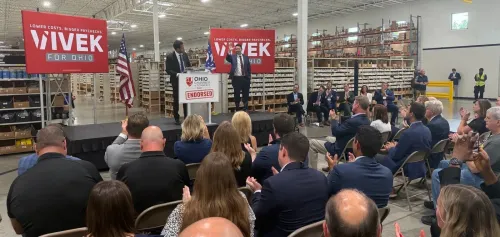
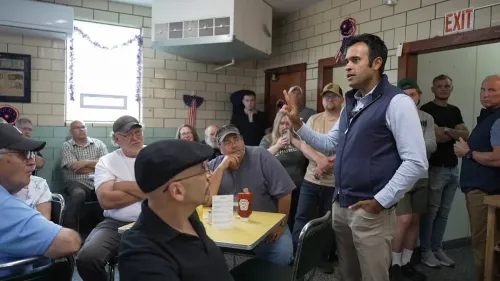
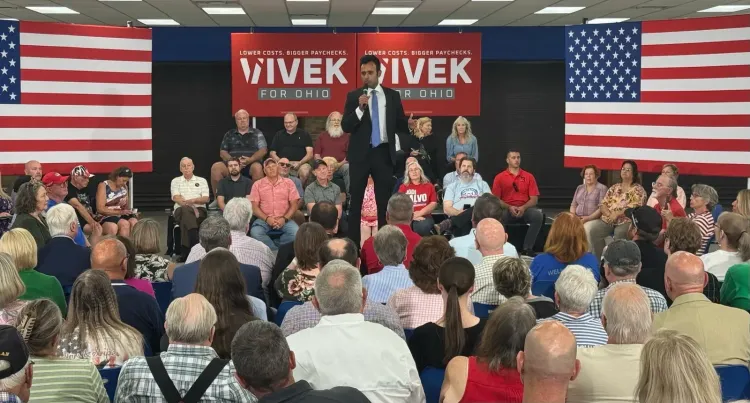
Vivek Ramaswamy held a town hall at the Buckeye Career Center in Tuscarawas County, Ohio, reaffirming his push to expand vocational training for students who do not need four-year college debt, while preserving top universities for those who genuinely benefit.
Key Takeaways
Vivek Ramaswamy attended a town hall at the Buckeye Career Center in Tuscarawas County, Ohio on June 5, 2026 .
He pledged to 'double down on the trades' for students who do not need to take on four-year college debt.
He simultaneously said he would ensure the best universities remain available for students who 'actually benefit from them.' US student loan debt exceeds $1.7 trillion , a figure that underpins Republican calls for expanded vocational pathways.
Ohio's 2023–2025 budget already increased funding for career-technical education and apprenticeships to address skilled workforce shortages.
The policy debate affects Ohio high school students , skilled trades employers, and public universities across the state.
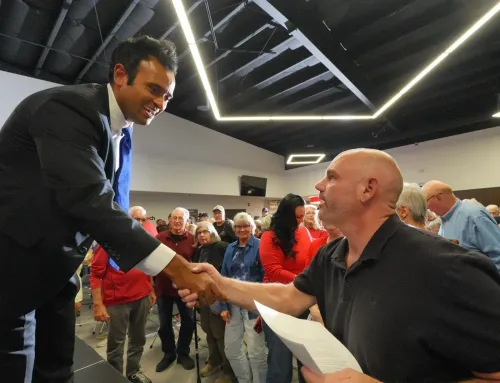
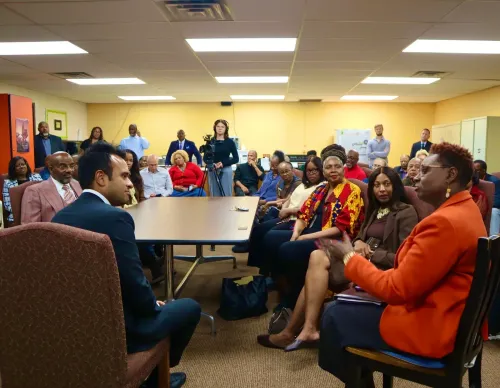
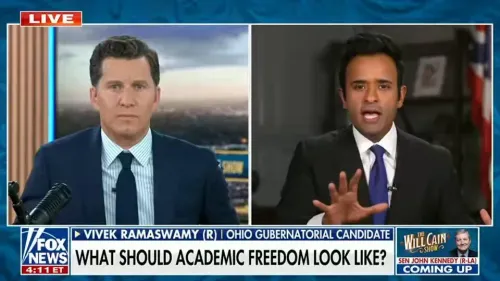
Entrepreneur Vivek Ramaswamy on Saturday, June 6, 2026, highlighted his commitment to expanding vocational training as an alternative to four-year college degrees, following a town hall at the Buckeye Career Center in Tuscarawas County, Ohio. The former co-lead of the US Department of Government Efficiency (DOGE) advisory effort said he would 'double down on the trades' for students who do not need to take on four-year college debt.
Context
Ramaswamy's visit to the Buckeye Career Center — a vocational and technical education facility in eastern Ohio — underscores a consistent theme in his public positioning: that four-year university enrollment is not the right path for every student. In the post, he stated the goal of ensuring 'the best universities for students who actually benefit from them,' framing higher education as a targeted resource rather than a universal default.
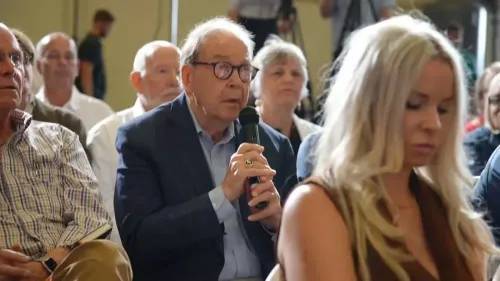
Tuscarawas County is home to manufacturing and energy sector employers that depend heavily on skilled tradespeople, making it a fitting backdrop for this argument. The town hall format allowed Ramaswamy to engage directly with students, educators, and local stakeholders on workforce preparation.
Policy Backdrop
Ramaswamy has consistently advocated for expanding vocational pathways since his 2024 Republican presidential campaign, repeatedly calling for reduced federal incentives that push students toward four-year college enrollment regardless of career goals. His position draws on a broader Republican argument that the current system has contributed to US student loan debt exceeding $1.7 trillion.
Ohio's 2023–2025 state budget already moved in this direction, increasing funding for career-technical education (CTE) districts and apprenticeship programmes to address documented workforce shortages in construction, manufacturing, and energy. The state has emerged as a testing ground for these policies through partnerships between career centres and local employers.
Post-pandemic scrutiny of the economic return on many non-STEM bachelor's degrees has added momentum to the trades-first argument, with labour market data pointing to persistent shortages in skilled occupations even as graduate unemployment in certain fields has risen.
Stakeholders and Impact
Ohio high school students stand at the centre of this debate, particularly those in counties like Tuscarawas where local industry demands welders, electricians, and machinists rather than four-year degree holders. Career centres like the Buckeye Career Center offer a direct pipeline to these roles, often with lower cost and faster time-to-employment than traditional universities.
Public universities and student loan servicers represent the other side of the equation. Ramaswamy's framing — that universities should serve students 'who actually benefit from them' — implicitly challenges the current model of broad federal subsidisation of higher education regardless of outcomes. Skilled trades employers across Ohio are among the clearest beneficiaries of any policy shift toward expanded CTE funding and apprenticeship pathways.
What's Next
Attention will turn to the Ohio state legislature and its handling of CTE funding in the next biennial budget cycle, where advocates are pushing for further expansion of apprenticeship programmes and employer partnerships. At the federal level, any changes to Pell Grant eligibility for short-term workforce programmes could significantly alter the financial calculus for students choosing between college and trades. Ramaswamy's continued public engagement on this issue signals that education and workforce policy will remain a central plank of his platform as he maintains a prominent voice in Republican policy circles.
Point of View
He avoids a populist overreach that could alienate higher-education constituencies. The visit fits a broader Republican pattern of using student debt anxiety as a wedge to reframe federal education spending — a strategy with particular resonance in manufacturing-heavy states like Ohio. Whether this translates into legislative action or remains campaign-trail positioning will depend on his ability to move specific funding mechanisms at the state or federal level.
NationPress
24 Oct 2026
Frequently Asked Questions
What did Vivek Ramaswamy say about trades education in Ohio?
Ramaswamy said he would 'double down on the trades' for students who do not need four-year college debt, following a town hall at the Buckeye Career Center in Tuscarawas County, Ohio.
What is the Buckeye Career Center?
The Buckeye Career Center is a vocational and technical education facility in Tuscarawas County, eastern Ohio, offering trades-focused programmes for high school and adult students.
Why is student debt a political issue in the United States?
US student loan debt has exceeded $1.7 trillion, prompting debate over whether federal policy over-incentivises four-year college enrollment at the expense of vocational and trades pathways.
What is Ohio doing to support career-technical education?
Ohio's 2023–2025 state budget increased funding for career-technical education districts and apprenticeship programmes to address workforce shortages in manufacturing, construction, and energy.
Is Vivek Ramaswamy running for office in 2026?
As of June 2026, Ramaswamy holds no elected office; he is the founder and executive chairman of Strive Asset Management and continues to engage publicly on policy issues including education and workforce development.