Goa CM Sawant meets Union Minister Khattar in New Delhi
Synopsis
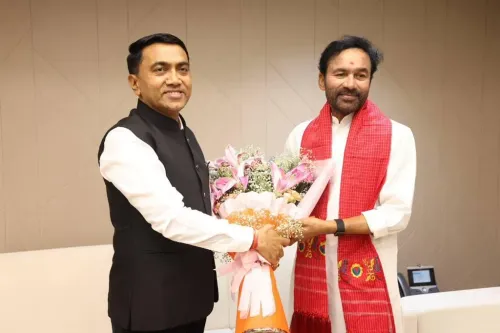
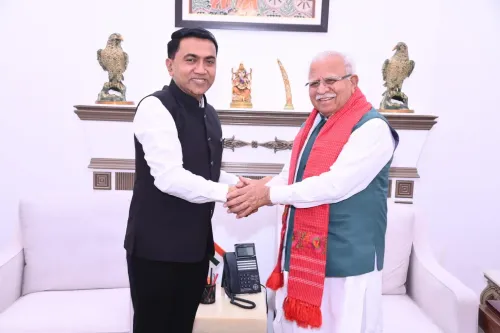
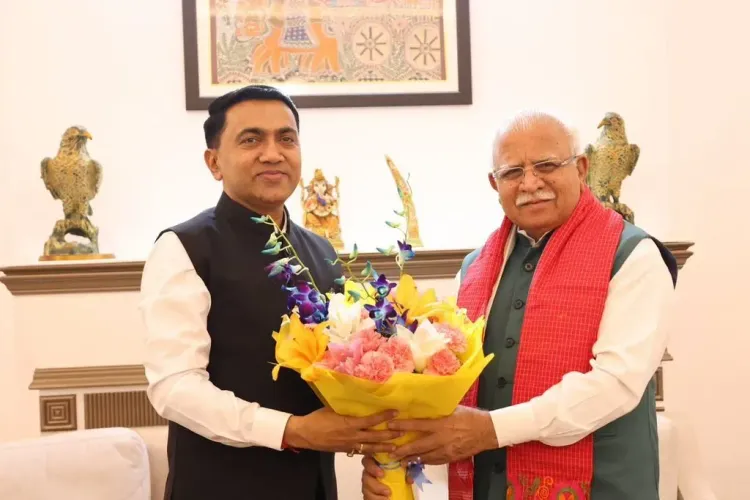
Goa Chief Minister Pramod Sawant met Union Minister Manohar Lal Khattar in New Delhi on June 10, 2026, discussing housing, urban development, and citizen-centric infrastructure for Goa. Sawant sought expedited approval of state proposals submitted under the Urban Challenge Fund, backed by the Modi government's centrally sponsored urban schemes.
Key Takeaways
Goa CM Pramod Sawant visited New Delhi on June 10, 2026 for a meeting with Union Minister Manohar Lal Khattar .
Discussions covered housing, urban development, and citizen-centric infrastructure and welfare initiatives in Goa .
CM Sawant specifically sought speedy approval for proposals submitted under the Urban Challenge Fund .
The meeting aligns with a broader pattern of BJP -governed states coordinating with the Ministry of Housing and Urban Affairs for central scheme clearances.
Key central schemes in the backdrop include AMRUT 2.0 and Pradhan Mantri Awas Yojana-Urban , both launched in 2015 .
Formal approval outcomes and fund release timelines for Goa's proposals are yet to be officially announced.
Goa Chief Minister Pramod Sawant travelled to New Delhi on Wednesday, June 10, 2026, and held a meeting with Union Minister for Housing, Urban Affairs and Power Manohar Lal Khattar to discuss a range of urban development and housing proposals for the state, seeking expedited central support under competitive funding windows.
Context
Posting from New Delhi, CM Sawant said he was 'pleased to meet' the Union Minister and that the discussions covered 'various aspects related to housing, urban development and strengthening citizen-centric infrastructure and welfare initiatives in Goa.' He specifically noted that he sought 'assistance for speedy approval of the proposals submitted under Urban Challenge funds' — a central competitive funding window designed to support state urban infrastructure projects.
The meeting underscores an active phase of engagement between the Goa government and the Centre, with the state looking to accelerate project clearances ahead of the next cycle of fund disbursements under national urban missions.
Policy Backdrop
The Urban Challenge Fund is a central competitive mechanism through which states submit proposals for urban infrastructure upgrades, with approvals and sanctions determined by the Ministry of Housing and Urban Affairs. States that align their proposals with national mission objectives — such as those under AMRUT 2.0 (Atal Mission for Rejuvenation and Urban Transformation) and Pradhan Mantri Awas Yojana-Urban — stand a stronger chance of securing timely clearances.
AMRUT, launched in 2015, funds urban water supply, sewerage, and drainage infrastructure, while Pradhan Mantri Awas Yojana-Urban, also initiated in 2015, targets pucca housing for eligible urban households. Goa's proposals, if approved, would channel central resources into the state's municipal and urban development pipeline.
Stakeholders and Impact
The primary beneficiaries of any approved proposals would be Goa's urban residents and the state's municipal bodies, which depend significantly on central funding to execute large-scale infrastructure projects that exceed local fiscal capacity. Faster approvals could translate into accelerated work on housing, roads, drainage, and civic amenities across the state's urban centres.
Union Minister Khattar, who previously served as Chief Minister of Haryana, brings direct administrative experience of managing Centre-state coordination on urban schemes — a factor that state governments have found useful when navigating complex multi-tier approval processes at the ministry level.
The meeting also reflects a broader pattern visible across BJP-governed states, where chief ministers and senior state officials make targeted visits to central ministries to advocate for their pending proposals and build political momentum for clearances.
What's Next
The formal approval status of Goa's submitted proposals under the Urban Challenge Fund remains to be officially announced by the ministry. Any subsequent project sanctions or fund releases — whether under AMRUT 2.0 or successor urban programmes — will be the key indicator of whether this engagement translates into on-ground outcomes.
Observers will watch for formal ministry communications or state government notifications detailing which specific proposals have been cleared, the quantum of funds allocated, and the timelines set for project execution across Goa's urban areas.
Point of View
Visible engagement with central ministers ahead of potential fund releases also carries domestic political value, reinforcing the BJP's narrative of seamless Centre-state coordination under the Modi government. The meeting's real significance will only be measurable once formal approval orders and fund sanctions are made public.
NationPress
28 Oct 2026
Frequently Asked Questions
Why did Goa CM Pramod Sawant meet Manohar Lal Khattar in Delhi?
CM Pramod Sawant met Union Minister Manohar Lal Khattar in New Delhi on June 10, 2026 to discuss housing, urban development, and infrastructure initiatives for Goa , and to seek speedy approval of proposals submitted under the Urban Challenge Fund .
What is the Urban Challenge Fund in India?
The Urban Challenge Fund is a central government competitive funding window under the Ministry of Housing and Urban Affairs that supports states in financing urban infrastructure and housing projects aligned with national urban missions.
What central urban schemes is Goa seeking funds under?
Goa is seeking support under central urban schemes including the Urban Challenge Fund , with the broader policy backdrop involving AMRUT 2.0 and Pradhan Mantri Awas Yojana-Urban , both of which fund urban infrastructure and housing for eligible households.
Who is Manohar Lal Khattar?
Manohar Lal Khattar is the Union Minister for Housing, Urban Affairs and Power in the Modi government . He previously served as Chief Minister of Haryana and is a senior BJP leader.
What will happen next after Goa CM's meeting with the Union Minister?
The formal approval status of Goa's proposals under the Urban Challenge Fund is yet to be announced. Any project sanctions or fund releases by the Ministry of Housing and Urban Affairs will indicate the concrete outcome of the meeting.