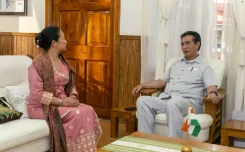
CM Sawant salutes Goa's Kunbi weavers on Handloom Day
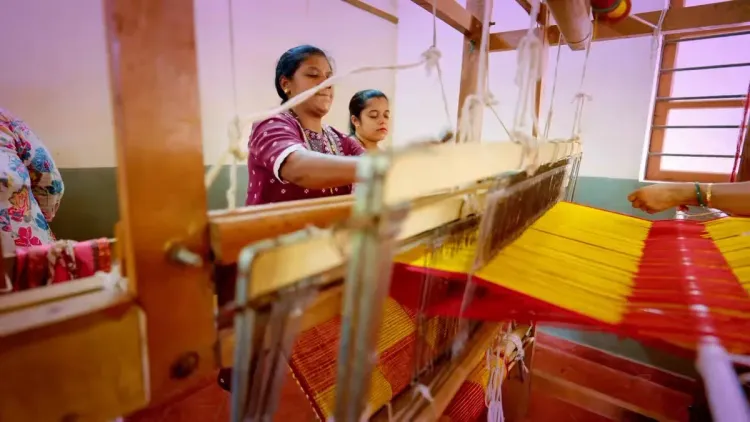
Synopsis
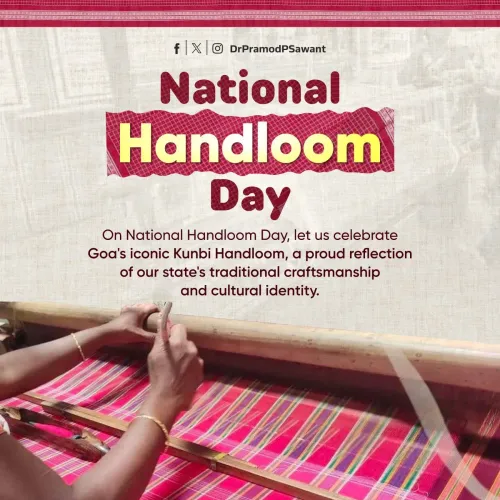
On National Handloom Day 2026, Goa Chief Minister Pramod Sawant honoured the state's weavers and spotlighted the Kunbi weave revival, crediting the Department of Handicrafts, Textiles and Coir for training women as master weavers and entrepreneurs under the Atmanirbhar Bharat framework.
Key Takeaways
National Handloom Day is observed on 7 August annually, instituted in 2015 to mark the Swadeshi movement centenary of 1905 .
Goa CM Pramod Sawant specifically named the Kunbi weave , a tradition tied to one of Goa's oldest agrarian communities.
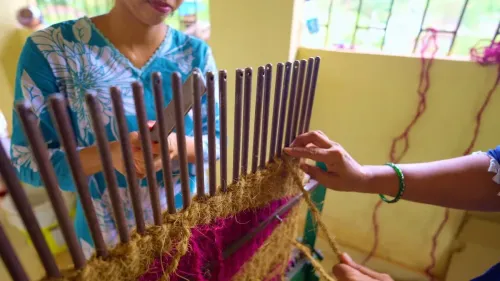
The Department of Handicrafts, Textiles and Coir runs training centres across Goa to skill women as master weavers and entrepreneurs.
Sawant linked the handloom revival to the Vocal for Local campaign and the Atmanirbhar Bharat self-reliance programme launched in 2020 .
The broader national push since 2015 has seen state governments target women for handloom entrepreneurship to sustain regional craft traditions commercially.
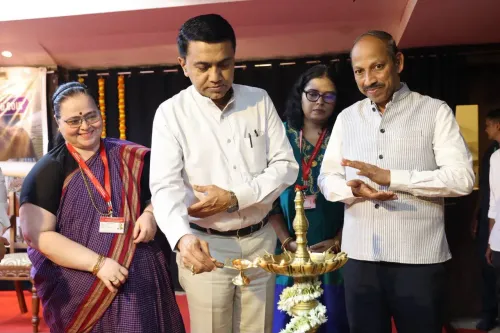
On a day that belongs to the loom, Goa Chief Minister Pramod Sawant used National Handloom Day, 7 August 2026, to spotlight the quiet revival of one of the state's most storied textile traditions — the Kunbi weave — and the women artisans driving it forward.
Sawant saluted the weavers preserving Goa's rich textile heritage and highlighted the role of the state's Department of Handicrafts, Textiles and Coir, whose training centres are equipping women to become skilled master weavers and entrepreneurs. 'This craft is a boost to the spirit of Vocal for Local,' he wrote, framing the handloom revival as a living expression of the Atmanirbhar Bharat vision.
The Kunbi weave and why it matters
The Kunbi weave is intrinsically tied to the Kunbi community, one of Goa's oldest agrarian groups, and carries centuries of cultural memory in its patterns and palette. Unlike mass-produced textiles, each piece is a record of identity — the kind of craft that disappears quietly when economic pressure pushes the next generation away from the loom. The fact that Sawant named it specifically, rather than invoking handlooms generically, signals a deliberate effort to anchor the revival to a community and a story.Women at the centre of the revival
The state's push is notably women-centric. Training centres run by the Department of Handicrafts, Textiles and Coir are designed not just to preserve technique but to create viable livelihoods — turning weavers into entrepreneurs who can sustain the craft commercially. This mirrors a broader national pattern since 2015, when the government instituted National Handloom Day to mark the centenary of the Swadeshi movement of 1905, linking handloom revival to self-reliance long before 'Atmanirbhar' became policy language. The next test is whether Goa's training infrastructure translates into real market access — domestic retail, tourism-linked sales, or export linkages that give Kunbi products a commercial runway beyond ceremonial occasions. That is the question weavers, and the department, will need to answer in the months ahead.Point of View
The state government positions a heritage craft as a policy deliverable, not just a cultural gesture. The women-centric framing is also strategically smart: it lets the government claim both artisan welfare and gender empowerment in a single initiative. The real measure of intent, however, will be whether market linkages and commercial infrastructure follow the training investment.
NationPress
22 Sept 2026
Frequently Asked Questions
What is the Kunbi weave of Goa?
The Kunbi weave is a traditional handloom textile associated with the Kunbi community, one of Goa's oldest agrarian groups, known for its distinctive patterns and cultural significance to the state's heritage.
Why is National Handloom Day celebrated on 7 August?
National Handloom Day is observed on 7 August to commemorate the launch of the Swadeshi movement on 7 August 1905 ; the government instituted the annual observance in 2015 to honour weavers and promote the handloom sector.
What is the Department of Handicrafts, Textiles and Coir doing for Goa's weavers?
The department runs training centres across Goa that equip women with weaving skills, aiming to develop them into master weavers and self-sustaining entrepreneurs to keep traditional crafts commercially viable.
How does the Kunbi weave revival connect to Atmanirbhar Bharat?
CM Sawant framed the Kunbi weave revival as an expression of the Atmanirbhar Bharat self-reliance programme, positioning locally made handloom products as a direct contribution to the 'Vocal for Local' push for indigenous manufacturing.
Who are the primary beneficiaries of Goa's handloom training centres?
Women from weaving communities are the primary beneficiaries, with the training programme designed to turn them into skilled master weavers and entrepreneurs capable of sustaining the craft as a livelihood.