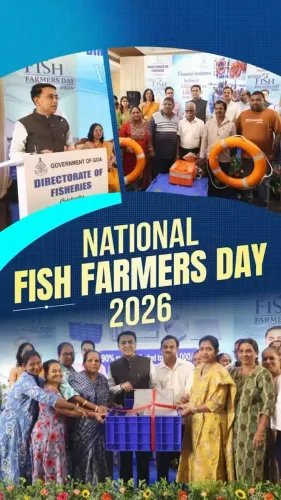
CM Sawant Highlights Goa's Fishermen Welfare Push on National Fish Farmers Day
Synopsis
On National Fish Farmers Day, Goa Chief Minister Pramod Sawant announced that the state government is providing financial assistance, modern equipment, and skill development training to fishermen through multiple schemes, reinforcing Goa's commitment to sustaining its fisheries sector within the broader central PMMSY framework.
Key Takeaways
Goa CM Pramod Sawant reaffirmed state support for fishermen on National Fish Farmers Day, 10 July 2026 .
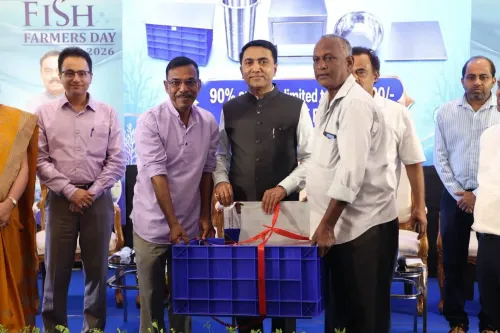
The Government of Goa is extending financial assistance, modern equipment, and skill development training through multiple schemes.
The central Pradhan Mantri Matsya Sampada Yojana , launched in 2020 with a Rs 20,050 crore outlay, underpins state-level fisheries support.
Goa's Fisheries Department has supplemented central schemes with state-level subsidies and training programmes since at least 2017 .
Specific scheme names, funding amounts, and timelines for the current round of assistance have not been officially detailed in public records.
Future Goa Assembly sessions and central-state review meetings on PMMSY implementation will be key indicators of on-ground progress.
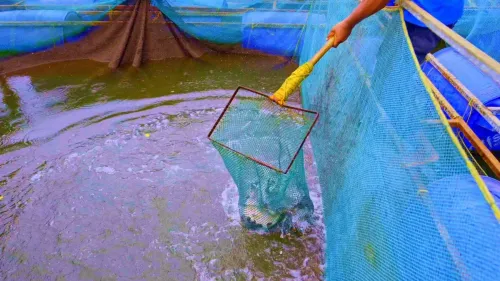
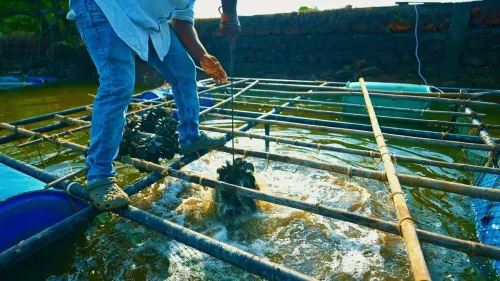
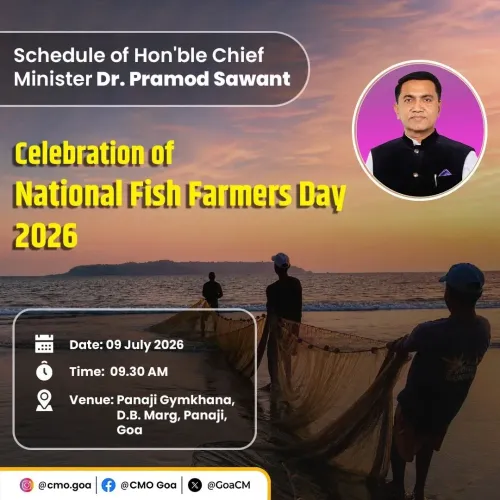
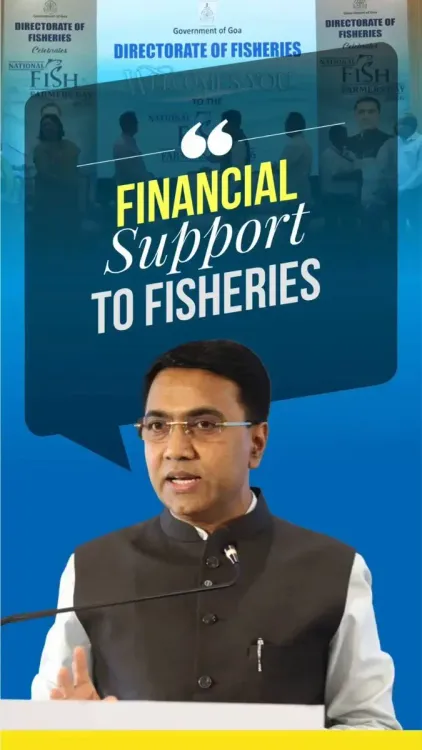
Goa Chief Minister Pramod Sawant on Thursday, 10 July 2026 reaffirmed the Government of Goa's commitment to the state's fishing communities, stating that financial assistance, modern equipment, and skill development training are being extended through multiple schemes to ensure the fisheries sector continues to thrive.
Context
National Fish Farmers Day, observed annually on 10 July, marks the occasion on which the contributions of fish farmers and fishing communities across India are formally recognised. The day also serves as a platform for state and central governments to highlight ongoing welfare measures for the sector. Chief Minister Sawant used the occasion to signal that Goa is actively channelling support to its fishermen through a combination of financial, material, and training interventions.
In his post, Sawant wrote: 'The Government of Goa is extending financial assistance, modern equipment, and skill development training through various schemes to our fishermen, ensuring that this vital sector continues to thrive.' The statement underscores the state administration's framing of fisheries not merely as a livelihood issue but as a strategic economic priority.
Policy Backdrop
The Pradhan Mantri Matsya Sampada Yojana (PMMSY), launched by the Union government in 2020 with an outlay of Rs 20,050 crore, forms the central pillar of fisheries modernisation across Indian states. The scheme targets infrastructure development, value-chain improvement, and direct welfare support for fishing communities, with state governments acting as implementation partners.
Goa's Fisheries Department has run recurring state-level schemes covering boat subsidies, net material distribution, and vocational training since at least 2017, supplementing the central framework. This layered approach — combining Union scheme funds with state budgetary allocations — reflects a broader pattern among coastal states seeking to build what policymakers describe as a blue economy strategy rooted in sustainable production and livelihood security.
Stakeholders and Impact
Goa's marine and inland fisheries sector supports a significant share of the state's coastal communities, making it both an economic and cultural cornerstone. Fishermen who benefit from equipment subsidies and skill training are better positioned to adopt modern techniques, improve catch efficiency, and reduce operational costs. Financial assistance schemes provide a safety net against seasonal income volatility that is characteristic of the fishing profession.
Skill development components are particularly significant for younger members of fishing communities, equipping them with capabilities relevant to both traditional fishing and adjacent sectors such as aquaculture and fish processing. The combination of these three streams — financial, material, and training — is designed to address the sector's challenges comprehensively rather than in isolation.
What's Next
Observers will watch the next Goa Assembly session for specific budget allocations and utilisation reports under the state's fisheries schemes, which would provide measurable detail behind the broad commitments articulated by CM Sawant. A joint review with the Department of Fisheries, Government of India on PMMSY implementation in Goa could also clarify how central and state funds are being coordinated on the ground.
As India continues to position itself as a major fish-producing nation, the performance of coastal states like Goa in translating scheme announcements into verifiable outcomes for fishermen will be a key metric of the broader blue-economy agenda's success.
Point of View
Reinforcing its coastal constituency credentials. The reference to 'various schemes' without naming them keeps the announcement broad enough to encompass both central PMMSY benefits and state-level measures, a common political strategy that allows governments to claim credit across multiple programme streams. Within the larger blue-economy arc that both the Union and coastal state governments have been pursuing since 2020, such reaffirmations serve as political markers of continuity rather than announcements of new policy. The real test will come when scheme-wise utilisation data is tabled in the Goa Assembly, revealing whether the stated commitments have translated into measurable outcomes for fishing communities.
NationPress
8 Oct 2026
Frequently Asked Questions
What did Goa CM Pramod Sawant announce on National Fish Farmers Day 2026?
Goa Chief Minister Pramod Sawant announced on 10 July 2026 that the Government of Goa is extending financial assistance, modern equipment, and skill development training to fishermen through various state schemes to support the fisheries sector.
When is National Fish Farmers Day celebrated in India?
National Fish Farmers Day is observed every year on 10 July to recognise the contributions of fish farmers and fishing communities and to highlight government support measures for the fisheries sector.
What is the Pradhan Mantri Matsya Sampada Yojana and how does it benefit Goa?
The Pradhan Mantri Matsya Sampada Yojana (PMMSY) is a central government scheme launched in 2020 with a Rs 20,050 crore outlay to modernise fisheries infrastructure and support fisher welfare. Goa, as a coastal state, receives funds under this scheme which it supplements with state-level subsidies and training programmes.
What schemes does the Goa government offer to fishermen?
The Goa Fisheries Department has run recurring schemes covering boat subsidies, net material distribution, and vocational training since at least 2017. These are supplemented by benefits flowing from the central PMMSY framework, though specific current scheme names and amounts have not been officially detailed in recent public records.
How does skill development training help Goan fishermen?
Skill development training equips fishermen, particularly younger members of coastal communities, with modern fishing techniques and knowledge relevant to aquaculture and fish processing, helping improve productivity and open up adjacent livelihood opportunities beyond traditional fishing.