CM Sawant highlights Goa fisherwoman's success under PMMSY
Synopsis
Goa Chief Minister Pramod Sawant has highlighted how Sylvia Fernandes of Curtorim adopted cage culture under PMMSY, producing nearly 4 tonnes of fish annually and earning ₹8–9 lakh in profit — illustrating the scheme's role in advancing Goa's self-reliance goals.
Key Takeaways
Sylvia Fernandes from Curtorim, South Goa adopted cage culture under the Pradhan Mantri Matsya Sampada Yojana .
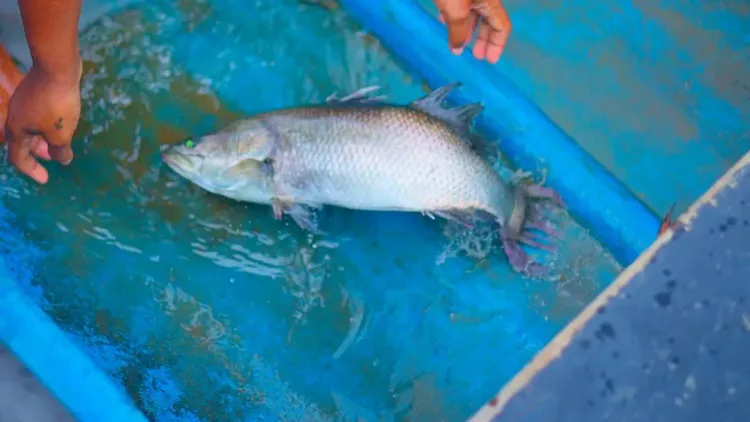
She now produces nearly 4 tonnes of fish annually and earns a profit of around ₹8–9 lakh per year .
PMMSY was launched in May 2020 with a Union Cabinet-approved outlay of ₹20,050 crore over five years.
The scheme replaced the earlier Blue Revolution programme (2015–16 to 2019–20) and expanded its scope and funding.
Goa's Swayampurna Goa programme aligns state fisheries development with the national Atmanirbhar Bharat and Viksit Bharat goals.
CM Sawant framed the beneficiary story as evidence of PMMSY's transformative impact on local fishing communities.
Goa Chief Minister Pramod Sawant on Thursday, 28 May 2026 spotlighted the story of Sylvia Fernandes, a fish farmer from Curtorim in South Goa, who has built a thriving cage-culture business under the Pradhan Mantri Matsya Sampada Yojana (PMMSY). Sawant shared the account on X to illustrate how the central fisheries scheme is delivering on-ground results in the state.
Context
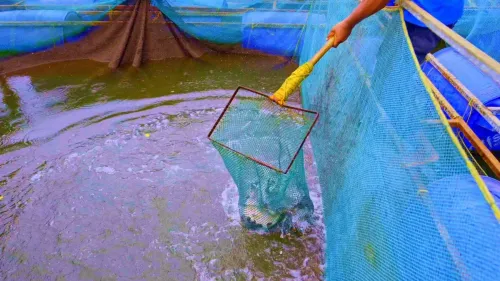
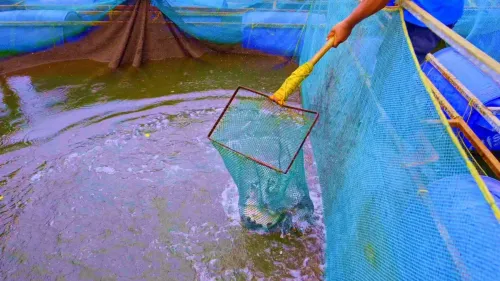
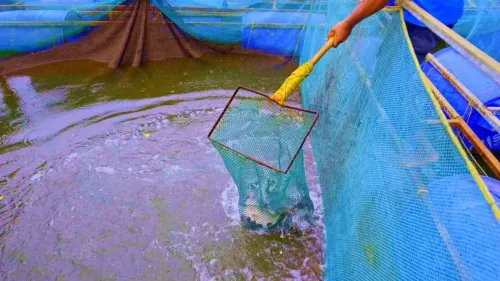
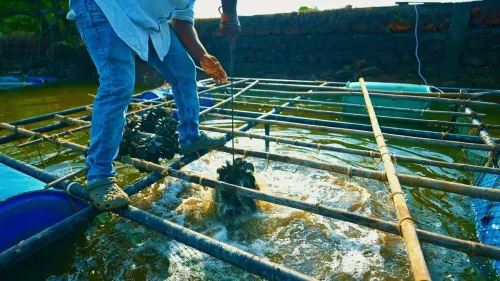
According to Sawant's post, Sylvia Fernandes now produces nearly 4 tonnes of fish annually and earns a profit of around ₹8–9 lakh per year through cage culture — a method of rearing fish in enclosed net structures in open water bodies. Sawant described her journey as an example of 'entrepreneurial vision' enabled by the scheme's equipment support and training sessions.
Curtorim, an assembly constituency and village in South Goa, sits along the Zuari river basin, making it well-suited for inland cage-culture operations. Fernandes's case is being presented as a model for how small-scale operators can scale up through government-backed intervention.
Policy Backdrop
The Pradhan Mantri Matsya Sampada Yojana was approved by the Union Cabinet in May 2020 with a total outlay of ₹20,050 crore over five years. The scheme was designed to modernise the fisheries sector through infrastructure investment, value-chain development, and the promotion of sustainable aquaculture practices such as cage culture.
PMMSY subsumed and significantly expanded the earlier Blue Revolution programme that ran from 2015–16 to 2019–20. A central thrust of the current scheme has been raising marine and inland fish production while reducing post-harvest losses — goals that cage culture directly addresses by improving yield predictability and reducing open-water mortality.
Goa has aligned its state-level Swayampurna Goa (self-reliant Goa) programme with this national push, framing local beneficiary outcomes as contributions to the broader Atmanirbhar Bharat and Viksit Bharat vision articulated by the central government.
Stakeholders and Impact
Women fish farmers and coastal communities are among the primary target groups under PMMSY. Fernandes's story is notable because it positions a woman entrepreneur from a rural constituency as a direct beneficiary of both the financial support and the capacity-building components — training sessions and modern equipment — that the scheme provides.
BJP-governed states have increasingly used individual beneficiary profiles to demonstrate scheme uptake among small-scale operators, particularly ahead of budget cycles and policy reviews. Sawant's post follows this broader communications pattern, using a single success story to signal state-level implementation momentum.
What's Next
Policymakers and fisheries sector observers are watching for the release of PMMSY phase-II guidelines and state-level impact assessments, which are expected to feature in upcoming Union Budget announcements or fisheries ministry reviews. For Goa, the continued push toward Swayampurna self-reliance means more beneficiary-centred rollouts are likely, with cage culture and allied modern aquaculture methods remaining at the centre of the state's fisheries strategy.
If outcomes like Fernandes's can be replicated at scale across Goa's coastal and riverine communities, the state could position itself as a benchmark for small-state PMMSY implementation — a narrative that Sawant appears keen to build ahead of future electoral and policy cycles.
Point of View
Humanised beneficiary story to validate central-scheme implementation at the state level. By naming a woman entrepreneur from a specific village, the message targets both rural coastal voters and national-level audiences tracking PMMSY outcomes. The framing within 'Swayampurna Goa' and 'Viksit Bharat' ties local delivery to a larger ideological arc, a pattern common among BJP chief ministers seeking to demonstrate alignment with New Delhi's flagship programmes. With PMMSY phase-II guidelines anticipated, such state-level success narratives are likely to intensify as governments compete to showcase impact data.
NationPress
11 Oct 2026
Frequently Asked Questions
What is Pradhan Mantri Matsya Sampada Yojana?
Pradhan Mantri Matsya Sampada Yojana (PMMSY) is a central government scheme launched in May 2020 with an outlay of ₹20,050 crore over five years to modernise India's fisheries sector through infrastructure, sustainable aquaculture, and value-chain development.
Who is Sylvia Fernandes and why is she in the news?
Sylvia Fernandes is a fish farmer from Curtorim in South Goa who adopted cage culture under PMMSY. She was highlighted by Goa Chief Minister Pramod Sawant on 28 May 2026 as a success story of the scheme, producing nearly 4 tonnes of fish annually and earning around ₹8–9 lakh in profit.
What is cage culture in fish farming?
Cage culture is a method of aquaculture in which fish are reared inside enclosed net or mesh structures placed in open water bodies such as rivers, lakes, or coastal areas. It improves yield predictability and reduces fish mortality compared to traditional open-water fishing.
What is Swayampurna Goa?
Swayampurna Goa is a state-level self-reliance programme launched by the Goa government under Chief Minister Pramod Sawant, aimed at making Goa self-sufficient across sectors including agriculture, fisheries, and rural livelihoods, aligned with the national Atmanirbhar Bharat vision.
What replaced the Blue Revolution fisheries scheme in India?
The Pradhan Mantri Matsya Sampada Yojana replaced the Blue Revolution programme, which ran from 2015–16 to 2019–20. PMMSY expanded the scope and significantly increased the funding allocated to fisheries modernisation across India.