CM Sawant Launches Mud Crab, Fish Vendor Schemes on Fishers Day
Synopsis
Goa CM Pramod Sawant launched two financial assistance schemes for mud crab farming and fish vendors at National Fish Farmers Day 2026 in Panaji, handing benefits to over 500 beneficiaries under PMMSY and state schemes while urging youth to adopt fisheries as a technology-driven enterprise.
Key Takeaways
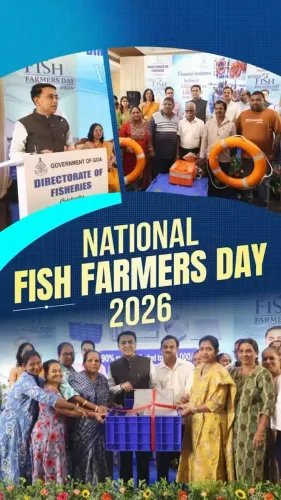
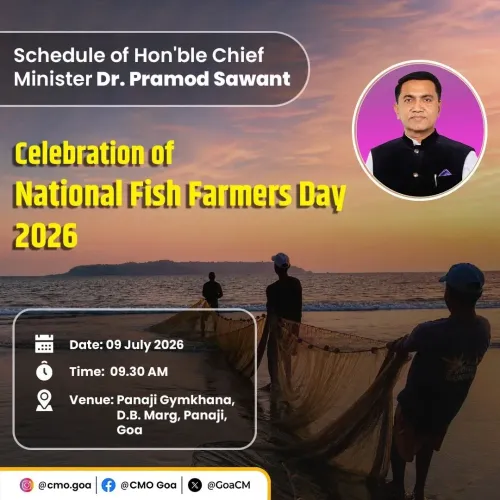
National Fish Farmers Day 2026 was held at Panaji Gymkhana, Panaji on 9 July 2026 .
CM Pramod Sawant launched the Financial Assistance Scheme for Setting up Mud Crab Culture Units in Goa.
A revised Financial Assistance Scheme for Fish Vendors was also launched to support value addition and sustainable livelihoods.
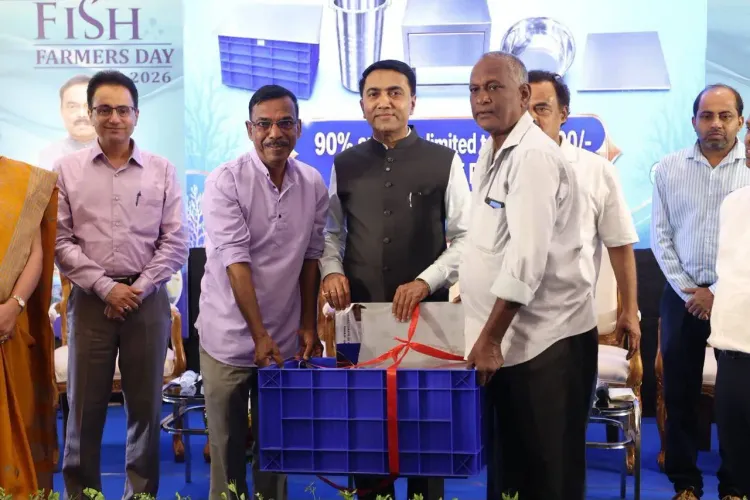
Sanction letters and benefits were distributed to over 500 beneficiaries under PMMSY and state schemes.
Fish Seller Cards were highlighted as a mechanism to formally empower traditional fishermen.
CM Sawant called on Goa's youth to treat fisheries as a modern, technology-driven sector for entrepreneurship and employment.
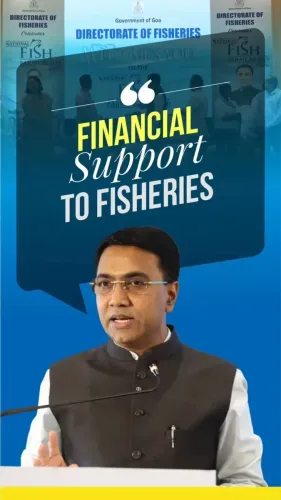
Goa Chief Minister Pramod Sawant on Thursday, 9 July 2026 addressed the National Fish Farmers Day 2026 programme at Panaji Gymkhana, Panaji, launching two new financial assistance schemes and handing over benefits to fishers, farmers and vendors across the state.
Context
The event, held in the presence of Nilkant Halarnkar, Goa's Minister for Fisheries, Animal Husbandry and Agriculture, brought together fish farmers, traditional fishermen and sector stakeholders to mark the national day. CM Sawant described the occasion as a celebration of the 'invaluable contribution of our fish farmers, fishermen and stakeholders towards strengthening Goa's Blue Economy and food security.'
Sanction letters and benefits were handed over to over 500 beneficiaries under the central Pradhan Mantri Matsya Sampada Yojana (PMMSY) and various state government schemes. Fish Seller Cards were also flagged as a tool to empower traditional fishermen through formal recognition and market access.
Policy Backdrop
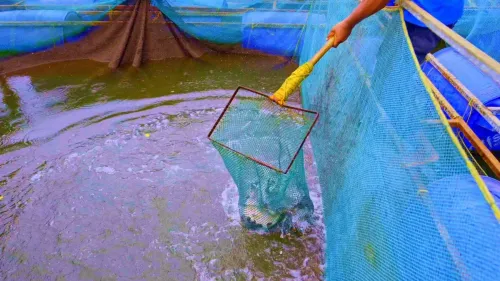
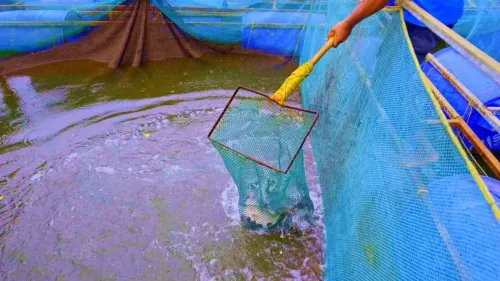
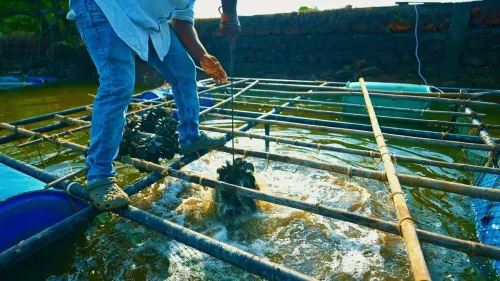
The two schemes launched at the event are the Financial Assistance Scheme for Setting up Mud Crab Culture Units in Goa and a revised Financial Assistance Scheme for Fish Vendors. Both are aimed at promoting scientific aquaculture, value addition and sustainable livelihoods in the coastal state.
PMMSY, launched by the central government in May 2020, is an umbrella scheme designed to increase fish production, modernise infrastructure and improve incomes for fishers. Goa had previously introduced beneficiary-oriented components under PMMSY covering cage culture, hatcheries and fish vending infrastructure. The revised Fish Vendor Scheme builds on that earlier framework with updated support structures.
India's National Fisheries Policy 2020 provides the broader strategic backdrop, emphasising sustainable marine and inland fisheries alongside value-chain development for traditional fishing communities.
Stakeholders and Impact
The schemes target multiple segments of Goa's fisheries economy: mud crab farmers entering a high-value aquaculture segment, fish vendors seeking formalised support, and traditional fishermen gaining access to modern infrastructure and better markets. CM Sawant also reaffirmed the government's commitment to expanding opportunities in ornamental fisheries, shellfish culture and aquaculture alongside crab farming.
Coastal states including Andhra Pradesh, Tamil Nadu and Kerala have pursued similar integrated approaches in recent years, aligning central PMMSY funding with state-specific schemes to diversify livelihoods into high-value segments and reduce pressure on capture fisheries. Goa's twin launches reflect that national pattern adapted to its smaller, coastline-dependent economy.
Addressing youth at the programme, Sawant urged them to 'embrace fisheries as a modern, technology-driven enterprise with immense potential for entrepreneurship and employment,' signalling a push to attract the next generation into the sector.
What's Next
Attention will now turn to the pace of unit setup under the new Mud Crab Culture Scheme and the rollout of the revised Fish Vendor Scheme across Goa's coastal districts. The distribution of Fish Seller Cards and the state's fisheries allocation in the 2027-28 budget will be key indicators of how firmly the government intends to anchor its Blue Economy commitments in fiscal terms.
With central PMMSY funding providing a structural backbone, the success of Goa's schemes will depend on ground-level uptake by farmers and vendors — and on whether the youth outreach translates into measurable entrepreneurship in aquaculture and allied segments.
Point of View
A pattern that signals intent to diversify the state's coastal economy beyond tourism. By specifically targeting mud crab culture — a high-value, export-linked segment — the administration is making a calculated bet on aquaculture as the next growth frontier for Goa's Blue Economy. The emphasis on Fish Seller Cards and formal market access for vendors also reflects a broader national push to bring informal fishing-community workers into structured welfare frameworks. Whether these schemes translate into measurable income gains will depend on implementation speed and the state's ability to sustain budget allocations beyond election cycles.
NationPress
8 Oct 2026
Frequently Asked Questions
What schemes did CM Pramod Sawant launch on National Fish Farmers Day 2026?
CM Sawant launched two schemes: the Financial Assistance Scheme for Setting up Mud Crab Culture Units in Goa and a revised Financial Assistance Scheme for Fish Vendors, both aimed at promoting scientific aquaculture and sustainable livelihoods.
Where was National Fish Farmers Day 2026 held in Goa?
The National Fish Farmers Day 2026 programme was held at Panaji Gymkhana in Panaji, Goa, on 9 July 2026.
What is PMMSY and how does it relate to Goa fisheries?
PMMSY, or Pradhan Mantri Matsya Sampada Yojana, is a central government scheme launched in 2020 to modernise fisheries infrastructure and raise fishers' incomes. Goa uses PMMSY funding alongside its own state schemes to support fish farmers, vendors and aquaculture entrepreneurs.
How many beneficiaries received benefits at the Goa fisheries event?
Over 500 beneficiaries received sanction letters and various benefits under PMMSY and state government schemes at the National Fish Farmers Day 2026 event in Panaji.
What is a Fish Seller Card in Goa?
A Fish Seller Card is a formal identity and benefit-access document issued by the Goa government to traditional fishermen and fish vendors, designed to provide them with recognition, modern infrastructure support and better market access.