CM Sawant Hails Modi's Decade of Inclusive Welfare at Scale
Synopsis
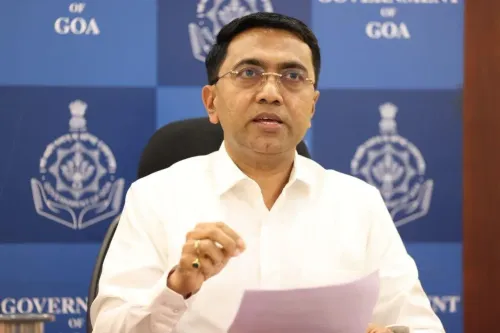
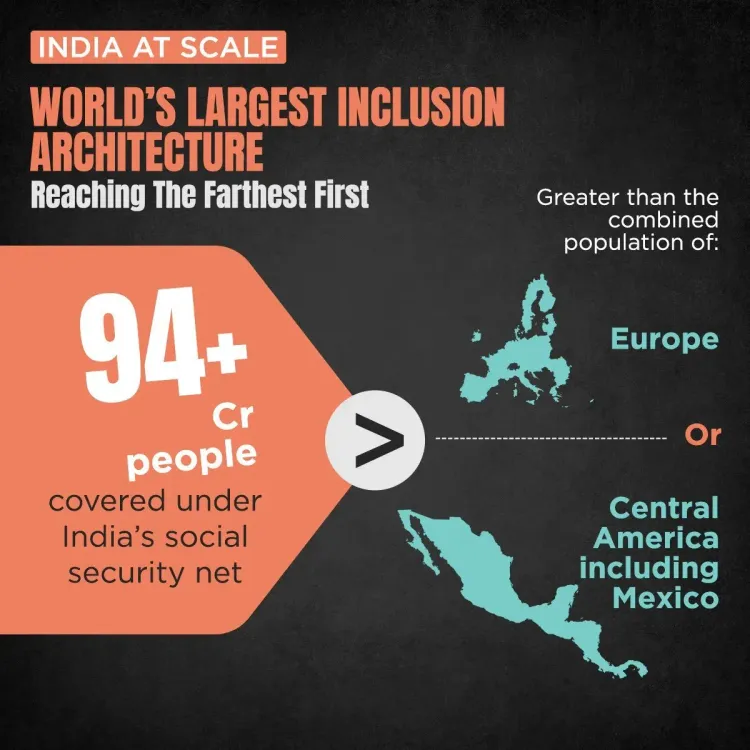
Goa Chief Minister Pramod Sawant on 8 June 2026 credited PM Narendra Modi's decade of leadership with scaling social security to nearly 94 crore citizens and formalising rural land ownership via the SVAMITVA Scheme, as BJP marks its Garib Kalyan anniversary.
Key Takeaways
Goa CM Pramod Sawant posted on 8 June 2026 praising PM Narendra Modi 's decade of welfare governance.
The post cited social security coverage expanding to nearly 94 crore citizens as a key achievement.
The SVAMITVA Scheme , launched in April 2020 , uses drone mapping to issue property cards to rural households across India.
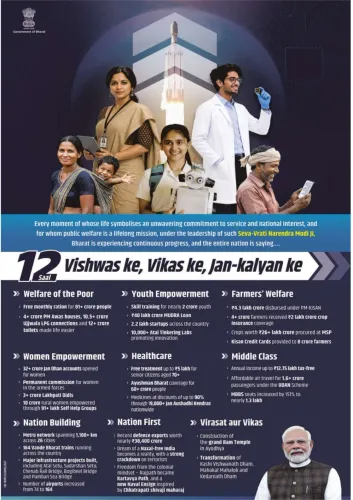
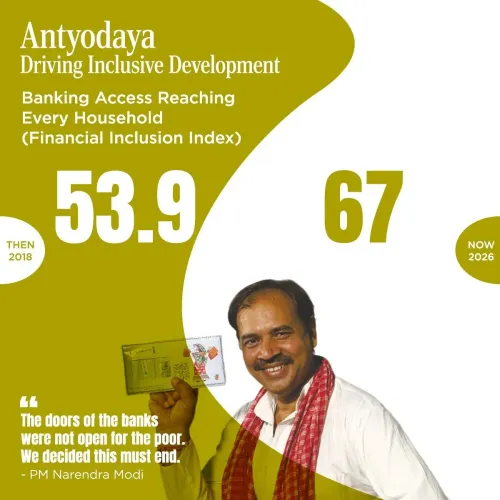
Sawant highlighted gains in financial inclusion, rural development, housing, healthcare, and digital governance as pillars of a 'self-reliant India.' The messaging is part of the BJP's #12YearsOfGaribKalyan campaign, coordinated across party leaders nationally.
The Antyodaya framework, targeting the poorest citizens first, underpins the political and policy narrative of the post.
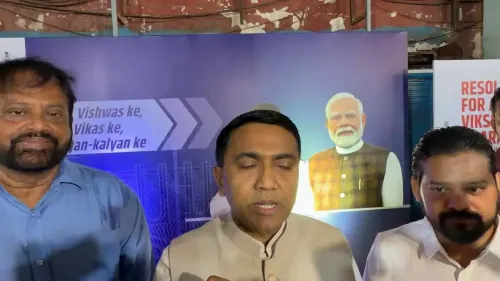
Goa Chief Minister Pramod Sawant on Monday, 8 June 2026 lauded Prime Minister Narendra Modi's decade of governance, highlighting the expansion of social security coverage and rural land empowerment through the SVAMITVA Scheme as markers of India's development journey under BJP-led rule.
Context
Sawant's post, shared on the occasion of the #12YearsOfGaribKalyan campaign, stated that 'India does at scale; India delivers at scale' under Modi's leadership. He specifically cited the expansion of social security coverage to nearly 94 crore citizens and the formalisation of rural property ownership through the SVAMITVA Scheme as evidence of inclusive growth. The hashtags #Antyodaya and #InclusiveDevelopment frame the message within the BJP's long-standing political vocabulary of reaching the last person in the queue.
The post arrives as the central government marks a milestone in its welfare delivery narrative, with BJP leaders across states amplifying a coordinated messaging push around the Garib Kalyan anniversary.
Policy Backdrop
The SVAMITVA Scheme, launched in April 2020 by the Ministry of Panchayati Raj, uses drone technology to map rural land parcels and issue property cards to households, giving millions of rural citizens formal ownership documentation for the first time. The scheme began with pilot projects in six states before a nationwide rollout.
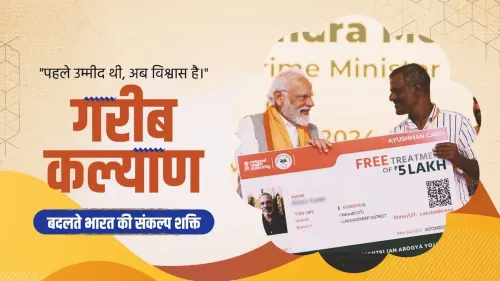
Financial inclusion has been another pillar of the decade's welfare architecture. The Pradhan Mantri Jan Dhan Yojana, announced in August 2014, brought unbanked households into the formal banking system and enabled the Direct Benefit Transfer mechanism to route subsidies and welfare payments with reduced leakage across ministries. The Ayushman Bharat Pradhan Mantri Jan Arogya Yojana, rolled out in 2018, extended health coverage to economically vulnerable families, rounding out a multi-sector welfare stack.
Sawant's post specifically names transformative initiatives in 'financial inclusion, rural development, housing, healthcare, and digital governance' as having 'strengthened the foundation of a self-reliant and empowered India.'
Stakeholders and Impact
The primary beneficiaries cited across these schemes are rural households, low-income families, and social security beneficiaries — the constituencies at the heart of the Antyodaya framework, which targets the poorest sections of society first. Property cards issued under SVAMITVA have practical significance beyond symbolism: they can serve as collateral for institutional credit, potentially unlocking access to formal loans for rural families.
For Goa, a state with a relatively small rural population compared to larger states, the national schemes translate into targeted beneficiary coverage. Sawant's amplification of central government messaging underscores the BJP's effort to align state-level political communication with the national welfare narrative ahead of future electoral cycles.
What's Next
Attention will turn to progress reports on SVAMITVA property card distribution within Goa and to any state budget allocations or parliamentary updates on social security coverage expansions in the 2026-27 fiscal cycle. As the central government pushes the Garib Kalyan anniversary as a political milestone, state BJP leaders like Sawant are expected to continue reinforcing the narrative with ground-level implementation data. The broader test will be whether the coverage figures cited translate into measurable improvements in rural credit access, housing quality, and health outcomes for the families these schemes are designed to serve.
Point of View
Technology-driven stack rather than isolated schemes. This framing serves a dual purpose: it burnishes the national leadership's record while positioning state governments as active delivery partners. As the 2026-27 fiscal year unfolds, the political pressure on state BJP administrations to demonstrate on-ground implementation data — particularly on property card distribution and beneficiary counts — will only intensify.
NationPress
26 Oct 2026
Frequently Asked Questions
What is the SVAMITVA Scheme mentioned by Goa CM Pramod Sawant?
The SVAMITVA Scheme is a central government programme launched in April 2020 by the Ministry of Panchayati Raj that uses drone technology to map rural land parcels and issue official property cards to rural households, giving them formal ownership documentation.
What is the Garib Kalyan anniversary that BJP is marking in 2026?
The Garib Kalyan anniversary refers to the BJP-led central government's celebration of over a decade of welfare delivery under PM Narendra Modi, encompassing schemes like Jan Dhan, Ayushman Bharat, SVAMITVA, and Direct Benefit Transfers targeting low-income and rural citizens.
How many citizens does India's social security coverage reach according to Sawant's post?
Goa CM Pramod Sawant's post states that social security coverage has expanded to nearly 94 crore citizens under PM Modi's leadership, though this figure has not been independently verified by NationPress from official 2026 data.
What is Antyodaya and why is it mentioned in the context of welfare schemes?
Antyodaya is a welfare philosophy meaning 'upliftment of the last person,' which the BJP uses to describe its approach of prioritising the poorest sections of society in the design and delivery of government schemes like SVAMITVA and Ayushman Bharat.
What is Goa CM Pramod Sawant's role in national BJP politics?
Pramod Sawant has served as Chief Minister of Goa since 2019 and is a BJP leader who regularly amplifies central government welfare and development messaging, aligning state-level communication with the national party's political narrative.