CM Sawant marks 12 years of Modi govt with welfare milestones
Synopsis
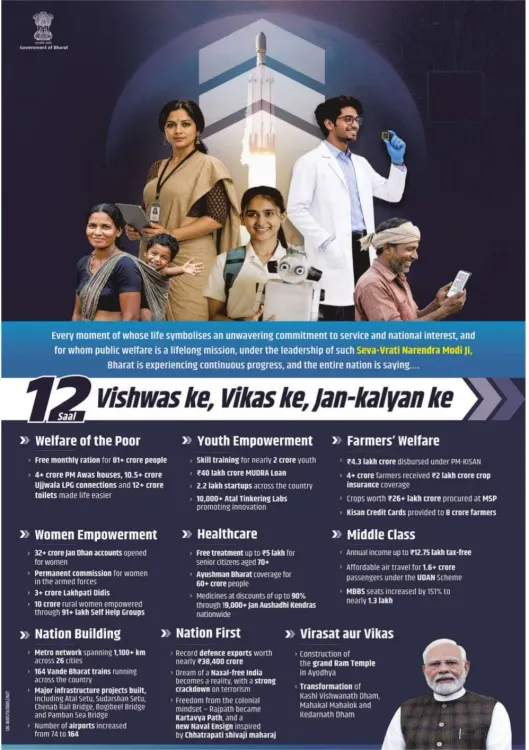
Goa Chief Minister Pramod Sawant marked 12 years of the Modi government on June 9, 2026, listing welfare milestones — banking, housing, water, LPG, electricity, toilets and health insurance — alongside India's rise in defence, startups and digital innovation under the Viksit Bharat 2047 vision.
Key Takeaways
Goa CM Pramod Sawant posted on June 9, 2026 to mark 12 years of the Narendra Modi government.
The post cited seven universal-access achievements: banking, housing, tap water, LPG, electricity, toilets and health insurance for all.
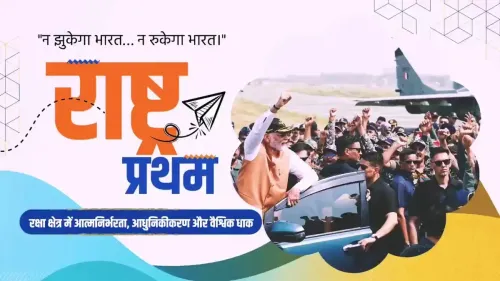
India's growth in defence, startups, pharmaceuticals, manufacturing, digital innovation, AI and infrastructure was highlighted as a global-force narrative.
The post invoked Atmanirbharta (self-reliance) and the Viksit Bharat 2047 long-term development vision.
Key flagship schemes underpinning the claims include Jan Dhan Yojana (2014), Swachh Bharat Mission (2014), Pradhan Mantri Awas Yojana (2015) and Ayushman Bharat (2018).
NITI Aayog scheme dashboards and mid-term Viksit Bharat reviews are expected to provide independent benchmarks for these claims.
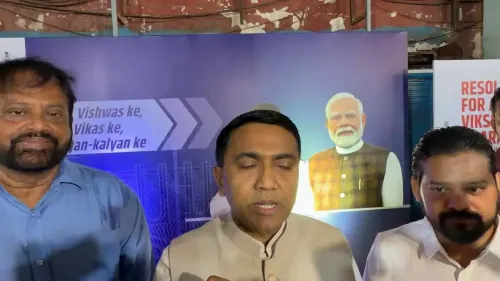
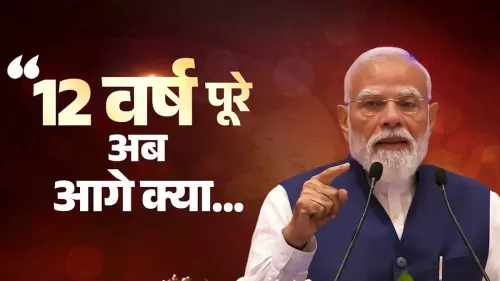
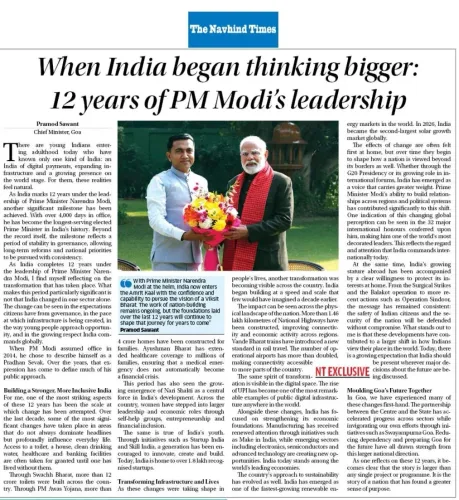
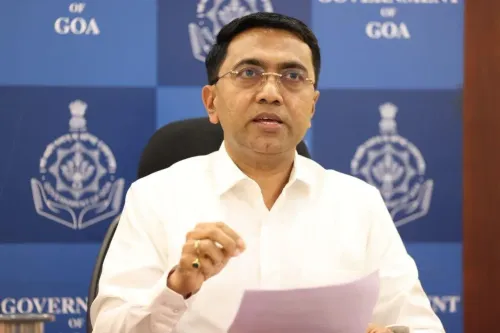
Goa Chief Minister Pramod Sawant on Tuesday, June 9, 2026, took to X to mark 12 years of the Narendra Modi-led central government, citing a sweeping list of welfare and governance achievements — from financial inclusion and housing to defence modernisation and digital innovation.
Context
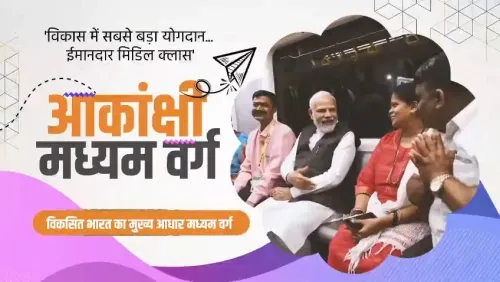
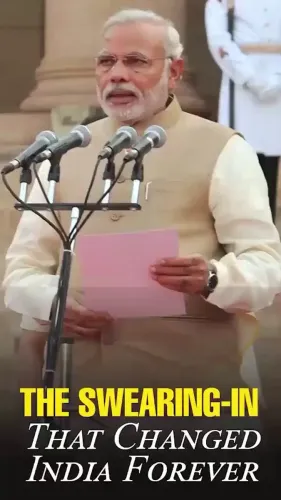
Sawant's post, carrying the hashtag #12YearsOfSeva, lands on the anniversary of Prime Minister Narendra Modi's government completing a dozen years in office — first sworn in on May 26, 2014. The post frames the period as one of transformation: 'from aspiration to achievement, from policy paralysis to decisive governance, and from dependence to Atmanirbharta,' invoking the government's flagship self-reliance doctrine.
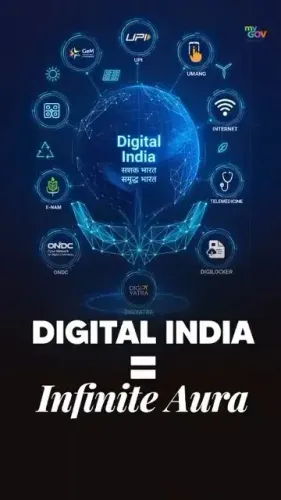
The Goa CM listed seven universal-access goals — banking, housing, tap water, LPG, electricity, toilets and health insurance — as the defining social pillars of the decade-plus tenure. He also highlighted India's emergence as a global force in defence, startups, pharmaceuticals, manufacturing, digital innovation, AI and infrastructure.
Policy Backdrop
The welfare pillars cited by Sawant map directly onto well-documented flagship schemes. Pradhan Mantri Jan Dhan Yojana, launched in August 2014, aimed to bring every unbanked household into the formal financial system. The Swachh Bharat Mission, launched in October 2014, targeted universal toilet coverage, while Pradhan Mantri Awas Yojana (launched 2015) set a housing-for-all goal.
Ayushman Bharat, rolled out in 2018, extended health insurance coverage to low-income families, becoming one of the world's largest publicly funded health assurance programmes. Together, these schemes form the backbone of the BJP's welfare narrative heading into the 2029 general election cycle.
The post also echoes the Atmanirbhar Bharat framing — a policy posture that ties domestic defence production, pharmaceutical self-sufficiency and digital public infrastructure to India's long-term development ambitions under the Viksit Bharat 2047 vision, which seeks to make India a fully developed nation by the centenary of its independence.
Stakeholders and Impact
The primary beneficiaries of the schemes cited are rural and low-income households across India — the demographic that welfare programmes such as Jan Dhan, Ujjwala (LPG access) and Jal Jeevan Mission (tap water) were designed to reach. Collectively, these programmes represent one of the largest state-driven social-infrastructure pushes in independent India's history.
For the BJP, the anniversary messaging serves a dual purpose: consolidating the government's record among core voters while reinforcing the 'decisive governance' contrast with the pre-2014 era. Senior leaders across states, including Sawant in Goa, have amplified this narrative simultaneously, signalling a coordinated party communication exercise.
What's Next
NITI Aayog is expected to release periodic scheme-performance dashboards that will provide independent benchmarks for the claims embedded in the anniversary messaging. Mid-term reviews of Viksit Bharat 2047 targets are also anticipated as the government approaches the midpoint of its current term.
How opposition parties respond to the 12-year milestone narrative — and whether civil-society assessments of scheme saturation align with official figures — will shape the political discourse around governance delivery ahead of the 2029 general elections.
Point of View
Where chief ministers reinforce the national leadership's record on welfare delivery simultaneously. By anchoring the message in tangible scheme names — Jan Dhan, Ayushman Bharat, Jal Jeevan — rather than abstract promises, the party attempts to ground its governance narrative in verifiable outputs ahead of the 2029 election cycle. The Viksit Bharat 2047 framing also signals a deliberate pivot: shifting voter expectations from short-term welfare to a long-arc national development story. Whether that framing holds will depend heavily on how independent assessments of scheme saturation and quality of delivery evolve over the next two years.
NationPress
22 Sept 2026
Frequently Asked Questions
Why is the Modi government celebrating 12 years in June 2026?
The Modi government was first sworn in on May 26, 2014, making June 2026 the period when it completes 12 years in office. Senior BJP leaders, including Goa CM Pramod Sawant, have marked the anniversary by highlighting welfare and governance achievements.
What is Viksit Bharat 2047?
Viksit Bharat 2047 is the central government's long-term vision to transform India into a fully developed nation by 2047, the centenary of its independence. It encompasses goals in infrastructure, manufacturing, digital innovation, defence and social welfare.
Which welfare schemes did Pramod Sawant refer to in his post?
Sawant's post referenced banking for all (Jan Dhan Yojana), housing for all (PM Awas Yojana), tap water for all (Jal Jeevan Mission), LPG for all (Ujjwala Yojana), electricity for all, toilets for all (Swachh Bharat Mission) and health insurance for all (Ayushman Bharat).
What does Atmanirbharta mean in the context of the Modi government?
Atmanirbharta means self-reliance. In the Modi government's policy context, it refers to the Atmanirbhar Bharat initiative that promotes domestic manufacturing, defence indigenisation, pharmaceutical self-sufficiency and digital public infrastructure to reduce dependence on imports.
What is Pramod Sawant's political role?
Pramod Sawant is the Chief Minister of Goa and a senior BJP leader. He frequently uses social media to highlight central government policies and achievements, and is a key voice amplifying the party's national governance narrative at the state level.