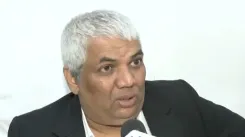
CM Sawant Hails 12 Years of India's Defence Self-Reliance
Synopsis
Goa Chief Minister Pramod Sawant on 17 June 2026 credited PM Narendra Modi's 12-year tenure with a historic transformation in India's defence capabilities, highlighting Atmanirbhar Bharat as the cornerstone of the country's push for military self-reliance and global defence power status.
Key Takeaways
Goa CM Pramod Sawant posted on X on 17 June 2026 marking 12 years of the Modi government's defence transformation under the hashtag #12YearsOfSurakshitBharat .
He credited the Atmanirbhar Bharat campaign, launched in May 2020 , as the foundation of India's defence self-reliance drive.
The Make in India initiative, announced in September 2014 , first identified defence manufacturing as a national priority sector.
Negative import lists introduced from August 2020 have progressively banned imports of over 100 categories of defence equipment to spur domestic production.
Key indigenous programmes including Tejas Mk2 and the Advanced Medium Combat Aircraft represent the forward edge of India's self-reliance agenda.
BJP leaders are coordinating digital outreach around the 12-year milestone, with defence achievements forming a core political narrative.
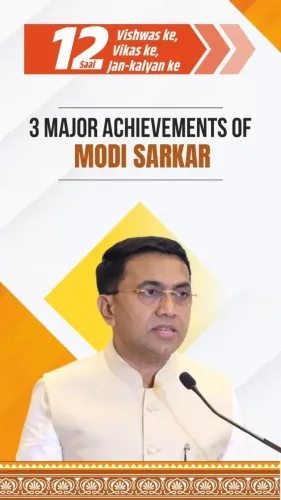
Goa Chief Minister Pramod Sawant on Wednesday, 17 June 2026 took to X to mark what he called a historic transformation in India's national security and defence capabilities over the past 12 years under Prime Minister Narendra Modi, invoking the hashtag #12YearsOfSurakshitBharat.
Context
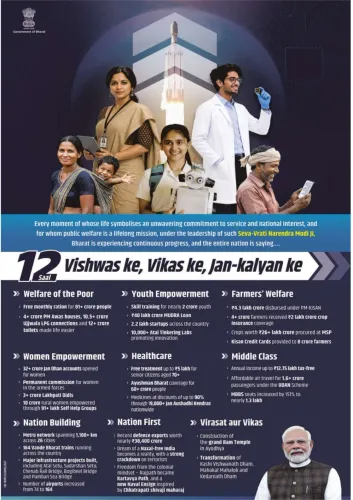
In his post, CM Sawant wrote: 'Under the visionary leadership of Hon'ble Prime Minister Shri Narendra Modi Ji, India's national security and defence capabilities have undergone a historic transformation over the past 12 years.' The statement coincides with the completion of 12 years of the Modi-led government at the Centre, a milestone being marked by BJP leaders across the country with coordinated messaging on national security achievements.
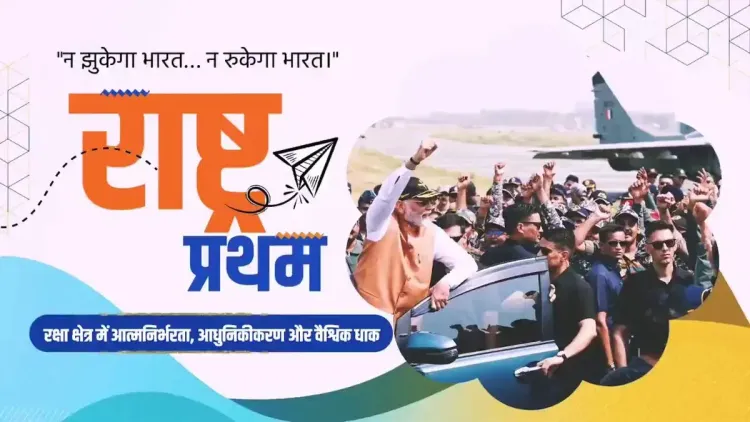
Sawant specifically highlighted the Atmanirbhar Bharat vision in defence, calling it a force that is 'empowering Indian innovation, strengthening our Armed Forces and establishing India as a rising global defence power.' The post was accompanied by a video, underscoring the BJP's organised digital outreach around the anniversary.
Policy Backdrop
The Atmanirbhar Bharat campaign, formally launched in May 2020, placed defence indigenisation at its core. It built on the Make in India initiative announced in September 2014, which identified defence manufacturing as a priority sector for both domestic and foreign investment.
Successive revisions to the Defence Procurement Procedure — including the 2016 edition and later updates — introduced higher indigenous content requirements and a strategic partnership model for major platform acquisitions. From August 2020 onward, the government promulgated negative import lists progressively banning imports of over 100 categories of defence equipment, mandating domestic production instead.
These measures have been complemented by increased budgetary allocations for domestic research and development, technology transfer agreements, and public-private partnerships involving Defence Public Sector Undertakings alongside private firms.
Stakeholders and Impact
The primary beneficiaries of India's defence indigenisation drive are the Indian Armed Forces, domestic defence manufacturers, and a growing ecosystem of defence startups. Reduced import dependence is seen as central to India's broader strategic-autonomy agenda, insulating the military from supply-chain disruptions and foreign policy pressures.
Domestic manufacturers and startups have gained access to a larger share of procurement budgets, while the government has simultaneously pursued export promotion to position India as a credible supplier in global defence markets. The convergence of procurement reform and export ambition marks a structural shift from the pre-2014 era of heavy import reliance.
What's Next
Attention will now turn to the forthcoming Union Budget, where defence capital acquisition proposals and allocations for domestic R&D will be closely watched as a measure of the policy's momentum. Progress on flagship indigenous programmes — including the Tejas Mk2 fighter jet, the Advanced Medium Combat Aircraft, and domestic missile systems — will serve as concrete benchmarks for the self-reliance agenda.
Outcomes of upcoming defence exhibitions and ministerial-level export promotion events will also indicate whether India is translating manufacturing ambition into tangible global market presence. As BJP leaders amplify the #12YearsOfSurakshitBharat narrative, the policy record in defence is likely to remain a central plank of the party's political communication in the months ahead.
Point of View
Using the 12-year milestone as a performance audit. The Atmanirbhar Bharat frame allows the party to link economic nationalism with strategic autonomy — a durable combination in Indian political messaging. The emphasis on 'historic transformation' signals that defence indigenisation, once a technocratic policy discussion, has been fully absorbed into mainstream political communication. Whether the rhetoric is matched by verifiable output — export figures, induction timelines, R&D outcomes — will determine how effectively this narrative holds under scrutiny.
NationPress
16 Sept 2026
Frequently Asked Questions
What is Atmanirbhar Bharat in defence?
Atmanirbhar Bharat in defence is a self-reliance campaign formally launched in May 2020 that aims to boost domestic design, production and export of military equipment, reducing India's dependence on foreign arms imports.
Why is Pramod Sawant talking about India's defence policy?
As a senior BJP leader and Goa Chief Minister, Sawant joined a coordinated party effort marking 12 years of the Modi government by highlighting national security achievements under the hashtag #12YearsOfSurakshitBharat.
What is the negative import list in Indian defence?
The negative import list, introduced from August 2020 onward, is a government-notified list of over 100 categories of defence equipment that can no longer be imported and must instead be produced domestically.
What are India's key indigenous defence programmes?
Key programmes include the Tejas Mk2 light combat aircraft, the Advanced Medium Combat Aircraft, and various domestic missile systems being developed under the Atmanirbhar Bharat framework.
What is #12YearsOfSurakshitBharat?
#12YearsOfSurakshitBharat is a BJP hashtag campaign marking 12 years of the Narendra Modi government, used by party leaders to highlight achievements in national security, defence indigenisation and strategic autonomy.