CM Sawant Marks 12 Years of Modi Govt, Cites Middle-Class Gains
Synopsis
Goa Chief Minister Pramod Sawant on 15 June 2026 marked 12 years of the Modi-led central government, citing Digital India, affordable housing, employment generation, and the Viksit Bharat 2047 vision as evidence of sustained middle-class empowerment under BJP rule.
Key Takeaways
Goa CM Pramod Sawant posted on X on 15 June 2026 to mark 12 years of the Narendra Modi -led NDA government.
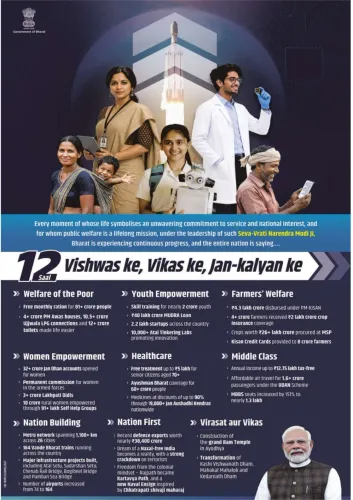
He cited Digital India , affordable housing, better education, employment generation, and transparent governance as key middle-class gains.
The Digital India programme was formally launched on 1 July 2015 ; Pradhan Mantri Awas Yojana (Urban) was announced the same year.
The post was tagged with #12YearsOfSakshamMiddleClass , #ViksitBharat , and #DigitalIndia , indicating a coordinated BJP communications effort.
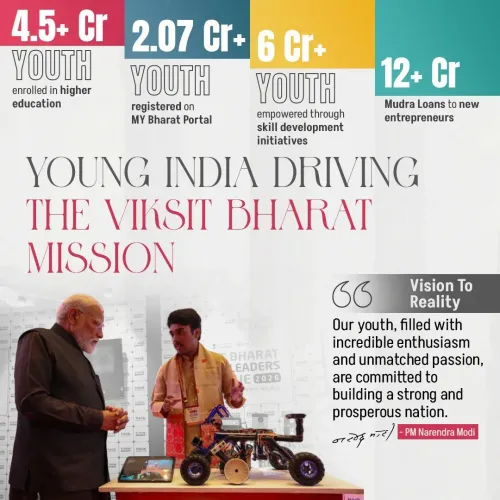
The long-term policy anchor referenced is Viksit Bharat 2047 , the central government's vision for developed-economy status by India's centenary of independence.
Next Union Budget announcements on direct-tax relief and urban housing will be the next concrete policy checkpoint for middle-class commitments.
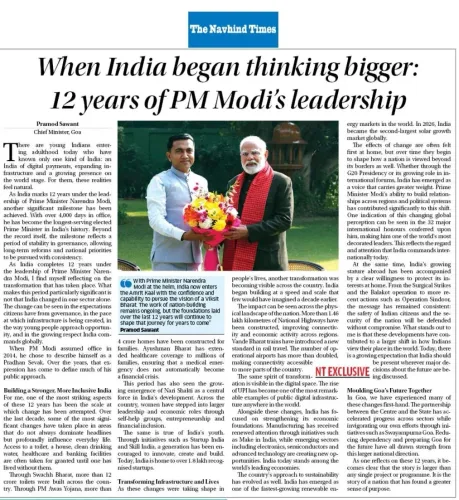
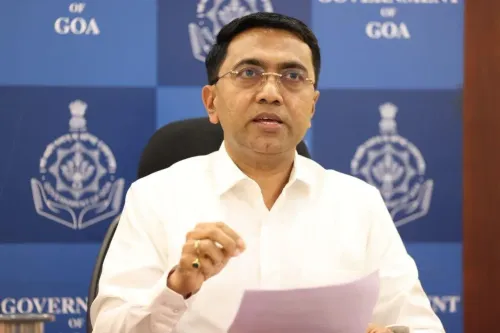
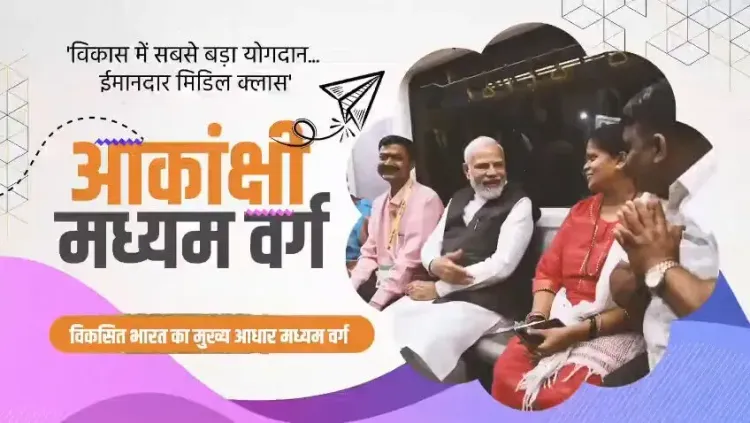
Goa Chief Minister Pramod Sawant on Monday, 15 June 2026, took to X to mark 12 years of the Narendra Modi-led central government, crediting the period with expanding opportunities, digital access, affordable housing, and improved quality of life for India's middle class.
Context
Sawant's post comes as the BJP-led NDA government completes a dozen years in office since first assuming power in May 2014. The Chief Minister framed the anniversary around the theme of middle-class empowerment, writing: 'Over the last 12 years, the middle class has witnessed greater opportunities, better connectivity, digital empowerment, improved infrastructure and enhanced quality of life under the leadership of Prime Minister Narendra Modi.'
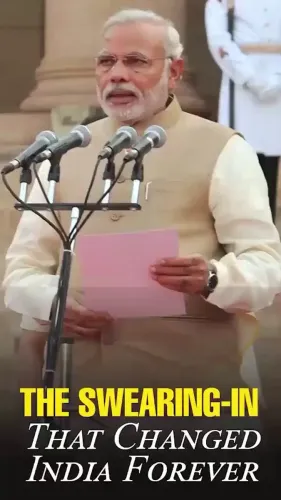
The post was accompanied by a video and carried hashtags #12YearsOfSakshamMiddleClass, #ViksitBharat, and #DigitalIndia, signalling a coordinated party-level messaging push around the government's anniversary.
Policy Backdrop
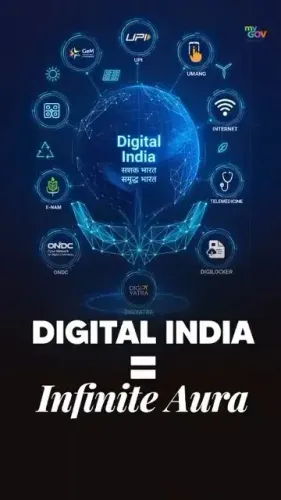
The governance milestones Sawant referenced span several flagship central schemes. The Digital India programme, formally launched on 1 July 2015, sought to integrate broadband, e-governance, and digital payments into everyday public service delivery. Pradhan Mantri Awas Yojana (Urban), announced in 2015, targeted affordable housing for lower- and middle-income households.
Successive Union Budgets since 2014-15 have periodically addressed middle-class priorities — from income-tax threshold revisions to subsidised loans and skill-development programmes. The overarching long-term frame is Viksit Bharat 2047, the central government's vision for India to attain developed-economy status by the centenary of independence in 2047.
Sawant characterised the past twelve years as 'Seva, Sushasan' (service, good governance) and empowerment, describing every reform as having 'strengthened the aspirations and confidence of India's middle class.'
Stakeholders and Impact
India's middle class — broadly the urban and semi-urban salaried and self-employed segment — has been a central rhetorical and policy target for the BJP since 2014. Ease of living, transparent governance, and digital access are frames that resonate particularly with this demographic, which also constitutes a significant share of the income-tax base.
Goa, as a BJP-governed state, has aligned its own state-level communications with central government messaging. Sawant's post reflects the broader pattern across BJP-ruled states of amplifying national scheme milestones, especially around politically significant anniversaries.
What's Next
Attention will now turn to the next Union Budget, where direct-tax rationalisation and fresh urban housing outlays explicitly referencing middle-class beneficiaries are likely to be closely watched. Any new scheme announcements or policy extensions under the Viksit Bharat 2047 framework will serve as the next concrete test of the government's stated commitment to middle-class empowerment.
Point of View
Coordinated BJP effort to frame the party's 12-year governance record through the lens of middle-class aspiration — a demographic that is both electorally decisive and symbolically central to the 'New India' narrative. By anchoring the message in tangible schemes such as Digital India and Pradhan Mantri Awas Yojana rather than abstract ideology, the party attempts to convert policy lineage into voter loyalty. The Viksit Bharat 2047 frame extends this messaging beyond the electoral cycle, positioning the BJP as the steward of a generational project. For state-level leaders like Sawant, amplifying central milestones also reinforces their alignment with the national leadership ahead of any future state assembly contests.
NationPress
20 Sept 2026
Frequently Asked Questions
What did Goa CM Pramod Sawant say about the Modi government's 12 years?
Sawant credited the 12-year period with delivering greater opportunities, digital empowerment, affordable housing, better education, employment generation, and transparent governance for India's middle class.
What is Viksit Bharat 2047?
Viksit Bharat 2047 is the central government's long-term vision for India to attain developed-economy status by 2047, the centenary of Indian independence.
What is the Digital India programme?
Digital India is a flagship government programme formally launched on 1 July 2015 to expand broadband connectivity, e-governance platforms, and digital payments infrastructure across the country.
What is Pradhan Mantri Awas Yojana Urban?
Pradhan Mantri Awas Yojana (Urban) is a central government scheme announced in 2015 to provide affordable housing to lower- and middle-income households in urban areas.
Why is BJP highlighting middle-class achievements after 12 years in power?
The BJP has consistently positioned the middle class as a core constituency since 2014; marking 12 years in office with a middle-class-focused message reinforces that identity and sets the tone for future policy and electoral communication.