CM Sawant Marks 12 Years of Garib Kalyan Welfare Push
Synopsis
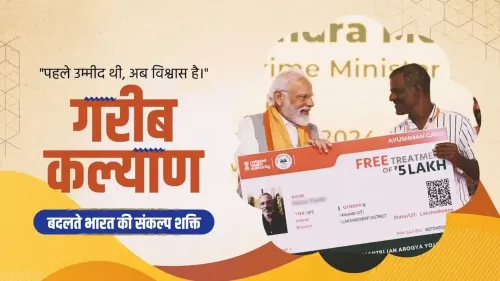
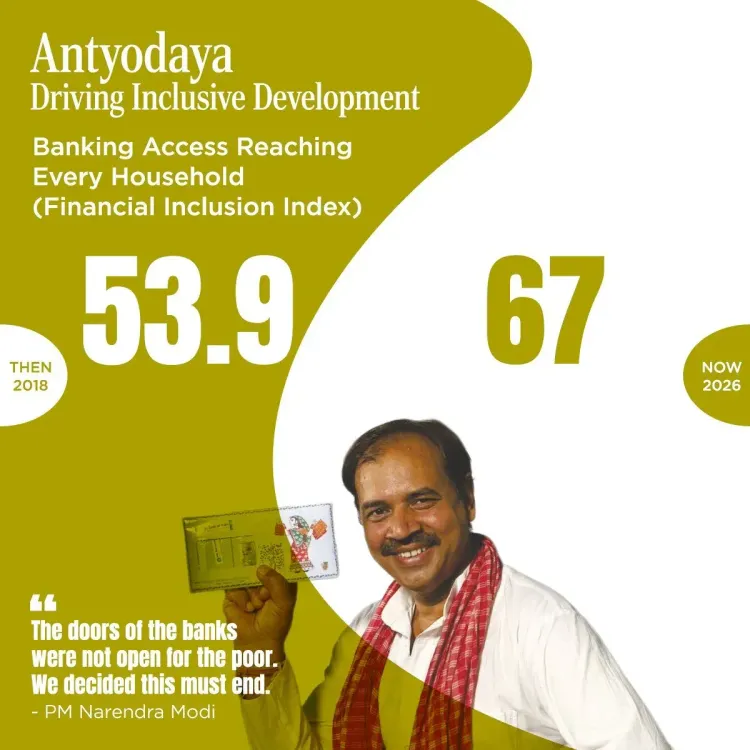
Goa Chief Minister Pramod Sawant marked 12 years of the Modi government's Garib Kalyan welfare push on June 8, 2026, highlighting the Antyodaya principle and progress on financial inclusion, disability rights, and rural poverty reduction under flagship schemes including Jan Dhan Yojana and the Rights of Persons with Disabilities Act.
Key Takeaways
Goa CM Pramod Sawant posted on June 8, 2026 marking 12 years of PM Modi's Garib Kalyan welfare programmes.
The post invokes the Antyodaya principle — ensuring welfare reaches the last person in society.
Key areas cited: empowerment of Divyangjan , reduction of rural poverty, and universal banking access.
Pradhan Mantri Jan Dhan Yojana (launched August 2014) underpins the financial inclusion drive referenced in the post.
The Rights of Persons with Disabilities Act, 2016 strengthened the legal framework for Divyangjan support.
The messaging is part of a wider BJP campaign; future Union Budget announcements may build on the 12-year milestone.
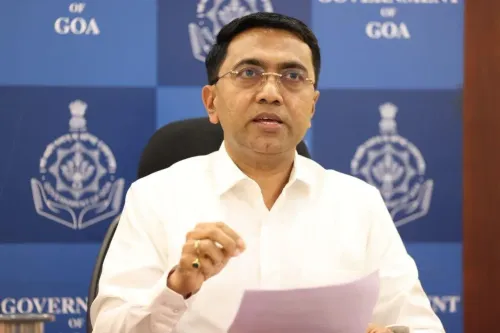
Goa Chief Minister Pramod Sawant on Monday, June 8, 2026, invoked the Antyodaya principle to mark 12 years of welfare programmes under Prime Minister Narendra Modi, highlighting gains in financial inclusion, disability rights, and rural poverty reduction.
Context
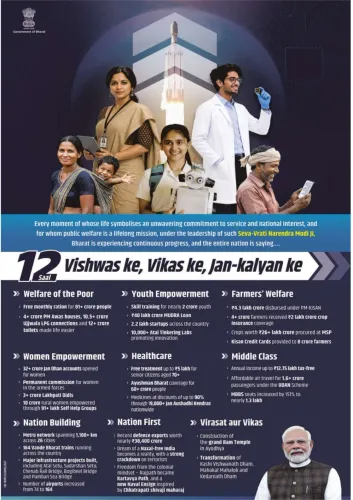
Sawant's post, tagged #12YearsOfGaribKalyan, frames the past decade-plus of central governance through the lens of Antyodaya — a concept rooted in the idea that welfare must reach the last person in society. He cited progress on three fronts: empowering Divyangjan (persons with disabilities), reducing rural poverty, and expanding banking access to every household.
The post is part of a coordinated BJP messaging effort marking 12 years of the Modi government's welfare architecture, with state-level leaders amplifying the national narrative.
Policy Backdrop
The welfare push Sawant references draws from a cluster of flagship programmes. The Pradhan Mantri Jan Dhan Yojana, launched in August 2014, aimed to open bank accounts for previously unbanked households, forming the foundation of the government's Direct Benefit Transfer system.
On disability rights, the Rights of Persons with Disabilities Act, 2016 replaced a 1995 law, broadening the definition of disability and strengthening entitlements for Divyangjan. The Direct Benefit Transfer framework, expanded steadily from 2014 onward, was designed to reduce leakages in subsidy delivery and improve last-mile reach in rural welfare programmes.
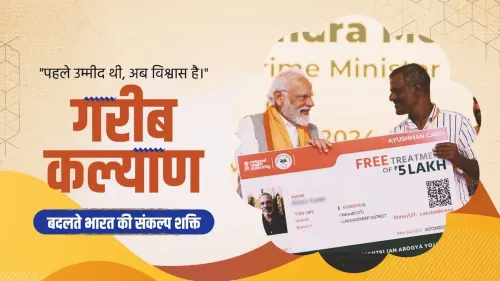
Together, these measures form what the BJP has branded the Garib Kalyan (welfare of the poor) model — combining financial inclusion, social security, housing, and food security under a single policy identity anchored in the Antyodaya philosophy.
Stakeholders and Impact
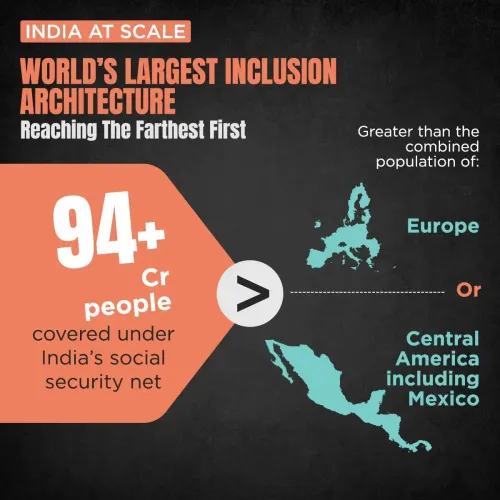
The primary beneficiaries of the programmes Sawant highlights are Divyangjan, rural households below or near the poverty line, and previously unbanked families. Jan Dhan accounts provided the infrastructure for direct cash transfers, ration linkages, and insurance products to reach these groups at scale.
From a state perspective, Goa — though among India's wealthiest states by per-capita income — has participated in central welfare delivery, with beneficiaries enrolled under national schemes. Sawant's endorsement also signals alignment between BJP-ruled state governments and the central government's welfare messaging ahead of potential budget announcements.
What's Next
Analysts tracking the Garib Kalyan campaign will watch for new scheme announcements in the next Union Budget, where the government may use the 12-year milestone to launch or expand programmes. State-level utilisation and saturation reports for central welfare schemes in Goa will indicate how effectively the Antyodaya framework has translated into on-ground outcomes. The broader question is whether the anniversary messaging translates into fresh policy commitments or remains a consolidation of existing programme achievements.
Point of View
Giving the Garib Kalyan brand ideological depth beyond individual schemes. For BJP-ruled states like Goa, echoing this messaging reinforces political continuity between state and central leadership. The more substantive test, however, is whether the anniversary produces new policy commitments or serves primarily as a consolidation exercise ahead of the next budget cycle.
NationPress
23 Sept 2026
Frequently Asked Questions
What is the Antyodaya principle in Indian welfare policy?
Antyodaya means 'welfare of the last person' and refers to the policy goal of ensuring government schemes reach the most marginalised sections of society. It is associated with RSS ideologue Deen Dayal Upadhyaya and has been adopted as a guiding framework for BJP-era welfare programmes including Jan Dhan, housing, and food security schemes.
What is the Garib Kalyan scheme and what does it cover?
Garib Kalyan, meaning 'welfare of the poor,' is an umbrella term the BJP government uses to describe its cluster of welfare programmes covering financial inclusion, food security, housing, and social security. The Pradhan Mantri Garib Kalyan Anna Yojana, for instance, provided free food grain to crores of beneficiaries.
What is Pradhan Mantri Jan Dhan Yojana?
Pradhan Mantri Jan Dhan Yojana is a financial inclusion programme launched in August 2014 to open zero-balance bank accounts for previously unbanked households, enabling direct benefit transfers, insurance, and credit access for the rural and urban poor.
What rights do Divyangjan have under Indian law?
Under the Rights of Persons with Disabilities Act, 2016, Divyangjan are entitled to reservation in government jobs and education, barrier-free access, social security benefits, and legal protections against discrimination. The Act expanded the recognised categories of disability from 7 to 21 compared to the earlier 1995 legislation.
Why is Goa CM Pramod Sawant commenting on national welfare schemes?
As a BJP Chief Minister, Sawant regularly amplifies central government policy messaging. Goa participates in centrally sponsored welfare schemes, and state leaders endorsing national programmes is a standard part of BJP's coordinated political communication strategy.