CM Pema Khandu Hails 12 Years of Garib Kalyan Welfare Push
Synopsis
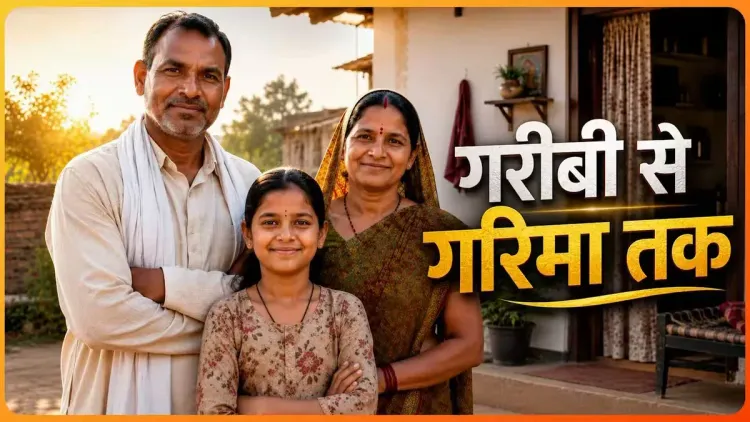
Arunachal Pradesh Chief Minister Pema Khandu marked 12 years of the central government's Garib Kalyan welfare push on June 8, 2026, highlighting Jan Dhan, Ayushman Bharat, housing and tap-water schemes as pillars of inclusive, last-mile development aligned with the Viksit Bharat 2047 vision.
Key Takeaways
CM Pema Khandu posted on June 8, 2026 to mark 12 years of the Garib Kalyan welfare agenda under the BJP-led central government.
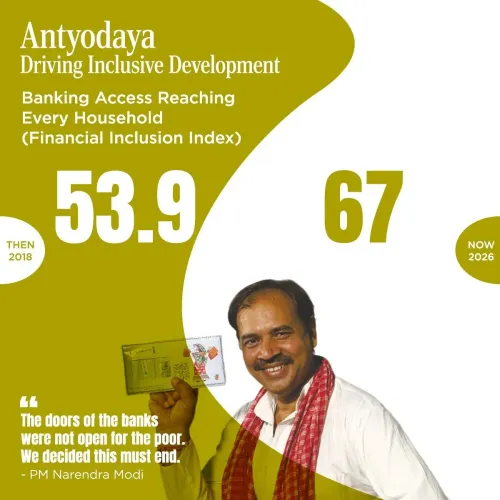
Pradhan Mantri Jan Dhan Yojana , launched in August 2014 , created the direct benefit transfer infrastructure for subsequent welfare schemes.
Ayushman Bharat provides health cover of up to Rs 5 lakh per family per year to the bottom 40 per cent of India's population.
Jal Jeevan Mission (approved 2019 ) and Pradhan Mantri Awas Yojana (started 2015 ) remain active with pending coverage targets in northeastern and rural geographies.
The post aligns with the Viksit Bharat 2047 framework, positioning welfare delivery as central to India's long-term development narrative.
Progress reviews on PMAY and Jal Jeevan Mission in Arunachal Pradesh and the next Union Budget decision on PMGKAY are the immediate policy watch-points.
Arunachal Pradesh Chief Minister Pema Khandu on Monday, June 8, 2026, marked twelve years of the central government's welfare agenda, citing flagship programmes from financial inclusion to health cover as evidence of transformative last-mile delivery for India's poorest citizens.
Context
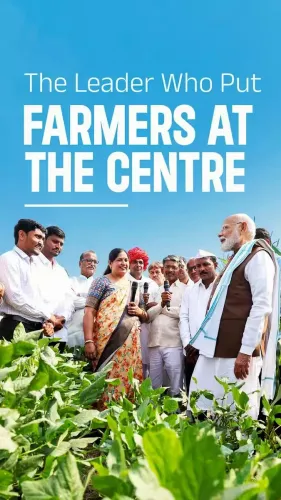
Posting under the hashtags #12YearsOfGaribKalyan and #ViksitBharat, CM Khandu framed the anniversary as a milestone in dignified, inclusive governance. 'Over the last 12 years, welfare has reached the doorstep of millions through Antyodaya, last-mile delivery and Garib Kalyan, ensuring dignity, inclusion and opportunity for every citizen,' he wrote. The post aligns with a broader BJP-led campaign marking a decade-plus of welfare-centric governance since 2014.
The reference to Antyodaya — a principle of serving the last person in the queue — and Garib Kalyan (welfare of the poor) signals the ideological framing the ruling party has consistently used to describe its social policy architecture.
Policy Backdrop
Pradhan Mantri Jan Dhan Yojana, launched in August 2014, opened bank accounts for previously unbanked households and built the direct benefit transfer infrastructure that underpins most subsequent schemes. Ayushman Bharat, announced in the 2018 Union Budget, extended health cover of up to Rs 5 lakh per family per year to the bottom 40 per cent of the population.
Pradhan Mantri Awas Yojana, started in 2015, targets delivery of pucca houses to rural and urban poor households, while Jal Jeevan Mission, approved in 2019, set a goal of functional tap-water connections to all rural households. Pradhan Mantri Garib Kalyan Anna Yojana, introduced in March 2020 and periodically extended, provides free foodgrains to beneficiaries covered under the National Food Security Act.
Together, these schemes represent a deliberate shift toward universal basic services delivered through targeted, technology-enabled pipelines rather than legacy subsidy mechanisms.
Stakeholders and Impact
The primary beneficiaries of this welfare architecture are poor and rural households, with northeastern states such as Arunachal Pradesh occupying a prominent place in the government's narrative of inclusive growth reaching India's geographical margins. CM Khandu, as a senior BJP leader heading one of the country's most remote states, has consistently positioned Arunachal Pradesh as a recipient and participant in this national push.
The post's mention of 'housing to tap water' directly echoes the twin pillars of PMAY and Jal Jeevan Mission, both of which have significant pending targets in rural and hilly terrain — terrain that defines much of Arunachal Pradesh. For millions of families in such geographies, last-mile delivery of these entitlements remains the most tangible measure of state reach.
What's Next
Attention will now turn to quarterly progress reviews on Jal Jeevan Mission and PMAY coverage figures, particularly for northeastern states, as the government seeks to close remaining gaps in universal service delivery. The upcoming Union Budget will also be watched for any extension or revision of PMGKAY, whose periodic renewals have become a key political and fiscal decision point.
With the Viksit Bharat 2047 vision increasingly used as an organising framework, posts such as this one signal that welfare delivery metrics will remain central to the ruling party's political messaging well into the next electoral cycle.
Point of View
Tethering his state's identity to the central government's decade-long welfare narrative ahead of what is likely to be a sustained BJP campaign around the '12 Years of Garib Kalyan' milestone. By invoking Antyodaya alongside modern schemes such as Jan Dhan and Ayushman Bharat, the post bridges ideological continuity — from Deendayal Upadhyaya's original philosophy to present-day DBT infrastructure — in a single frame. For a northeastern frontier state like Arunachal Pradesh, where state capacity and central transfers are deeply intertwined, this messaging also reinforces the CM's own political standing as a credible conduit of Delhi's development pipeline. The broader pattern suggests welfare delivery metrics will be the primary electoral currency in India's periphery states through the next cycle.
NationPress
23 Sept 2026
Frequently Asked Questions
What is Garib Kalyan and why is it in the news?
Garib Kalyan means 'welfare of the poor' and refers to a cluster of central government schemes — including free foodgrain distribution, housing, health cover and financial inclusion — that the BJP has championed since 2014. It is in the news because Arunachal Pradesh CM Pema Khandu and other BJP leaders are marking 12 years of this welfare push in June 2026.
What schemes did CM Pema Khandu mention in his post?
CM Khandu referenced Jan Dhan (financial inclusion), Ayushman Bharat (health cover), housing (Pradhan Mantri Awas Yojana) and tap water (Jal Jeevan Mission) as key pillars of the 12-year Garib Kalyan agenda.
What is Ayushman Bharat and who does it cover?
Ayushman Bharat is a national health protection scheme launched in 2018 that provides up to Rs 5 lakh in annual health cover to families in the bottom 40 per cent of India's population, focusing on economically weaker sections.
What is Jal Jeevan Mission?
Jal Jeevan Mission is a central government scheme approved in 2019 with the goal of providing functional tap-water connections to every rural household in India. It is a key component of the Garib Kalyan welfare framework.
What is Viksit Bharat 2047?
Viksit Bharat 2047 is the central government's long-term vision to make India a developed nation by the centenary of its independence. Welfare delivery, infrastructure and inclusive growth are positioned as foundational pillars of this vision.