CM Himanta Marks 12 Years of Garib Kalyan Under Modi
Synopsis
Assam Chief Minister Himanta Biswa Sarma marked 12 years of the Modi government on 8 June 2026, citing Antyodaya as the guiding philosophy behind a decade of welfare expansion. The post aligns with a coordinated BJP anniversary narrative linking central schemes to last-mile delivery for poor households.
Key Takeaways
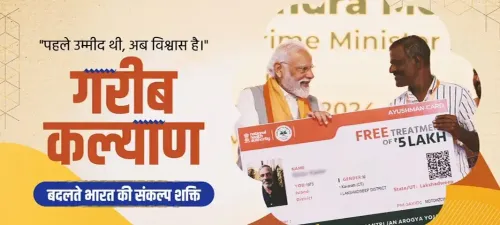
Himanta Biswa Sarma posted on 8 June 2026 under #12YearsOfGaribKalyan , marking the anniversary of the Modi government's welfare agenda.
He cited Antyodaya — 'rise of the last person' — as the guiding philosophy behind 12 years of poverty-focused governance.
Key schemes under the Garib Kalyan umbrella include PM Jan Dhan Yojana (2014), PM Ujjwala Yojana (2015), and PM Garib Kalyan Anna Yojana (2020).
Sarma, as NEDA convenor , consistently links Assam's state-level governance to central welfare delivery, reinforcing BJP's North-East political strategy.
The post is part of a coordinated BJP messaging effort across states countering opposition critiques on inequality.
Assam Chief Minister Himanta Biswa Sarma on Monday, 8 June 2026 joined a nationwide BJP chorus marking 12 years of the Narendra Modi government, framing the period as one of sustained welfare delivery guided by the Antyodaya philosophy of reaching the poorest citizen first.
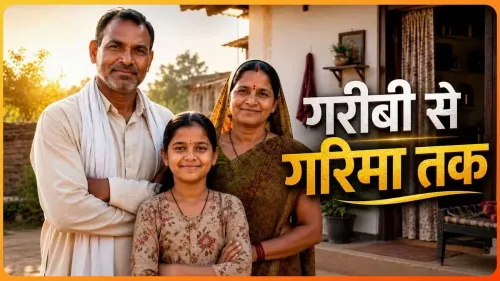
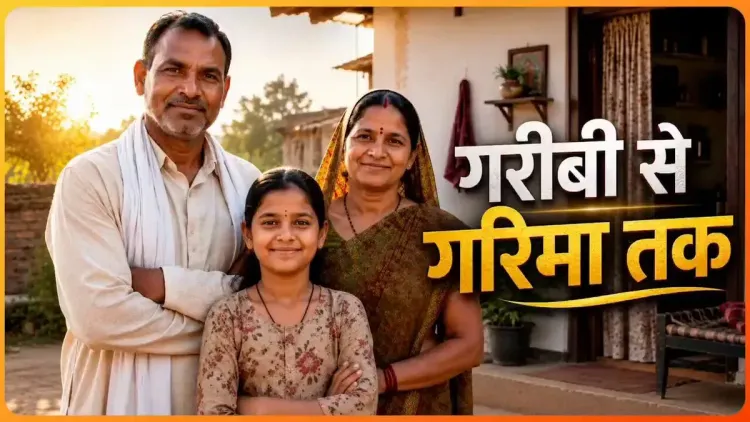
Posting under the hashtag #12YearsOfGaribKalyan, Sarma wrote in Hindi and English: 'गरीब से गरिमा तक, हर वर्ग का सम्मान, हर परिवार का कल्याण' — 'From poverty to dignity, respect for every section, welfare for every family.' He credited Prime Minister Modi's vision of Antyodaya for what he described as 12 years dedicated to 'empowering the poor, expanding opportunities and ensuring that development touches every family.'
Context
The term Antyodaya — meaning 'rise of the last person' — draws from the political philosophy of Deendayal Upadhyaya, articulated in the 1960s and adopted as a guiding framework by the National Democratic Alliance (NDA) government from 2014 onward. The concept places the poorest household at the centre of policy design, arguing that development is incomplete until it reaches the most marginalised.
Sarma's post is part of a coordinated messaging effort by BJP leaders across states on the anniversary of the Modi government's first term, linking local governance outcomes to centrally sponsored welfare programmes. As convenor of the North-East Democratic Alliance (NEDA), Sarma frequently positions Assam as a model for delivering central schemes at the state level.
Policy Backdrop
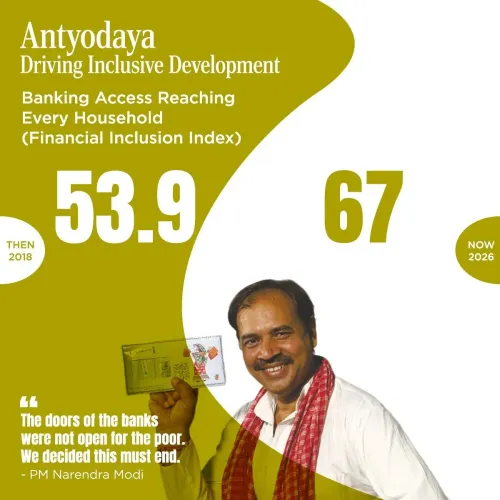
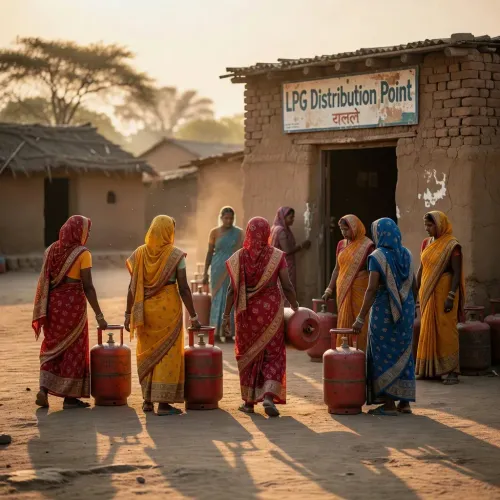
The Garib Kalyan umbrella has encompassed several flagship initiatives. Pradhan Mantri Jan Dhan Yojana, launched in 2014, sought to bring unbanked households into the formal financial system, while PM Ujjwala Yojana, launched in 2015, provided subsidised LPG connections to women in below-poverty-line families.
PM Garib Kalyan Anna Yojana (PMGKAY), introduced in March 2020 in response to the pandemic, extended free rations to vulnerable households and was subsequently renewed multiple times, becoming one of the largest food security programmes in the world by beneficiary count. Together, these schemes form the policy lineage Sarma's post invokes.
Himanta Biswa Sarma took charge as Assam Chief Minister in May 2021 and has since made the state-level delivery of central welfare schemes a consistent theme of his administration's public communication.
Stakeholders and Impact
The primary beneficiaries of the Garib Kalyan framework are poor and rural households — those dependent on free or subsidised rations, clean cooking fuel, and basic banking access. In a state like Assam, with significant rural and tea-garden populations, the reach of schemes such as PMGKAY and Ujjwala carries direct electoral and social significance.
Opposition parties have consistently challenged the government's poverty-reduction claims, arguing that inequality has widened alongside welfare spending. The BJP's coordinated anniversary messaging is partly a rebuttal to that narrative, reinforcing the frame that targeted entitlement delivery — rather than broad economic redistribution — is the appropriate metric of welfare governance.
What's Next
Attention will now turn to state-level implementation data from Assam on welfare scheme coverage and to any fresh announcements on scheme extensions or enhanced allocations in the next Union Budget. Sarma's alignment with the central government's anniversary narrative also signals continued coordination between Dispur and New Delhi ahead of future electoral cycles in the North-East.
Point of View
He connects Assam's record to a philosophically rooted BJP doctrine rather than making falsifiable metric claims, which insulates the message from immediate fact-check pressure. The coordinated use of a single hashtag across BJP leaders signals a centralised communications strategy ahead of what could be a politically significant electoral cycle in the North-East. The framing of welfare as 'dignity' rather than mere subsidy also reflects a deliberate ideological repositioning of entitlement spending within the BJP's broader narrative.
NationPress
24 Sept 2026
Frequently Asked Questions
What is the #12YearsOfGaribKalyan campaign about?
The #12YearsOfGaribKalyan campaign marks 12 years of the Narendra Modi government since 2014, highlighting welfare schemes aimed at poor households under the Antyodaya philosophy of reaching the most marginalised citizens first.
What is Antyodaya and why does BJP use it?
Antyodaya means 'rise of the last person' and derives from the philosophy of Deendayal Upadhyaya . The BJP has used it since 2014 as the guiding framework for poverty alleviation, arguing that development is complete only when it reaches the poorest household.
What is PM Garib Kalyan Anna Yojana?
PM Garib Kalyan Anna Yojana (PMGKAY) is a food security scheme launched in March 2020 that provides free rations to vulnerable households. It was introduced during the pandemic and extended multiple times, making it one of the largest such programmes by beneficiary count.
Why did Himanta Biswa Sarma post about Garib Kalyan?
As Assam Chief Minister and NEDA convenor , Himanta Biswa Sarma regularly aligns state messaging with central government priorities. His post on 8 June 2026 was part of a coordinated BJP effort to mark 12 years of welfare governance under Prime Minister Narendra Modi .
Which welfare schemes are linked to the Garib Kalyan framework?
The Garib Kalyan framework includes PM Jan Dhan Yojana for financial inclusion (2014), PM Ujjwala Yojana for clean cooking fuel (2015), and PM Garib Kalyan Anna Yojana for free rations (2020), among other targeted poverty-alleviation programmes.