CM Himanta marks 12 years of Modi govt's farm welfare push
Synopsis
Assam Chief Minister Himanta Biswa Sarma marked the BJP government's 12-year agricultural welfare milestone on 11 June 2026, crediting PM Narendra Modi with building farmer dignity and income through schemes like PM-KISAN, crop insurance, and digital mandi reforms.
Key Takeaways
Assam CM Himanta Biswa Sarma posted on 11 June 2026 to mark #12YearsOfKisanSamriddhi , highlighting a decade-plus of central farm welfare under PM Narendra Modi .
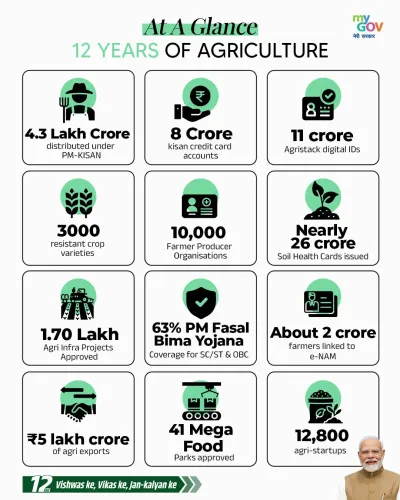
The Pradhan Mantri Kisan Samman Nidhi (PM-KISAN) , launched in 2019 , provides ₹6,000 per year in direct income support to eligible farmer families.
The Pradhan Mantri Fasal Bima Yojana (2016) and e-NAM digital mandi platform (2016) are key structural reforms cited in this policy arc.
Sarma, as NEDA convenor, plays a central role in aligning North-East BJP messaging with national agricultural narratives.
The next Union Budget 's agriculture allocations — including any PM-KISAN expansion — will be the key policy test of the government's stated commitment to farmer welfare.
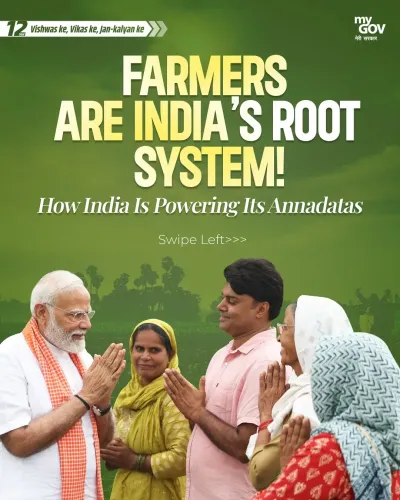
Assam Chief Minister Himanta Biswa Sarma on Thursday, 11 June 2026, invoked a decade-plus of central government agricultural policy to mark the #12YearsOfKisanSamriddhi milestone, crediting Prime Minister Narendra Modi with steering a sustained transformation in farmer welfare, income, and dignity.
Context
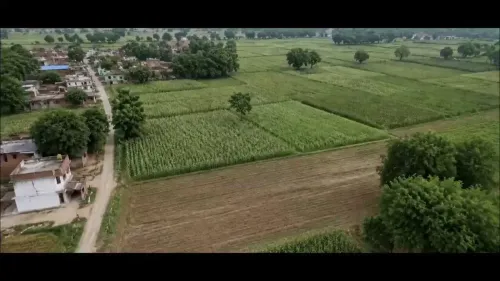
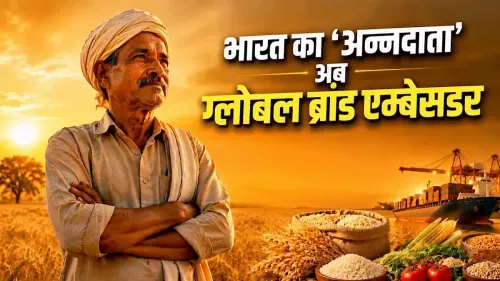
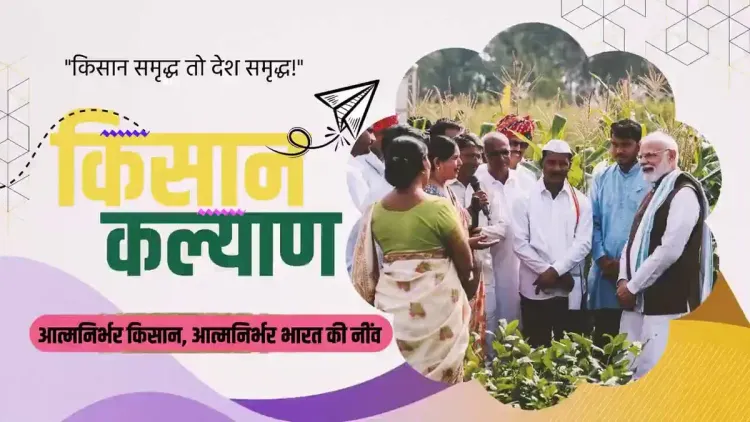
Sarma's post, written in Hindi, states: 'Pichhle ek dashak ki krishi kalyan, sirf bade ankdon ki kahani nahin hai' ('The agricultural welfare of the past decade is not merely a story of big numbers'). He frames the 12-year arc as one of conviction — centred on the honour, prosperity, better income, and a brighter future of India's annadata (food providers), under Modi's leadership. The post was accompanied by a video, underscoring the campaign's multimedia rollout.
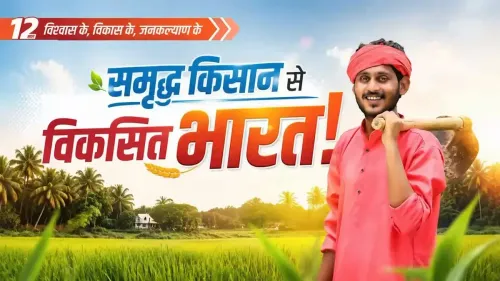
The hashtag #12YearsOfKisanSamriddhi signals a coordinated BJP communication effort to mark twelve years since the party came to power at the Centre in May 2014, with farm welfare as a key pillar of that retrospective.
Policy Backdrop
The central government's agricultural reform package since 2014 has rested on several flagship interventions. The Pradhan Mantri Kisan Samman Nidhi (PM-KISAN), launched in 2019, provides eligible farmer families with annual direct income support of ₹6,000 in three equal instalments, representing one of the largest direct benefit transfer programmes in the world by beneficiary count.
Earlier reforms included the Pradhan Mantri Fasal Bima Yojana, introduced in 2016 to broaden crop insurance coverage and reduce post-harvest distress, and the e-NAM (Electronic National Agriculture Market) platform, also launched in 2016, which sought to integrate mandis digitally for more transparent and competitive price discovery.
Together these schemes form the structural spine of what BJP leaders describe as a shift from crisis-management to proactive farmer empowerment — a narrative Sarma's post explicitly reinforces.
Stakeholders and Impact
India's farming community — estimated at hundreds of millions of households — sits at the centre of this policy and political conversation. Direct benefit transfers such as PM-KISAN have been credited with improving rural liquidity, particularly among small and marginal farmers who historically lacked access to formal credit or insurance.
As BJP's convenor of the North-East Democratic Alliance (NEDA), Sarma occupies a strategic role in amplifying central government messaging across the North-East. His social media activity on national agricultural milestones serves the dual purpose of reinforcing Assam's alignment with New Delhi's development agenda and consolidating the party's rural voter base in the region.
Opposition voices have questioned whether headline scheme numbers translate into verifiable income gains on the ground, particularly for farmers affected by climate-linked crop failures and volatile market prices — a debate that frames the political backdrop to campaigns like #12YearsOfKisanSamriddhi.
What's Next
The immediate watch-point is the next Union Budget, where allocations for agriculture — including any expansion of PM-KISAN beneficiary criteria or enhancement of the annual transfer amount — will test whether the government's rhetorical commitment to farmer welfare is matched by fresh fiscal outlay.
Campaigns like this one also set the tone for state-level BJP communication ahead of assembly election cycles across the North-East, where agrarian sentiment and rural income remain decisive electoral variables. How the Centre responds to calls for higher minimum support prices and wider insurance coverage will determine whether the 12-year narrative sustains its political traction.
Point of View
The messaging deliberately shifts the debate from measurable outcomes to values and intent, a resilient rhetorical strategy when ground-level data is contested. As NEDA convenor, Sarma's voice carries weight beyond Assam, making such posts instruments of regional coalition management as much as domestic communication. The durability of this narrative will ultimately hinge on whether the next budget delivers tangible enhancements to PM-KISAN and allied schemes.
NationPress
22 Sept 2026
Frequently Asked Questions
What is #12YearsOfKisanSamriddhi?
#12YearsOfKisanSamriddhi is a BJP campaign hashtag marking twelve years since the Modi government came to power in May 2014, highlighting agricultural welfare schemes such as PM-KISAN, Pradhan Mantri Fasal Bima Yojana, and e-NAM as evidence of farmer-focused governance.
What is PM-KISAN and how much do farmers get?
PM-KISAN (Pradhan Mantri Kisan Samman Nidhi) is a central government scheme launched in 2019 that provides eligible farmer families with ₹6,000 per year in direct income support, paid in three instalments of ₹2,000 each.
Why did Himanta Biswa Sarma post about farm welfare?
As Assam Chief Minister and BJP's North-East Democratic Alliance convenor, Sarma regularly aligns state-level communication with national party campaigns; his 11 June 2026 post marked the #12YearsOfKisanSamriddhi milestone and credited PM Modi's leadership for farmer welfare gains.
What is the Pradhan Mantri Fasal Bima Yojana?
Pradhan Mantri Fasal Bima Yojana is a crop insurance scheme launched in 2016 by the central government to expand coverage for farmers against losses due to natural calamities, pests, and diseases, aimed at reducing post-harvest financial distress.
What is e-NAM and how does it help farmers?
e-NAM, or the Electronic National Agriculture Market, is a digital platform launched in 2016 that connects agricultural mandis across India, enabling more transparent and competitive price discovery so farmers can access better rates for their produce.