Drug smugglers use micro-dosing, deep concealment to beat India's postal surveillance
Synopsis
India's drug networks have gone granular — sending 1,000+ micro-dosed parcels daily, hiding narcotics inside steam irons and religious offerings, and routing them to rural post offices with weak KYC checks. Tamil Nadu's Operation Deep Source has cracked one such module, but officials warn the volume alone makes this a systemic challenge that arrests alone cannot fix.
Key Takeaways
Tamil Nadu Police's Operation Deep Source busted a drug network routing parcels across 19 states and Union Territories .
Peddlers send at least 1,000 posts and couriers daily , each carrying just 5–20 grams of narcotics to minimise detection.
MDMA, hashish, and opioids were found concealed inside steam irons and religious offerings — a tactic known as deep concealment.
Mahender Singh Bisht (Ambala) was identified as the key coordinator; Sunil Kumar (Jammu and Kashmir) facilitated state-wise distribution.
Peddlers exploit public postal systems due to weaker KYC norms and target rural post offices lacking advanced screening infrastructure.
The government has directed private logistics firms to enforce mandatory KYC, item scanning, and parcel verification .
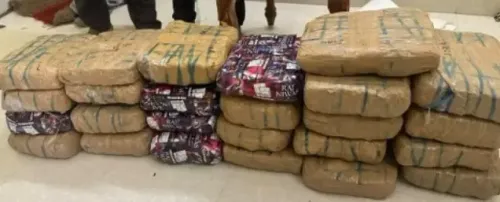
Tamil Nadu Police's Operation Deep Source has exposed a sophisticated narcotics distribution network that exploits India's postal and courier infrastructure through micro-dosing and deep-concealment tactics, officials confirmed on 7 November 2026. The bust has revealed how drug peddlers are systematically routing small consignments — typically 5–20 grams per parcel — across 19 states and Union Territories, making interception exponentially harder for law enforcement.
How the Micro-Dosing Network Operates
Rather than moving large drug consignments that attract immediate attention, operatives are reportedly dispatching at least 1,000 posts and couriers daily from multiple locations across the country. Each parcel carries only a few grams, limiting both detection risk and financial loss from any single police intervention, according to officials familiar with the matter.
Peddlers create fake identities and false sender addresses to mask their tracks. Deliveries are specifically routed to rural post offices and smaller towns where screening infrastructure is limited compared to metropolitan hubs. Once a parcel arrives, delivery personnel are directed to contact a burner number and hand over the consignment at a public space — eliminating any traceable link to a physical address.
Deep Concealment: Drugs Hidden Inside Steam Irons, Religious Offerings
Beyond micro-dosing, operatives are deploying what officials describe as the 'deep-concealment' method — embedding narcotics inside everyday consumer products. Recent operations have uncovered MDMA, hashish, and opioids concealed within steam irons and even religious offerings, according to officials. This tactic bypasses casual visual checks at sorting facilities.
Intelligence Bureau officials noted that peddlers deliberately favour public postal systems over private couriers because public services typically enforce less stringent Know Your Customer (KYC) norms, reducing the documentation trail.
Key Arrests: Ambala Coordinator Identified
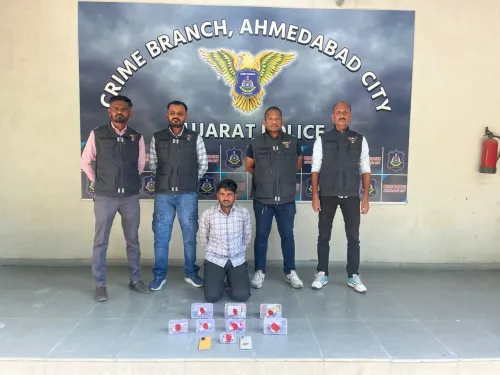
The Tamil Nadu Police investigation traced the origin of parcels to Ambala, where they had been dispatched over the past year. Mahender Singh Bisht was identified as the key coordinator operating from Ambala, while Sunil Kumar, reportedly based in Jammu and Kashmir, was facilitating supply to multiple states. The network's reach — spanning 19 states and Union Territories — underscores the scale of the operation.
Agencies Scale Up Response
The Narcotics Control Bureau (NCB), Indian Coast Guard (ICG), and state police forces have intensified operations as part of the Centre's stated objective of making India drug-free. Beyond arrests, the NCB has shifted strategy toward dismantling supply chains, targeting masterminds, and pursuing extradition requests against overseas operators based in Pakistan, Myanmar, and Mexico, officials said.
Border forces continue to intercept drone-dropped drug consignments along the Jammu and Kashmir and Punjab borders, while the government has directed private logistics companies to enforce mandatory KYC validation, item scanning, and parcel verification. Officials acknowledge, however, that the sheer volume of postal traffic makes comprehensive screening a significant challenge.
What Lies Ahead
Officials warn that consistency in enforcement will be critical to achieving a drug-free India, as traffickers continue to adapt their methods faster than regulatory frameworks can respond. The government's directive to tighten courier screening norms is a step forward, but the postal network's vast reach — and its historically weaker compliance infrastructure — means the battle is far from over.
Point of View
Which is built around intercepting large, high-value consignments. By flooding the postal system with thousands of small parcels, traffickers have effectively weaponised volume against a network that was never designed for this kind of distributed threat. The deep-concealment tactic — drugs in steam irons and religious offerings — signals a level of operational sophistication that goes beyond opportunistic smuggling. The larger structural problem is India's postal infrastructure itself: rural post offices with limited digital tools and weak KYC compliance are an open flank, and directing private couriers to tighten norms does nothing to fix the public postal gap. Without mandatory universal scanning and a centralised digital manifest system, enforcement will remain reactive.
NationPress
7 Nov 2026
Frequently Asked Questions
What is Operation Deep Source by Tamil Nadu Police?
Operation Deep Source is a Tamil Nadu Police anti-narcotics operation that busted a drug distribution module exploiting India's postal and courier network. The operation revealed that narcotics were being sent in micro-dosed parcels of 5–20 grams each to 19 states and Union Territories, with Ambala identified as a key dispatch hub.
What is the micro-dosing method used by drug smugglers?
Micro-dosing refers to the practice of splitting drug consignments into very small quantities — typically 5–20 grams per parcel — and dispatching thousands of such parcels simultaneously. This limits the financial and legal exposure from any single police seizure and makes it statistically harder for agencies to intercept the entire supply.
How are drugs concealed inside courier parcels?
Traffickers use a 'deep-concealment' technique, embedding narcotics such as MDMA, hashish, and opioids inside everyday consumer goods. Recent busts have found drugs hidden inside steam irons and religious offerings, specifically chosen because they are less likely to trigger suspicion during casual screening.
Who were the key accused identified in the Tamil Nadu drug courier network?
Mahender Singh Bisht was identified as the primary coordinator, operating out of Ambala, from where parcels had been dispatched over the past year. Sunil Kumar, based in Jammu and Kashmir, reportedly facilitated distribution to the network's recipient states.
What steps is the government taking to stop drug smuggling through couriers?
The government has directed private logistics companies to enforce mandatory KYC validation, item scanning, and parcel verification. The NCB has also shifted focus from individual arrests to dismantling supply chains and pursuing extradition requests against overseas operators. Border forces continue to intercept drone-based drug drops along the Jammu and Kashmir and Punjab borders.