Dark web drug cartels: How crypto and encrypted networks are outsmarting India's narcotics agencies

Synopsis
India's drug war has a new front it wasn't built for. The NCB logged 92 dark net and crypto drug cases in four years, busted a cartel sourcing LSD and MDMA from Europe, and is now grappling with an even harder target: anonymous two-person micro-cartels with no prior intelligence file, no syndicate ties, and full operational cover behind encrypted browsers.
Key Takeaways
The Narcotics Control Bureau (NCB) registered 92 cases involving the dark net and cryptocurrencies between 2020 and 2024 .
The Team Kalki cartel sourced LSD and MDMA from Poland , Germany , and the Netherlands , fulfilling over 1,000 orders across India via courier.
A new tier of anonymous micro-cartels — typically two to three technically skilled individuals — is emerging outside the reach of existing intelligence files.
The Dawood Ibrahim Syndicate and Golden Triangle networks remain dominant in conventional narcotics trafficking but are increasingly supplementing with digital methods.
Cryptocurrency transactions routed through mule wallets are the primary tool used to conceal financial trails in dark web drug operations.
India's anti-narcotics agencies are confronting a rapidly mutating threat as drug trafficking networks migrate from conventional smuggling corridors to the dark web and cryptocurrency-powered financial systems, officials say. The shift is complicating investigations and making it significantly harder for enforcement bodies to trace money flows and dismantle supply chains.
The Digital Pivot in Drug Trafficking
According to an Intelligence Bureau official, the narcotics trade has largely abandoned traditional land, air, and sea routes in favour of encrypted online marketplaces. 'The trade has largely shifted to the dark web, and this poses a major challenge,' the official said. 'Transactions are fuelled by cryptocurrency, and this has aided smugglers in concealing their networks behind digital wallets.'
Tracing the financial trail, the official noted, is critical to dismantling any drug operation — and it is precisely this trail that is becoming increasingly opaque. Cryptocurrency transactions, routed through intermediary 'mule wallets', allow drug networks to obscure the origin and destination of funds in ways that conventional banking surveillance cannot easily penetrate.
NCB's Dark Net Caseload and the Team Kalki Bust
The Narcotics Control Bureau (NCB), India's apex anti-drug authority, registered 92 cases involving dark net activity and cryptocurrencies between 2020 and 2024, according to officials. The agency has since moved to bolster its digital surveillance and technology capabilities in response to the trend.
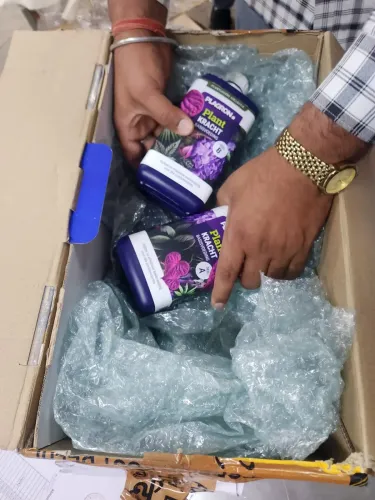
Earlier this year, the NCB dismantled a dark net-enabled pan-India drug distribution network operating under the name Team Kalki. The cartel reportedly sourced high-grade LSD and MDMA from Poland, Germany, and the Netherlands. It then deployed a 'drop-dead' technique — leaving consignments at pre-determined hidden locations for trusted buyers — and fulfilled more than 1,000 orders across the country using speed post and courier services. Funds were laundered through a chain of intermediary mule wallets to obscure the money trail.
The Rise of Unknown, Independent Micro-Cartels
Beyond established networks, officials are tracking an emerging and arguably more elusive threat: small, technically proficient cartels operating entirely outside the orbit of major syndicates. 'Two to three persons with ample technical knowledge of the dark web get together and start a cartel,' one official explained. 'There is no file on them, and they are largely incognito.'
This is a structural departure from the traditional narcotics landscape, where the Dawood Ibrahim Syndicate — primarily active in Maharashtra, Gujarat, and northern India, with secondary operations in Tamil Nadu targeting southern states and Sri Lanka — and the Golden Triangle cartels, which dominate the northeast and Sri Lanka via southern corridors, have long been the dominant players. Those larger networks, officials say, are comparatively easier to monitor because they rely on known methods and established routes.
The micro-cartels, by contrast, leave no prior intelligence footprint, have no known associates within major syndicates, and operate through encrypted browsers and dedicated systems — making detection and attribution far more resource-intensive.
Bigger Syndicates Not Abandoning Conventional Methods
Despite the digital shift, officials caution that established drug lords are unlikely to abandon traditional smuggling entirely. 'They would try to maximise their business and hence would use all possible methods available at their disposal,' an official said. The implication is a dual-track threat: legacy networks continuing to exploit physical routes while simultaneously experimenting with digital channels, and a new tier of independent operators who exist almost entirely in the encrypted online space.
What Agencies Are Doing Next
The NCB's response has centred on expanding online surveillance capabilities and inter-agency coordination. However, officials acknowledge that the pace of technological adoption by traffickers is straining existing frameworks. The challenge, as one official put it, is not just investigative — it is jurisdictional, given that dark web drug supply chains routinely cross multiple international borders before a package reaches an Indian doorstep. Going forward, deeper collaboration with global law enforcement and crypto-tracing specialists is expected to be central to India's counter-narcotics strategy.
Point of View
By definition, are not in that count. The real policy gap is jurisdictional: Indian law enforcement can surveil domestic networks, but when supply chains originate in Poland or Germany and payments clear through anonymous crypto wallets, national enforcement frameworks hit a ceiling. India's counter-narcotics architecture was built for the Dawood model — hierarchical, geographically traceable, and relationship-driven. The dark web model inverts every one of those assumptions. Without binding mutual legal assistance treaties with crypto exchanges and deeper Interpol coordination, the NCB is playing catch-up against an adversary that scales faster than legislation.
NationPress
7 Oct 2026
Frequently Asked Questions
How is the dark web being used for drug trafficking in India?
Drug traffickers in India are using encrypted dark web marketplaces to source and distribute narcotics, bypassing conventional land, air, and sea smuggling routes. Transactions are conducted in cryptocurrency and funds are concealed through intermediary mule wallets, making financial tracing significantly harder for enforcement agencies.
How many dark web drug cases has the NCB registered?
The Narcotics Control Bureau registered 92 cases involving the dark net and cryptocurrencies between 2020 and 2024. The agency has since enhanced its digital surveillance capabilities in response to the growing trend.
What was the Team Kalki drug cartel and how was it busted?
Team Kalki was a dark net-enabled pan-India drug distribution cartel dismantled by the NCB earlier this year. It sourced high-grade LSD and MDMA from Poland, Germany, and the Netherlands, used a 'drop-dead' delivery technique at hidden locations, and processed over 1,000 orders nationwide via speed post and courier services.
What makes the new dark web micro-cartels harder to track than established syndicates?
Unlike the Dawood Ibrahim Syndicate or Golden Triangle networks — which follow known routes and have established intelligence files — micro-cartels typically consist of just two to three individuals with technical expertise in encrypted systems. They have no prior intelligence record, no syndicate affiliations, and operate entirely through anonymous encrypted browsers, leaving almost no conventional investigative trail.
Are major drug syndicates like the Dawood network abandoning conventional smuggling?
Not entirely, according to officials. Established syndicates are expected to continue using conventional land, sea, and air routes while also exploring digital channels to maximise reach. The threat is now dual-track: legacy networks on physical routes and a new generation of independent operators functioning almost exclusively online.