Pakistan's narcotics crisis deepens as institutional failures persist
Synopsis
A report in Sri Lanka's Daily Mirror lays bare how Pakistan's drug trade has outgrown criminal enclaves — running through smartphone apps and courier networks into Karachi's elite neighbourhoods, while border traffickers exploit the Afghanistan-Iran-Balochistan corridor unchecked. The arrest of alleged cocaine kingpin Anmol alias 'Pinky', and the subsequent suspension of senior police officers, has put institutional complicity squarely in the spotlight.
Key Takeaways
Pakistan's narcotics trade now operates through smartphone apps and courier networks reaching Karachi's affluent neighbourhoods and university campuses, according to a Daily Mirror report.
Traffickers exploit remote border routes linking Afghanistan , Iran , and Balochistan , taking advantage of weak frontier controls.
The 2026 arrest of alleged drug trafficker Anmol alias 'Pinky' became one of Pakistan's most discussed criminal investigations after videos allegedly showed preferential court treatment.
Senior police officials were suspended and enquiries ordered over allegations of facilitating or protecting the accused.
The report warns that enforcement actions consistently target individual traffickers while leaving broader criminal support structures intact.
Recurring scandals point to what the report calls 'persistent institutional failures' and 'allegations of official complicity' within Pakistan's anti-narcotics framework.
Pakistan's narcotics challenge has evolved into a multi-dimensional crisis that cuts across governance, public health, border security, education, and economic vulnerability, according to a report published by Sri Lankan newspaper Daily Mirror. The findings paint a picture of a deeply entrenched drug ecosystem that has adapted to new technologies, shifting consumer demand, and evolving regional dynamics — from trafficking corridors in Balochistan to cocaine distribution networks operating inside Karachi's most affluent neighbourhoods.
A Narcotics Economy Hiding in Plain Sight
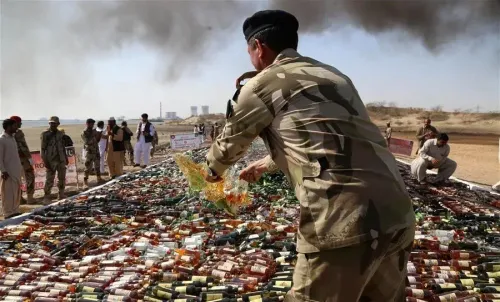
The report describes how narcotics in Karachi are no longer confined to criminal enclaves or hidden corners. According to the report, drugs now move through smartphone apps, courier-style delivery networks, and organised supply chains that reach university campuses, residential districts, and upscale neighbourhoods. Simultaneously, thousands of kilometres away, traffickers exploit remote border routes linking Afghanistan, Iran, and Balochistan, taking advantage of Pakistan's porous western frontier.
The report characterises this as 'a narcotics economy sustained not merely by criminal ingenuity but also by persistent institutional failures, weak enforcement and recurring allegations of official complicity.'
The Anmol Alias 'Pinky' Case and Its Fallout
The recent arrest of alleged Karachi-based drug trafficker Anmol, also known as 'Pinky', has become one of Pakistan's most scrutinised criminal investigations of 2026, according to the report. Accused of running a sophisticated cocaine distribution network in the city, the case drew widespread attention when videos surfaced allegedly showing her receiving what critics described as preferential treatment during court appearances.
The controversy deepened as senior police officials were subsequently suspended and enquiries were ordered into allegations that officers had facilitated or protected the accused. Rather than appearing as an isolated incident, the episode has raised broader questions about the reach of Pakistan's drug networks and the capacity — or willingness — of state institutions to dismantle them, the report noted.
Institutional Failures Under the Spotlight
Pakistan's anti-narcotics framework has faced persistent scrutiny over allegations of institutional compromise, the report stressed. The suspensions in the Pinky investigation, it noted, highlighted concerns that individuals tasked with enforcing the law may sometimes become vulnerable to criminal influence. Enquiries remain ongoing and allegations are still subject to investigation.
The report further observed that enforcement actions in Pakistan have historically targeted individual traffickers while leaving broader support structures intact. 'Pakistan's history includes repeated scandals involving narcotics trafficking, smuggling operations and allegations of official negligence. Each high-profile arrest tends to generate headlines and promises of accountability, yet recurring cases continue to emerge,' it stated.
Shifting Trafficking Routes and Evolving Tactics
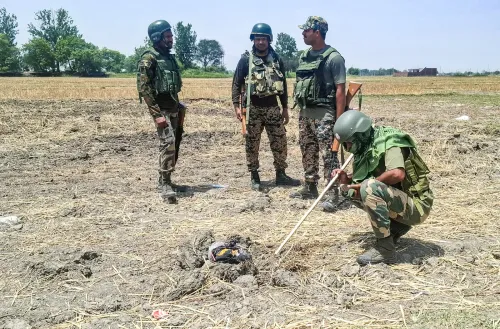
Trafficking organisations have exploited weak border controls and fragmented enforcement mechanisms as traditional drug markets adjust to changing dynamics, according to the report. The Afghanistan-Iran-Balochistan corridor remains a critical artery, with remote terrain and limited state presence enabling sustained smuggling activity. The convergence of this frontier trade with urban distribution networks in cities like Karachi represents a structural challenge that Pakistan has, reportedly, struggled to confront for decades.
What Comes Next
The report stops short of prescribing solutions but underscores that piecemeal enforcement will not address what it describes as a systemic problem. With enquiries into the Pinky case still underway and broader institutional credibility at stake, Pakistan faces mounting pressure to demonstrate that accountability extends beyond headline arrests to the networks and complicit actors that sustain them.
Point of View
Not the story. Pakistan's narcotics ecosystem has survived — and arguably thrived — through successive crackdowns precisely because enforcement is episodic and accountability rarely climbs the chain of command. The suspension of police officers is a familiar ritual: visible enough to signal action, contained enough to protect the network. What the Daily Mirror report captures, but Pakistani policy discourse rarely confronts, is that the drug economy is not a law-and-order problem with a governance footnote — it is a governance failure with a law-and-order surface. Until anti-narcotics accountability extends to the institutional enablers rather than the street-level accused, headline arrests will continue to generate headlines, and little else.
NationPress
19 Sept 2026
Frequently Asked Questions
What does the report say about Pakistan's narcotics crisis?
A report in Sri Lankan newspaper Daily Mirror describes Pakistan's narcotics challenge as a multi-dimensional crisis intersecting governance, public health, border security, education, and economic vulnerability. It highlights how drug networks have adapted to use smartphone apps and courier systems in Karachi while exploiting the Afghanistan-Iran-Balochistan border corridor.
Who is Anmol alias 'Pinky' and why is the case significant?
Anmol, alias 'Pinky', is an alleged Karachi-based drug trafficker accused of running a sophisticated cocaine distribution network. Her 2026 arrest became one of Pakistan's most scrutinised criminal cases after videos allegedly showed preferential treatment during court appearances, leading to the suspension of senior police officers and formal enquiries into alleged official complicity.
What are the main trafficking routes described in the report?
The report identifies two key vectors: urban distribution networks in Karachi operating through apps and courier services, and cross-border smuggling routes linking Afghanistan, Iran, and Balochistan. Traffickers exploit remote terrain and fragmented enforcement to sustain both pipelines.
Why has Pakistan's anti-narcotics framework been criticised?
The report says Pakistan's enforcement history is marked by recurring scandals, allegations of official negligence, and actions that target individual traffickers while leaving broader criminal support structures intact. The Pinky case reinforced concerns that officers tasked with enforcement can become vulnerable to criminal influence.
What is the broader impact of Pakistan's drug trade beyond crime?
According to the report, Pakistan's narcotics economy intersects with multiple sectors — weakening governance, straining public health systems, undermining border security, and increasing economic and educational vulnerability. The report frames it as a structural problem decades in the making, not a discrete law-and-order issue.