Pakistan's online narcotics surge: Youth drug crisis deepens in 2026
Synopsis
Pakistan's drug crisis has gone digital. With 44% of university students admitting drug use and traffickers exploiting online platforms to recruit couriers and push synthetic substances, the World Drug Report 2026 has put a spotlight on a crisis that is younger, more connected, and harder to police than ever before.
Key Takeaways
The World Drug Report 2026 flags Pakistan's rising online narcotics market, with traffickers using digital platforms to reach younger buyers.
A 2024 survey at Karachi University found 44 per cent of university and college students admitted to drug use, including 53 per cent of males and 31 per cent of females.
Heroin accounts for 48 per cent and cannabis for 28 per cent of substance abuse cases among young users, per a 2025 systematic review .
The UNODC estimates 6.7 to 7.6 million Pakistanis — about 6 per cent of the population — use drugs, with 4 million needing treatment.
Suicide is reportedly the fourth leading cause of death among Pakistanis under 30 , with adolescents aged 15–18 most at risk.
The ANF in 2024 seized 140 kg of narcotics from 235 universities and arrested 31 traffickers .
Pakistan is grappling with a sharp rise in the online sale of narcotics, with digital transactions making drugs increasingly accessible to young people across the country, according to findings cited in the World Drug Report 2026. An editorial in leading Pakistani daily The News International warned that the country's most digitally connected generation is also its most drug-exposed, as traffickers exploit technology and global instability to push novel, more potent substances into new markets.
Digital Pipelines Fuelling Drug Access
Drug traffickers are leveraging online platforms to reach younger demographics with unprecedented ease. The editorial posed a pointed question: 'Is it a coincidence that the most online generation is experiencing rising drug abuse at a time when the drugs business is increasingly conducted online?' It noted that while online narcotics sales have plagued more advanced economies for over a decade, Pakistan is now experiencing the same trajectory — accelerated by rapid expansion of internet access.
Synthetic drugs, flagged by Pakistan's Anti-Narcotics Force (ANF) as more potent and easier to conceal, are compounding the danger. Beyond consumption, young people are reportedly being lured into becoming drug couriers through false promises of easy money and a glamorous lifestyle.
Scale of the Crisis: What the Data Shows
The numbers paint a stark picture. A 2025 systematic review of rehabilitation cases found that heroin accounts for 48 per cent of substance abuse cases among young users, while cannabis makes up 28 per cent. Some 35 per cent of those surveyed began using drugs during adolescence, and 46 per cent were diagnosed with comorbid depression.
A 2024 survey cited at Karachi University found that 44 per cent of university and college students admitted to drug use — 53 per cent of males and 31 per cent of females — with a growing trend of online procurement, as reported by Pakistani daily The Express Tribune.
According to the United Nations Office on Drugs and Crime (UNODC), an estimated 6.7 to 7.6 million people across Pakistan — roughly six per cent of the population — use drugs, with around 4 million requiring structured treatment.
Youth Vulnerabilities and the Suicide Link
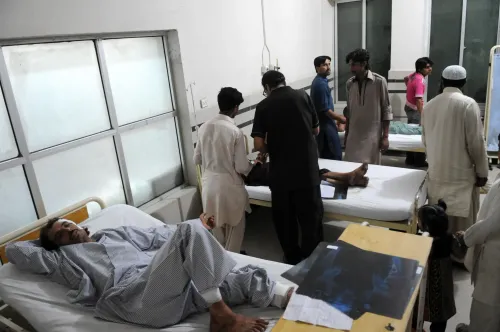
The crisis extends beyond addiction. Reports indicate that suicide has emerged as the fourth leading cause of death among Pakistanis under 30, with adolescents aged 15 to 18 identified as especially vulnerable. Poisoning and hanging are cited as the most common methods. Reliable monthly statistics remain unavailable, largely due to criminalisation and social stigma surrounding suicide.
The ANF has warned that millions between the ages of 18 and 31 face potential risk. Economic hardship, easy availability of Afghan-sourced cannabis and heroin, and untreated mental illness are identified as the primary drivers of the crisis.
Institutional Response and Key Cases
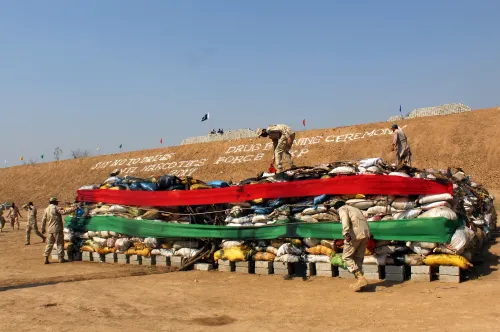
Back in 2024, the ANF reportedly uncovered 31 drug traffickers and seized 140 kilogrammes of narcotics from 235 universities. A senior Sindh minister has since announced that the provincial government would conduct rapid, random drug testing in schools to address rising narcotics use among children.
One of the most prominent cases to emerge is that of alleged drug dealer Anmol alias Pinky, who is accused of selling cocaine in colleges, universities, schools, and upscale areas of Karachi. The case has drawn attention to how drug networks are adapting their operations to exploit both digital channels and institutional blind spots.
A 2025 longitudinal clinical review covering 15 years documented rising drug positivity rates, with cannabis present in more than 20 to 30 per cent of tested samples, followed by opioids and benzodiazepines. Over 70 per cent of identified addicts were above 35 years of age, suggesting the crisis spans generations even as youth remain the most visible new frontier.
Unless Pakistan moves to regulate digital access to narcotics with the same urgency it applies to physical trafficking, the convergence of online commerce, synthetic drugs, and youth vulnerability could deepen into a full-scale public health emergency.
Point of View
But Pakistan's version carries a distinctive structural risk: a young, rapidly internet-connected population intersecting with porous Afghan supply chains and under-resourced mental health infrastructure. What the data reveals — 46 per cent of young users with comorbid depression, suicide as the fourth leading cause of death under 30 — is a public health emergency wearing the mask of a law-enforcement problem. Pakistan's institutional response so far, random drug testing and university raids, treats symptoms rather than causes. The harder question, one the editorial in The News International gestures at but stops short of answering, is whether the state has the appetite to regulate digital platforms with the same force it applies to physical trafficking routes.
NationPress
28 Sept 2026
Frequently Asked Questions
How widespread is drug use among Pakistan's youth?
According to a 2024 survey cited at Karachi University, 44 per cent of university and college students admitted to drug use, including 53 per cent of males and 31 per cent of females. The UNODC estimates that between 6.7 and 7.6 million people across Pakistan — roughly six per cent of the population — use drugs.
What role does online commerce play in Pakistan's drug crisis?
Drug traffickers are increasingly using digital platforms to sell narcotics, making access as straightforward as ordering food online, according to The News International. Young people are also reportedly being recruited as drug couriers through online channels with promises of easy money.
Which drugs are most commonly abused by Pakistani youth?
A 2025 systematic review of rehabilitation cases found that heroin accounts for 48 per cent of substance abuse cases among young users, while cannabis makes up 28 per cent. A 2025 longitudinal clinical review also found cannabis present in 20 to 30 per cent of tested drug samples.
What is the link between drug abuse and suicide in Pakistan?
Reports indicate that suicide has emerged as the fourth leading cause of death among Pakistanis under 30, with adolescents aged 15 to 18 identified as especially vulnerable. The 2025 systematic review found that 46 per cent of young drug users were diagnosed with comorbid depression, suggesting a strong mental health dimension to the crisis.
What steps has Pakistan taken to address the drug crisis?
Pakistan's Anti-Narcotics Force in 2024 seized 140 kilogrammes of narcotics from 235 universities and arrested 31 traffickers. A senior Sindh minister has also announced plans for rapid, random drug testing in schools to curb rising narcotics use among children.