India's drug crackdown fuels rise of local narco labs, ISI-backed cartels pivot
Synopsis
India's border crackdowns have worked so well that ISI-backed drug cartels are no longer trying to smuggle narcotics in — they're manufacturing them inside India instead. With 80% of locally produced drugs reportedly destined for global export, the country risks becoming a narcotics production hub. Operation Ragepill's ₹182 crore Captagon bust from a Dehradun pharmaceutical unit is the clearest evidence yet of this dangerous pivot.
Key Takeaways
International drug cartels are setting up local narcotics laboratories inside India after border crackdowns disrupted smuggling routes.
An Intelligence Bureau official says an estimated 80 per cent of locally produced drugs are intended for export , not domestic use.
8 out of every 10 drug consignments entering via Jammu and Kashmir and Punjab are now being intercepted, according to officials.
The NCB seized Captagon tablets worth ₹182 crore from Gujarat's Mundra Port and Delhi's Neb Sarai under Operation Ragepill .
The illegal lab was traced to a pharmaceutical unit in Dehradun, Uttarakhand ; a Syrian national and the factory owner were arrested.
Officials link ISI-backed cartel activity to post- Operation Sindoor efforts to rebuild terror financing networks.
India's intensifying war on narcotics has forced international drug cartels to abandon cross-border smuggling routes and pivot to establishing local manufacturing laboratories across the country, according to intelligence officials. The shift, described as a direct consequence of the Modi government's drug-free India initiative, signals a new and more complex phase in the country's counter-narcotics battle.
Why Cartels Are Going Local
For years, the dominant model was to smuggle finished narcotics into India and distribute them domestically — with surplus consignments re-exported to countries such as Maldives, Sri Lanka, and more recently Thailand. That model has been disrupted. Union Home Minister Amit Shah has repeatedly stated that no effort will be spared to dismantle narcotic networks, and enforcement data backs that resolve: drugs running into crores of rupees have been seized by agencies across the country since the initiative's launch.
An unnamed official told reporters that real-time intelligence sharing and seamless coordination between central and state agencies have led to the interception of a significant number of consignments. The pressure has been enough to force a strategic rethink among the cartels.
India as a Production Hub, Not Just a Transit Point
The concern now, according to an Intelligence Bureau (IB) official, is that cartels are no longer treating India as a transit or landing hub. 'They are making it a massive production hub,' the official said, adding that an estimated 80 per cent of drugs produced locally are intended for export to global markets — not domestic consumption.
Cartels have reportedly directed local operatives to set up laboratories and produce narcotics in high volumes before enforcement agencies can dismantle them. Officials note that the cartels are operating with urgency, aware that their local modules will eventually be identified and busted.
ISI-Backed Networks Under Pressure
Several of the cartels operating in India are reportedly backed by Pakistan's Inter-Services Intelligence (ISI). Their two primary entry corridors — Jammu and Kashmir and Punjab — have been secured to the point where, according to officials, 8 out of every 10 consignments are now intercepted. Drone-based delivery attempts have also largely failed, with border agencies and police forces significantly upgrading their surveillance and counter-drone capabilities over the past two years.
The narcotics trade is described by officials as a critical funding mechanism for ISI-linked terror groups. This comes amid the aftermath of Operation Sindoor, during which Pakistan reportedly suffered significant losses to its terror infrastructure. Officials say the ISI is now under pressure to rebuild those networks — and drug revenue is a primary means of doing so.
Operation Ragepill: A Sign of What's Coming
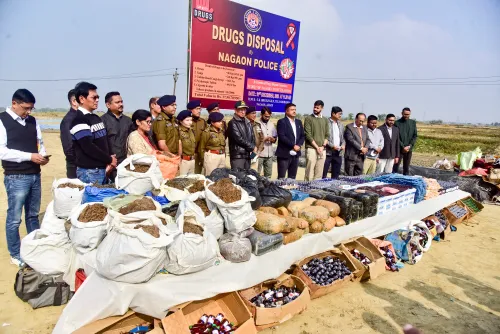
A concrete illustration of the local-lab threat emerged with Operation Ragepill, announced by Home Minister Shah. The Narcotics Control Bureau (NCB) seized Captagon tablets worth ₹182 crore — the drug is also known as the 'Jihadi drug' or 'rage drug' — from Gujarat's Mundra Port and Delhi's Neb Sarai area.
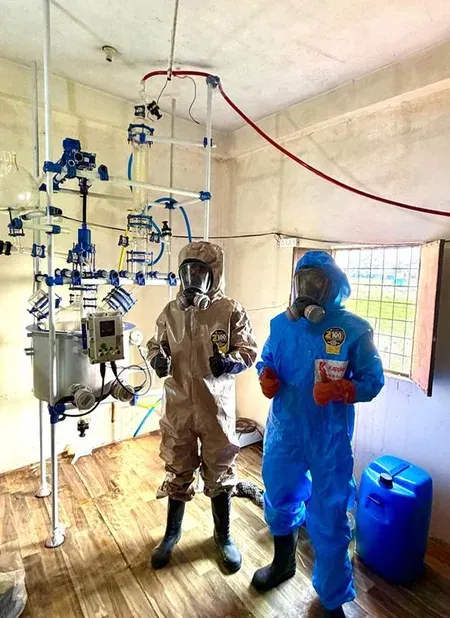
The source was an illegal laboratory operating out of a pharmaceutical unit in Dehradun, Uttarakhand. A Syrian national and the Dehradun factory owner were arrested in connection with the operation. The drugs were intended to be smuggled into the Middle East and Gulf region.
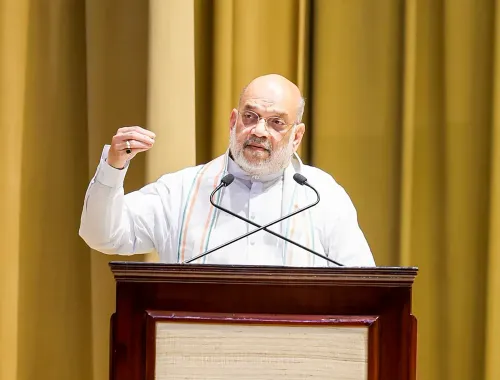
'The Modi government is resolved for a drug-free India... Our agencies have achieved the first-ever seizure of Captagon, the so-called Jihadi Drug,' Home Minister Shah said following the operation.
What Comes Next
Officials acknowledge that while international cartel operations have been significantly disrupted, the local manufacturing challenge is now the primary frontier. Agencies are expected to intensify raids on pharmaceutical units and industrial facilities that could serve as cover for narcotics production. The race, as one official framed it, is between enforcement capacity and the cartels' urgency to produce and export before their networks are rolled up.
Point of View
As the Dehradun case makes plain. The 80% export figure, if accurate, reframes the threat entirely — India is not just fighting a domestic drug problem but risks becoming a narcotics exporter to the Gulf and beyond. Enforcement agencies will need to shift focus from border interception to industrial surveillance, a far more complex and resource-intensive challenge.
NationPress
1 Oct 2026
Frequently Asked Questions
Why are drug cartels setting up laboratories inside India?
Cartels are establishing local narcotics labs because tightened border security — particularly in Jammu and Kashmir and Punjab — has made smuggling finished drugs into India increasingly difficult. Officials say 8 out of every 10 consignments are now intercepted, forcing cartels to produce narcotics domestically instead.
What is Operation Ragepill and what was seized?
Operation Ragepill is an NCB-led operation announced by Home Minister Amit Shah targeting Captagon, a synthetic stimulant also called the 'Jihadi drug' or 'rage drug.' The operation resulted in the seizure of Captagon tablets worth ₹182 crore from Gujarat's Mundra Port and Delhi's Neb Sarai area.
What is Captagon and why is it called the 'Jihadi drug'?
Captagon is a synthetic stimulant that has been widely used by armed groups in conflict zones, particularly in the Middle East, earning it the informal label 'Jihadi drug' or 'rage drug.' The consignment seized in Operation Ragepill was reportedly destined for the Middle East and Gulf region.
How is the ISI linked to India's narcotics trade?
According to intelligence officials, several drug cartels operating in India are backed by Pakistan's Inter-Services Intelligence (ISI). Drug revenues are described as a key source of terror financing. Officials say ISI pressure on these cartels has intensified following Operation Sindoor, as the organisation seeks funds to rebuild its terror infrastructure.
Who was arrested in connection with the Dehradun narcotics lab?
A Syrian national and the owner of a pharmaceutical unit in Dehradun, Uttarakhand — which was being used as an illegal Captagon production facility — were arrested as part of Operation Ragepill. The lab's output was intended for smuggling into the Middle East and Gulf countries.