Vande Mataram row: Gehlot fires back at Shah, cites Congress' freedom-era role
Synopsis
A row over Vande Mataram has erupted between Amit Shah and Ashok Gehlot — but this is less about a song and more about who owns India's freedom struggle. Gehlot's invocation of the 1896 Calcutta Congress session and his challenge to the RSS' independence-era record signals that the battle over historical legacy is sharpening as Rajasthan's political temperature rises.
Key Takeaways
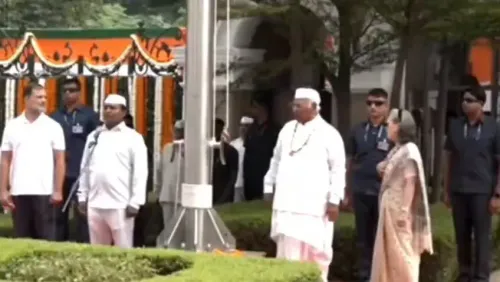
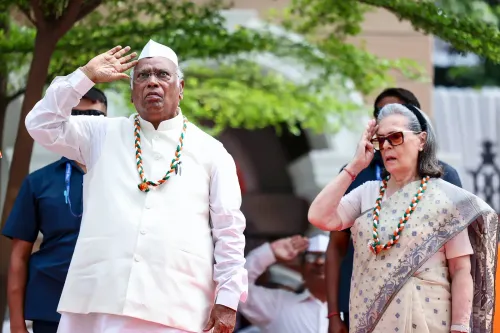
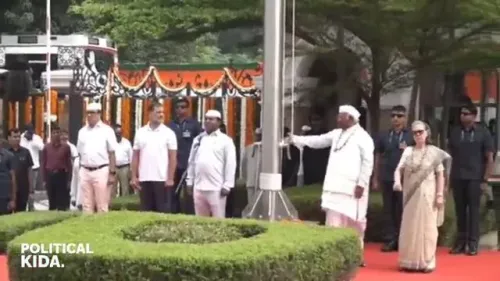
Union Home Minister Amit Shah alleged in Chittorgarh that Sonia Gandhi signalled Congress President Mallikarjun Kharge to stop Vande Mataram at an Independence Day event at the party's Delhi headquarters.
Former Rajasthan Chief Minister Ashok Gehlot hit back via social media, calling Shah's claims “laughable” and citing Rabindranath Tagore 's singing of the song at the 1896 Calcutta session of the Indian National Congress.
Gehlot defended the Congress' 1937 decision to adopt only the first two stanzas of Vande Mataram, calling it an inclusive step to preserve national unity across communities.
Gehlot alleged the RSS did not adopt Vande Mataram as its official song during the freedom struggle and remained absent from the Quit India Movement of 1942 — claims the RSS has historically disputed.
Vande Mataram was accorded the status of National Song on 24 January 1950 , with Jana Gana Mana designated the National Anthem.
A sharp political dispute over Vande Mataram has broken out in Rajasthan, pitting former Chief Minister and senior Congress leader Ashok Gehlot against Union Home Minister Amit Shah over the song's place in India's freedom struggle and the competing claims of the Bharatiya Janata Party (BJP), the Rashtriya Swayamsevak Sangh (RSS), and the Indian National Congress (INC) to its legacy.
What Amit Shah Said in Chittorgarh
Addressing a gathering in Chittorgarh on Sunday, Shah alleged that Sonia Gandhi signalled to Congress President Mallikarjun Kharge to stop Vande Mataram while it was being sung at the party's Delhi headquarters during an Independence Day programme. Shah accused the Congress of appeasement and vote-bank politics, and demanded an apology for what he described as an attempt to erase the song from the history of India's freedom movement.
Gehlot's Counter: History Cannot Be Rewritten
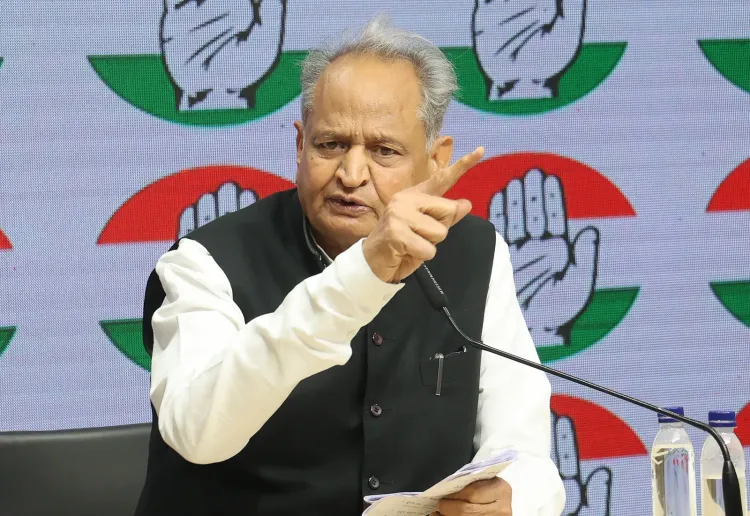
Reacting through a social media post, Gehlot said historians would find Shah's claims about Vande Mataram “laughable.” He argued that the BJP and RSS had no role in the song's historic standing within the freedom movement and accused them of attempting to rewrite history after coming to power. “The ‘wisdom’ shared by Amit Shah in Chittorgarh reflects his guilt,” Gehlot said, contending that political speeches or proposed legislation cannot alter the documented historical record.
Gehlot pointed to the 1896 Calcutta session of the Indian National Congress, where Rabindranath Tagore sang Vande Mataram, as evidence of the party's deep association with the song. He noted that it subsequently became a regular feature of Congress sessions and a rallying cry for freedom fighters facing British repression, including arrests and lathi-charges.
The 1937 Decision and Its Contested Legacy
Gehlot also defended the Congress' 1937 decision to adopt only the first two stanzas of Vande Mataram for public use. He argued the move was intended to make the song inclusive across all religious communities in India, given concerns about the religious imagery in its later verses. Written by Bankim Chandra Chattopadhyay and later incorporated into his novel Anandamath, the song had become one of the most powerful symbols of the independence movement, though its complete composition remained contested on grounds of religious imagery.
The BJP and Sangh Parivar have long portrayed the 1937 decision as an act of appeasement, while the Congress has consistently defended it as an inclusive, unity-preserving step — a disagreement that the latest exchange has reignited.
Gehlot Questions RSS' Role in Freedom Struggle
Going further, Gehlot questioned the RSS' conduct between its formation in 1925 and India's Independence in 1947. He claimed the organisation did not adopt Vande Mataram as its official song during the freedom struggle, instead developing its own prayer, Namaste Sada Vatsale. He also alleged that the RSS remained absent from the Quit India Movement of 1942. These are longstanding allegations that the RSS has historically disputed.
The Broader Political Fault Line
On 24 January 1950, Constituent Assembly President Rajendra Prasad announced that Jana Gana Mana would be India's National Anthem, while Vande Mataram would hold the status of National Song with comparable respect. That constitutional settlement, however, has never fully resolved the political contest over the song's ownership. The Gehlot-Shah exchange signals that as India's independence anniversary recedes, the battle over who can claim the freedom struggle's legacy is intensifying ahead of electoral cycles in Rajasthan and beyond.
Point of View
Not a genuine disagreement about a song. Both sides are selectively mining the same archive: Shah uses an alleged Independence Day incident to question Congress' nationalist credentials; Gehlot uses the 1896 Calcutta session and the RSS' wartime record to flip the charge. What neither side addresses is that the 1937 two-stanza compromise was itself a politically negotiated settlement, not a betrayal — and the Constituent Assembly's 1950 ruling gave it constitutional finality. Relitigating it every election cycle serves political mobilisation, not historical clarity.
NationPress
17 Aug 2026
Frequently Asked Questions
What triggered the Vande Mataram row in Rajasthan?
The row was triggered by Union Home Minister Amit Shah's remarks in Chittorgarh, where he alleged that Sonia Gandhi signalled Congress President Mallikarjun Kharge to stop Vande Mataram while it was being sung at the party's Delhi headquarters during an Independence Day programme. Shah accused the Congress of appeasement and called for an apology.
What is Ashok Gehlot's response to Amit Shah?
Gehlot called Shah's claims 'laughable' in a social media post and cited the Congress' deep historical association with Vande Mataram, including Rabindranath Tagore singing it at the 1896 Calcutta session of the Indian National Congress. He argued that political speeches cannot rewrite the historical record.
Why did the Congress adopt only two stanzas of Vande Mataram in 1937?
The Congress adopted only the first two stanzas in 1937 due to concerns that the later verses, with their religious imagery, might not be acceptable across all religious communities in India. The party defended this as an inclusive step aimed at preserving national unity.
What is the official status of Vande Mataram in India?
On 24 January 1950, Constituent Assembly President Rajendra Prasad announced that Jana Gana Mana would be India's National Anthem, while Vande Mataram would be accorded the status of National Song and receive comparable respect.
What allegations has Gehlot made about the RSS and the freedom struggle?
Gehlot alleged that the RSS, formed in 1925, did not adopt Vande Mataram as its official song during the freedom struggle and instead developed its own prayer, Namaste Sada Vatsale. He also claimed the organisation remained absent from the Quit India Movement of 1942 — allegations the RSS has historically disputed.