BJP new office bearers 2025: Experience, renewal, and regional reach
Synopsis
BJP's new office bearers team under president Nitin Nabin reads like a careful electoral calculation: Piyush Goyal anchors finances, Smriti Irani leads outreach, and appointments from Nagaland to Rajasthan signal a pan-India push — all with the 2029 Lok Sabha election already in view.
Key Takeaways
The BJP announced its new national office bearers on 17 August under party president Nitin Nabin .
Piyush Goyal named National Treasurer ; his appointment has sparked speculation about a Union Cabinet reshuffle given the party's 'one person, one post' convention.
Vasundhara Raje and Ram Madhav appointed National Vice Presidents , retaining senior stalwarts in the leadership structure.
Smriti Irani elevated as General Secretary ; Roop Kumari Choudhary named Mahila Morcha President .
Biplab Deb (Tripura) and Phangnon Konyak (Nagaland) represent the Northeast in the new team.
Hemang Joshi appointed Yuva Morcha President ; Anil Antony , son of former Congress leader A.K.
Antony , named National Secretary .
The Bharatiya Janata Party (BJP) on Monday, 17 August unveiled its new national office bearers team, striking a balance between retaining seasoned leaders and introducing fresh faces, with a deliberate emphasis on regional diversity, gender representation, and ideological continuity. The reshuffle follows Nitin Nabin's assumption of the party presidency — a choice that itself caught many observers off guard — and arrives at a pivotal moment with multiple state elections on the horizon ahead of the 2029 Lok Sabha election.
Key Appointments and What They Signal
Piyush Goyal, currently serving as Union Commerce and Industry Minister, has been entrusted with the post of National Treasurer. Goyal brings a track record of managing key ministries and has been at the forefront of India's trade negotiations under the Prime Minister Narendra Modi-led government. Notably, his father, Ved Prakash Goyal, also served as BJP Treasurer, making this something of a familial legacy. His appointment has renewed speculation about a possible cabinet reshuffle, given the party's long-standing — though unwritten — 'one person, one post' norm. However, as the tenure of former party chief J.P. Nadda demonstrated, this remains a convention rather than a binding rule.
Veteran Rajasthan leader Vasundhara Raje, a former Chief Minister, has been appointed National Vice President. Her inclusion underscores the BJP's recognition of its senior stalwarts even as it seeks to project younger energy. Alongside her, Ram Madhav — known for his intellectual rigour and strategic depth — also returns as Vice President, signalling that ideological clarity remains a valued currency within the organisation.
Women Leaders Take Centre Stage
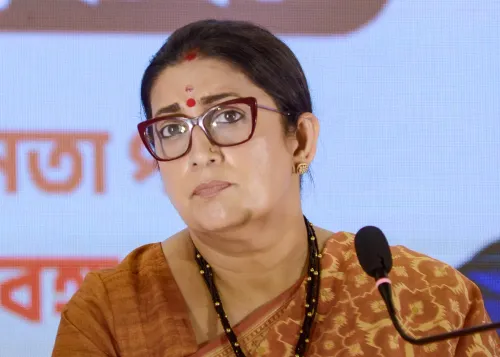
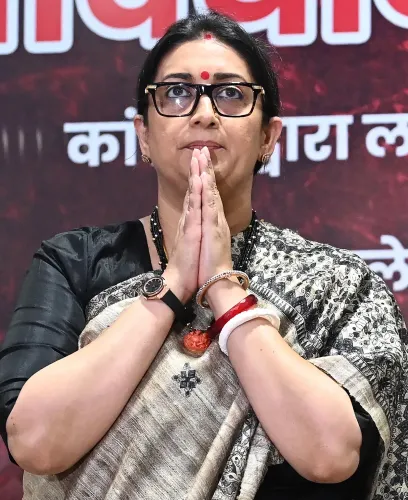
Smriti Irani, a former Union Minister with a commanding media presence, has been appointed General Secretary. Her ability to connect across demographics — from urban middle-class voters to rural women — makes her a significant asset in the BJP's outreach architecture. Complementing her elevation, Roop Kumari Choudhary has been named Mahila Morcha President, further reinforcing the party's women-centric messaging in states where it is keen to deepen its base.
Northeast and Minority Outreach
The Northeast receives prominent representation through Biplab Deb, former Chief Minister of Tripura, appointed as General Secretary. Adding to this regional thrust, Phangnon Konyak — the first woman Rajya Sabha MP from Nagaland and state President of BJP Mahila Morcha — has been named National Secretary. Her inclusion is widely seen as a signal of the party's intent to integrate northeastern voices into its national leadership framework.
Anil Antony, son of veteran Congress leader and former Defence Minister A.K. Antony, has also been appointed National Secretary — a move that reflects the BJP's openness to leaders who have crossed the aisle and now share its political philosophy.
On minority outreach, Kunwar Basit Ali's appointment as Minority Morcha President is a symbolic gesture toward communities that have historically maintained a distance from the party. Whether the symbolism translates into substantive electoral gains remains to be seen, according to political observers.
Youth and Generational Renewal
Hemang Joshi, a leader from Gujarat, has been appointed Yuva Morcha President, embodying the generational shift the BJP is keen to project. His mandate will be to energise the party's youth cadre as the BJP looks to consolidate its standing among first-time voters heading into the next electoral cycle.
The Broader Picture
Taken together, the new team spans a wide geographic arc — from Rajasthan to Nagaland, from Gujarat to Tripura — projecting the BJP's self-image as a genuinely pan-Indian party. The gender composition, anchored by leaders such as Irani, Konyak, and Choudhary, strengthens the inclusivity narrative. With state elections imminent and the 2029 general election already casting a long shadow, the composition of this team will be tested sooner rather than later.
Point of View
One post' norm in plain sight — and the party appears unbothered by the optics. The Northeast appointments are strategically sound but thin on depth; placing Konyak as National Secretary is symbolism without portfolio weight. The more telling signal is Anil Antony's inclusion: the BJP is quietly building a narrative of ideological migration from the Congress, a message calibrated as much for the media as for voters in Kerala ahead of 2026.
NationPress
17 Aug 2026
Frequently Asked Questions
Who are the key appointments in BJP's new office bearers team announced on 17 August?
Key appointments include Piyush Goyal as National Treasurer, Smriti Irani as General Secretary, Vasundhara Raje and Ram Madhav as National Vice Presidents, Biplab Deb as General Secretary, and Phangnon Konyak as National Secretary. The team was announced after new party president Nitin Nabin assumed charge.
Why is Piyush Goyal's appointment as BJP Treasurer significant?
Goyal's appointment as Treasurer is significant because he currently serves as Union Commerce and Industry Minister, raising questions about the BJP's 'one person, one post' convention. However, this remains an unwritten norm rather than a formal rule, as seen during J.P. Nadda's tenure as party chief while holding a cabinet post.
How does the new BJP team reflect regional and gender diversity?
The team spans appointments from Rajasthan, Gujarat, Tripura, and Nagaland, projecting a pan-India footprint. Women leaders including Smriti Irani, Phangnon Konyak, and Roop Kumari Choudhary hold prominent positions, reinforcing the BJP's gender inclusivity messaging.
Who is Phangnon Konyak and why is her appointment notable?
Phangnon Konyak is the first woman Rajya Sabha MP from Nagaland and serves as state President of BJP Mahila Morcha. Her appointment as National Secretary highlights the BJP's intent to integrate northeastern voices into its national leadership and signals a focus on gender inclusivity from the region.
What is the significance of Anil Antony joining the BJP's national team?
Anil Antony, son of veteran Congress leader and former Defence Minister A.K. Antony, has been named National Secretary. His inclusion reflects the BJP's strategy of welcoming leaders who have shifted allegiance, and carries particular symbolic weight given his family's deep association with the Congress.