Mirwaiz Umar Farooq barred from Rabi-Ul-Awwal congregation in Srinagar
Synopsis
For the second time in days, Mirwaiz Umar Farooq — Kashmir's chief cleric — was placed under house arrest, this time blocking tens of thousands from the annual Khawaja Diger congregation at Naqshband Sahab. With the AAC banned under UAPA and Friday sermons repeatedly disrupted, the restrictions are drawing sharp scrutiny over religious freedoms in Jammu and Kashmir.
Key Takeaways
Mirwaiz Umar Farooq was placed under house arrest on 17 August , preventing him from addressing the Khawaja Diger congregation at Naqshband Sahab, Srinagar .
The congregation is observed annually on the 3rd of Rabi-Ul-Awwal ; tens of thousands of devotees were reportedly present.
Days earlier, on Friday , Mirwaiz was also barred from delivering the sermon at Jama Masjid, Nowhatta .
Authorities say the house arrests are for his personal security and to maintain law and order.
The MHA banned Mirwaiz's Awami Action Committee (AAC) for five years under UAPA on 11 March 2025 .
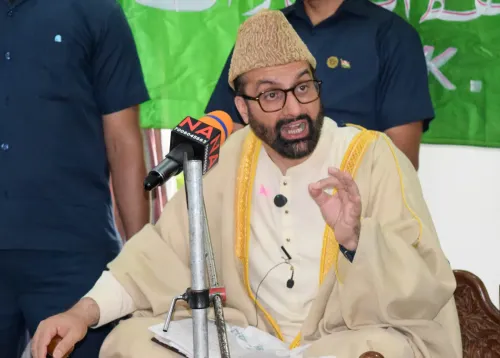
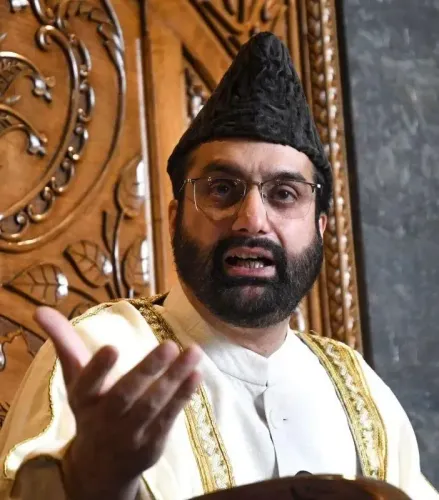
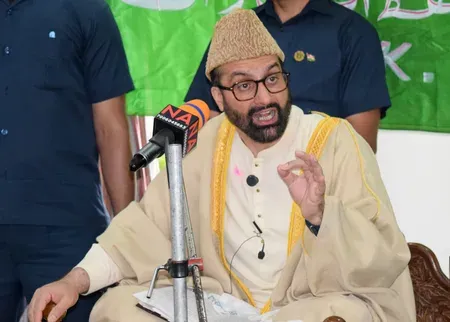
Senior religious leader and chief cleric Mirwaiz Umar Farooq on Monday, 17 August accused authorities of placing him under house arrest to prevent him from addressing the annual Khawaja Diger congregation at Naqshband Sahab in Srinagar, observed on the 3rd of Rabi-Ul-Awwal. Mirwaiz said tens of thousands of devotees had gathered and were denied access to the religious address.
What Mirwaiz Said
Posting on X, Mirwaiz Umar wrote: 'Preventing me from addressing congregational religious occasions as the Mirwaiz, to punish me for my political outlook and for raising social and religious concerns of people, while a reflection of the now familiar repressive mindset of rulers, is still unfortunate and shameful to say the least.'
He further alleged that authorities were displaying 'insensitivity and disrespect' towards the religious rights of Muslims by denying them the right to hear sermons and participate in spiritual experiences. He urged elected governments to actively safeguard these rights across both the Kashmir Valley and Jammu.
A Recurring Pattern
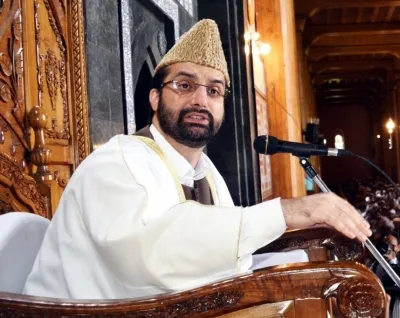
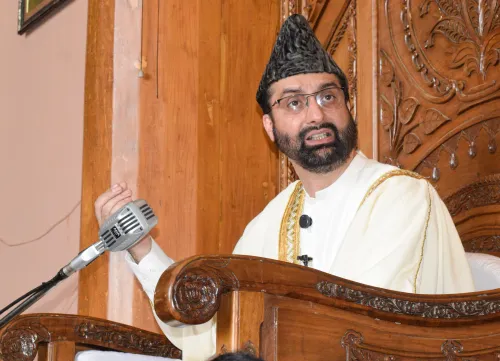
This is not an isolated incident. Just days earlier, on Friday, Mirwaiz Umar Farooq was similarly placed under house arrest and barred from delivering the traditional Friday sermon at the historic Jama Masjid in Nowhatta, Srinagar. Critics argue that the repeated restrictions on the cleric's religious engagements have become a pattern, raising questions about the boundaries between security concerns and religious freedoms in the Union Territory.
Authorities' Position
Officials maintain that Mirwaiz Umar Farooq is periodically placed under house arrest for his personal security and to preserve law and order in the region. No specific threat assessment has been made public to substantiate these claims.
The AAC Ban and Its Context
Mirwaiz Umar Farooq also heads the Awami Action Committee (AAC), which the Ministry of Home Affairs (MHA) declared a banned organisation on 11 March 2025 under the Unlawful Activities (Prevention) Act (UAPA) for a period of five years. The ban on the AAC has added a layer of political complexity to what Mirwaiz frames as a purely religious and civil liberties dispute.
The repeated restrictions on one of Kashmir's most prominent clerics continue to draw attention to the broader question of religious autonomy in Jammu and Kashmir, with no resolution in sight.
Point of View
Which makes the 'personal security' rationale increasingly difficult to accept at face value. With the AAC banned under UAPA and the Jama Masjid pulpit repeatedly silenced, the cumulative effect is a significant curtailment of the chief cleric's public religious function — a role that predates the current political dispensation by centuries. Elected governments in Jammu and Kashmir, as Mirwaiz himself noted, have so far been conspicuously quiet on the matter.
NationPress
17 Aug 2026
Frequently Asked Questions
Why was Mirwaiz Umar Farooq placed under house arrest on 17 August?
Mirwaiz Umar Farooq was placed under house arrest on 17 August to prevent him from addressing the annual Khawaja Diger congregation at Naqshband Sahab in Srinagar. Authorities have stated that such restrictions are imposed for his personal security and to maintain law and order, though no specific threat details have been made public.
What is the Khawaja Diger congregation?
The Khawaja Diger congregation is a time-honoured annual religious gathering observed on the 3rd of Rabi-Ul-Awwal in Srinagar. It is one of the significant religious occasions at which the Mirwaiz traditionally addresses the Muslim community.
Has Mirwaiz Umar Farooq faced similar restrictions before?
Yes. Just days before the 17 August incident, Mirwaiz was also placed under house arrest on a Friday and barred from delivering the traditional sermon at Jama Masjid in Nowhatta, Srinagar. Such restrictions have occurred on multiple occasions in recent years.
What is the Awami Action Committee and why was it banned?
The Awami Action Committee (AAC) is a socio-political body headed by Mirwaiz Umar Farooq. The Ministry of Home Affairs banned it for five years on 11 March 2025 under the Unlawful Activities (Prevention) Act (UAPA).
What has Mirwaiz Umar Farooq demanded from elected governments?
Mirwaiz has urged elected governments to actively protect the religious rights of Muslims in both the Kashmir Valley and Jammu, including their right to hear sermons and participate in congregational spiritual gatherings.