BJP under Nitin Nabin: Cadre, coalition and digital push define new national team
Synopsis
The BJP's new national team under Nitin Nabin is less about star power and more about structural readiness — Smriti Irani's return, a data-savvy social-media chief, and six women among 13 vice presidents signal a party recalibrating its machinery for the next round of electoral battles from the ground up.
Key Takeaways
BJP announced a national organisational reshuffle on Monday, 17 August under president Nitin Nabin .
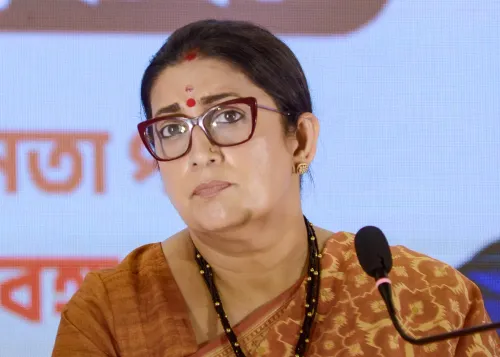
Smriti Irani returns as national general secretary, strengthening the party's Uttar Pradesh outreach.
Ram Madhav makes a comeback as national vice president; Piyush Goyal returns as national treasurer.
Six of 13 national vice presidents are women; morcha leadership spans youth, OBC, SC, ST and minority outreach.
Deepak Mhaskey of Chhattisgarh takes over as national social-media convenor, signalling a data-driven digital push.
BL Santhosh continues as national general secretary (Organisation), keeping the BJP-RSS axis intact.
The Bharatiya Janata Party (BJP) unveiled a sweeping organisational reshuffle on Monday, 17 August, with its new national team under president Nitin Nabin sending an unambiguous signal ahead of the next electoral cycle: the party is prioritising cadre strength, social coalition-building and data-driven digital outreach over personality-led campaigns.
Key Appointments and What They Signal
The most prominent appointment is the return of Smriti Irani as national general secretary. A high-profile political communicator with deep roots in Uttar Pradesh, Irani's elevation places a relentless campaigner back at the centre of the BJP's organisational machinery at a time when the party is keen to consolidate its position in the state.
Biplab Kumar Deb, a prominent BJP face from Tripura closely associated with the party's eastward expansion, also receives a national general secretary role. Satish Poonia brings a prominent Jat constituency from Rajasthan, while Harish Dwivedi and Bhola Singh reinforce the party's representation among key social groups in Uttar Pradesh. Manoj Tigga, an important BJP leader from West Bengal, moves into the national structure, and Hemang Joshi of Gujarat takes charge of the Yuva Morcha — a deliberate effort to build a younger organisational layer.
Continuity at the Organisational Core
The reshuffle is as notable for what it retains as for what it changes. The BJP-RSS organisational axis remains firmly intact: BL Santhosh continues as national general secretary (Organisation), and Saudan Singh and Shivprakash hold their organisational responsibilities. Ram Madhav makes a significant comeback as national vice president, indicating that experienced leaders sidelined from the immediate national structure are being redeployed rather than discarded. Piyush Goyal returns as national treasurer, adding another seasoned political figure to a defined role.
Representation and Social Outreach
There is a pronounced emphasis on representation in the new structure. Six of the 13 national vice presidents are women, while the revamped morcha leadership covers youth, women, OBC, farmers, SC, ST and minority outreach — reflecting a deliberate attempt to broaden the party's social coalition ahead of competitive state and national contests.
Digital Machinery Gets a Makeover
The communications structure is undergoing a particularly significant recalibration. Anil Baluni retains the media convenor post, providing continuity on conventional media. However, Deepak Mhaskey of Chhattisgarh takes over as national social-media convenor. His background in the BJP's IT organisation, electoral data analysis and grassroots mobilisation suggests the party intends to place greater emphasis on data-driven political communication and targeted digital outreach. This comes amid growing recognition across political parties that social media has become a central battlefield in Indian elections.
The Broader Strategic Message
According to political observers, Team Nabin appears designed around one central idea: less personality, more organisation. The BJP is retaining its core backbone while refreshing its social, regional, youth and digital machinery. 'The message for the coming electoral cycle is clear — build the cadre, sharpen the communication network and prepare the party from the ground up for the next poll battles,' analysts say. With the next round of state elections approaching, the structural choices made in this reshuffle will be closely watched as indicators of the BJP's electoral priorities.
Point of View
Not a headline grab — and that distinction matters. The BJP has historically won elections through booth-level organisation, not just television moments, and this team is calibrated for exactly that. The elevation of a data-background figure to the social-media convenor role is the most underreported signal: it suggests the party is moving from broadcast-mode digital campaigning to targeted, analytics-driven outreach. The real question is whether the regional faces — Deb in the east, Tigga in Bengal, Poonia in Rajasthan — can translate national structure into state-level vote arithmetic. Organisation without aligned state leadership has its limits, and the BJP knows that better than most.
NationPress
1 Oct 2026
Frequently Asked Questions
Who is Nitin Nabin and what is his role in the BJP?
Nitin Nabin is the BJP's national president, under whose leadership the party announced its new national organisational team on 17 August. The reshuffle is designed to prepare the party's machinery for the next round of electoral battles, with a focus on cadre-building, social outreach and digital strategy.
Why has Smriti Irani been appointed as BJP national general secretary?
Smriti Irani has been reappointed as national general secretary to bring a high-profile political communicator back into the BJP's organisational core, particularly as the party looks to consolidate its presence in Uttar Pradesh. Her reputation as a relentless campaigner makes her a key figure in the party's electoral preparation.
What does Deepak Mhaskey's appointment as social-media convenor mean for the BJP?
Deepak Mhaskey of Chhattisgarh, who has a background in the BJP's IT organisation and electoral data work, has been named national social-media convenor. His appointment signals a shift toward data-driven, targeted digital outreach rather than conventional broadcast-style communication on social platforms.
How does the new BJP team address representation concerns?
Six of the 13 national vice presidents in the new team are women. Additionally, the revamped morcha leadership covers youth, women, OBC, farmers, SC, ST and minority outreach, reflecting a deliberate effort to broaden the party's social coalition.
What remains unchanged in the BJP's organisational structure?
BL Santhosh continues as national general secretary (Organisation), and Saudan Singh and Shivprakash retain their organisational responsibilities, keeping the BJP-RSS organisational axis intact. The reshuffle is as much about continuity at the core as it is about refreshing the party's social, regional and digital machinery.