BJP's Nitin Nabin team: Youth, women and experience in new org structure
Synopsis
The BJP's new organisational team under Nitin Nabin is a deliberate pre-election construction — younger faces, more women in senior roles, and broader regional and community representation. With UP and Punjab elections approaching, the party is betting that a more diverse leadership structure will sharpen its electoral edge.
Key Takeaways
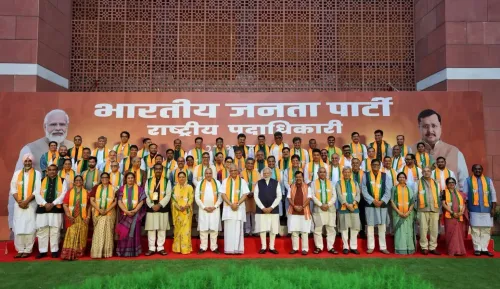
BJP unveiled a restructured organisational team under national president Nitin Nabin on 17 August .
6 office-bearers are below 40; 15 are between 40–49; 21 are in the 50–59 age group.
Women hold 12 of 65 organisational positions, including 6 of 13 national vice-president posts.
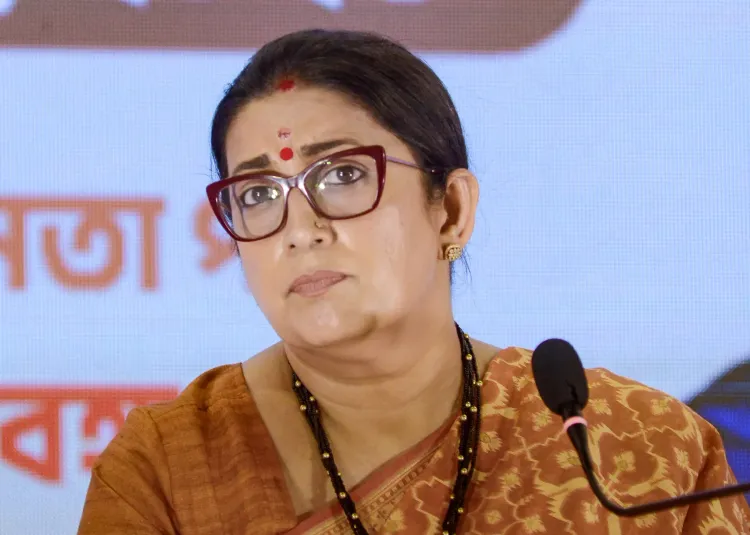
Smriti Irani returns as national general secretary; Ram Madhav appointed national vice-president.
Reportedly around 40% of office-bearers belong to marginalised communities; new Morcha heads appointed for OBC, SC, ST and Minority wings.
The reshuffle comes ahead of key Assembly elections in Uttar Pradesh and Punjab .
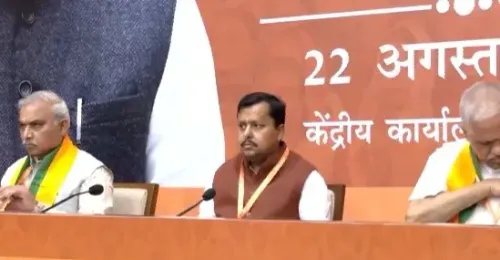
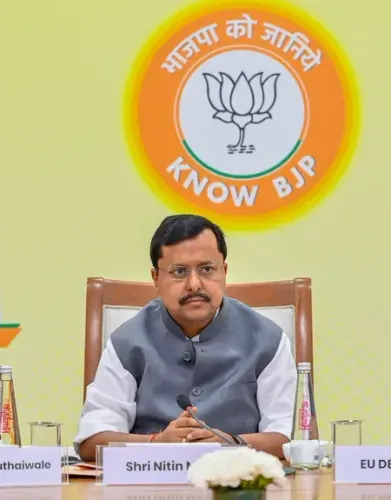
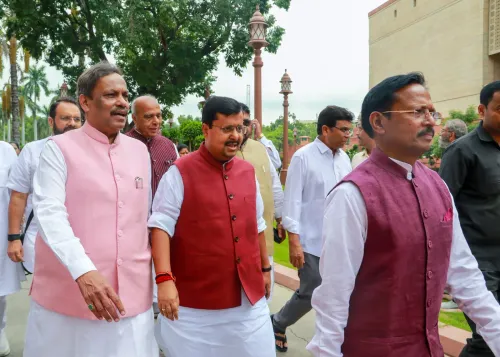
The Bharatiya Janata Party (BJP) has unveiled a restructured organisational team under new national president Nitin Nabin, combining younger leaders, greater women's representation, and seasoned political veterans. The reshuffle, announced on 17 August from New Delhi, comes ahead of high-stakes Assembly elections in Uttar Pradesh and Punjab, and analysts say it reflects a calculated effort to build a more energetic and representative party apparatus.
Youth at the Fore
The most visible shift in the new team is its age profile. Six office-bearers are below 40, while 15 fall between 40 and 49, and another 21 are in the 50–59 age bracket. According to a BJP leader, 'The lower average age indicates a conscious effort to strengthen the BJP's second generation of leadership. Younger office-bearers can bring fresh ideas, greater organisational energy and a closer connection with young voters.' The move also deepens the party's leadership pipeline ahead of a generational transition.
Women's Representation Strengthened
Women have secured 12 of the 65 organisational positions, including six of the 13 national vice-president posts. Prominent leaders such as Vasundhara Raje, Smriti Irani, and D. Purandeswari have been placed in senior roles, raising the visibility of women within the party's decision-making hierarchy. Political observers note that the strategic inclusion of women leaders aligns with the growing electoral weight of women voters across key states.
Veterans Hold Key Positions
Experience remains central to the new structure. Former Union minister Smriti Irani returns to a prominent role as national general secretary, while Ram Madhav has been appointed national vice-president. Vasundhara Raje, Piyush Goyal, and B.L. Santosh are expected to guide the organisation drawing on their extensive political backgrounds. The pairing of veterans with younger leaders is designed to provide institutional continuity while allowing room for generational renewal.
Regional and Social Diversity
Phangnon Konyak and Biplab Deb bring stronger representation from the Northeast, while D. Purandeswari and M. Venkatesan reinforce the BJP's footprint in southern India. Reportedly, around 40 per cent of office-bearers belong to marginalised communities. New leadership has also been appointed for the OBC, SC, ST, and Minority Morchas, and the inclusion of academics and professionals further broadens the party's organisational base.
What This Signals Ahead of Key Elections
With Assembly elections in Uttar Pradesh and Punjab on the horizon, the reshuffle is widely read as a pre-election consolidation move. The team's composition — diverse in age, gender, region, and community — suggests the BJP is seeking to project a more inclusive face without sidelining its most experienced hands. How effectively this structure translates into ground-level mobilisation will be the defining test in the months ahead.
Point of View
Who lost her Lok Sabha seat in 2024, to a general secretary role raises questions about whether organisational revival and electoral accountability are being conflated. The 40 per cent marginalised-community figure, if verified, would be significant — but the party has not released a full breakdown, making independent scrutiny difficult. The real test of this reshuffle is not its optics but whether the new structure produces measurable ground-level gains in UP and Punjab.
NationPress
2 Oct 2026
Frequently Asked Questions
Who is Nitin Nabin and what is his role in the BJP?
Nitin Nabin is the newly appointed national president of the Bharatiya Janata Party (BJP). He has unveiled a restructured organisational team that blends youth, women's representation, and experienced political leaders ahead of upcoming Assembly elections.
How many women have been included in the BJP's new organisational team?
Women hold 12 of the 65 organisational positions in the new BJP team, including six of the thirteen national vice-president posts. Senior leaders Vasundhara Raje, Smriti Irani, and D. Purandeswari are among those placed in prominent roles.
Which experienced leaders feature in the BJP's new team?
Former Union minister Smriti Irani has been appointed national general secretary, while Ram Madhav has been named national vice-president. Vasundhara Raje, Piyush Goyal, and B.L. Santosh are also part of the team, bringing long political experience to the new structure.
How does the new BJP team reflect regional diversity?
Phangnon Konyak and Biplab Deb represent the Northeast, while D. Purandeswari and M. Venkatesan strengthen the party's southern India presence. Reportedly around 40 per cent of office-bearers belong to marginalised communities, and new leaders have been appointed for the OBC, SC, ST, and Minority Morchas.
Why is the BJP reshuffle significant ahead of UP and Punjab elections?
The reshuffle is seen as a pre-election consolidation move, with the BJP building a more diverse and energetic leadership structure ahead of crucial Assembly elections in Uttar Pradesh and Punjab. Analysts say the blend of youth, women, and experienced leaders is designed to sharpen the party's electoral mobilisation.