NCP (SP) urges Maharashtra CEO to overhaul Special Intensive Revision of voter lists
Synopsis
NCP (SP) has put the Maharashtra election machinery on notice: 1.08 crore voter names already deleted, BLOs under pressure, and data mapping errors piling up. The party's detailed reform blueprint — GPS tagging, AI matching, open dashboards, and disciplinary action — signals that the SIR process is heading into contested political territory well before the next election.
Key Takeaways
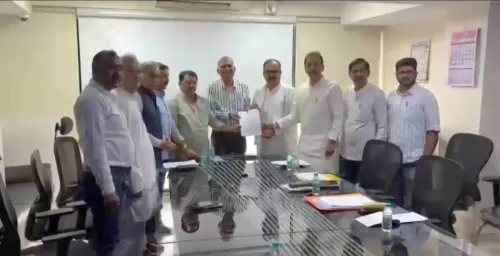
MLA Rohit Pawar and state chief Shashikant Shinde led an NCP (SP) delegation to Maharashtra CEO S.
Chockalingam on 17 August .
1.08 crore names have already been removed from Maharashtra's voter list during the ongoing SIR exercise.
The party flagged duplicate entries, wrong address mapping, improper family mapping, and BLO pressure as key problems.
NCP (SP) demanded GPS geo-tagging , OTP-based verification , AI and facial recognition tools , and a real-time open district-wise dashboard.
BLOs must complete at least two home visits before classifying any voter as shifted or untraceable.
Strict disciplinary action sought against officers found guilty of negligence or incorrect entries.
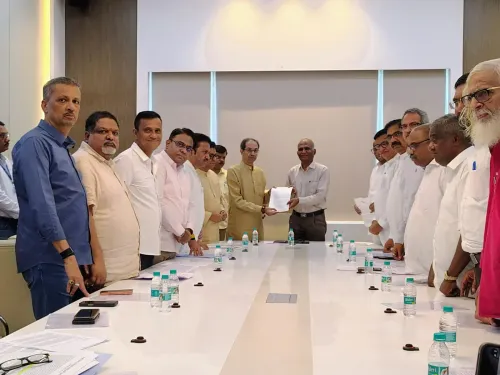
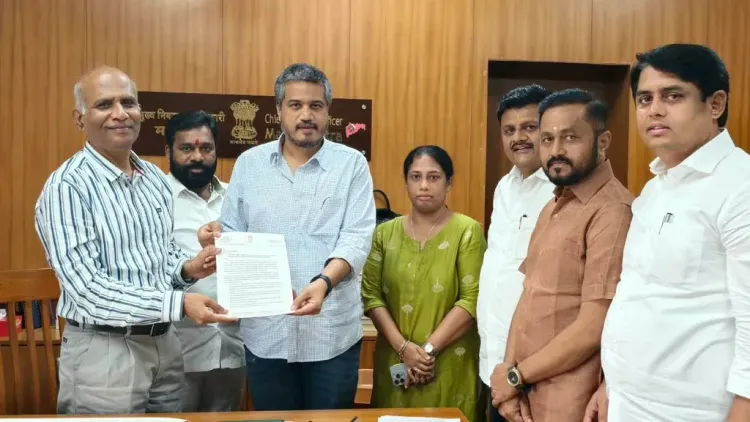
A Nationalist Congress Party (Sharadchandra Pawar) delegation, led by MLA Rohit Pawar and state unit chief Shashikant Shinde, on Monday, 17 August submitted a formal representation to Maharashtra Chief Electoral Officer (CEO) S. Chockalingam in Mumbai, demanding sweeping reforms in the ongoing Special Intensive Revision (SIR) of the state's voter rolls.
Key Discrepancies Flagged
The delegation catalogued a range of operational, technical, and administrative failures in the SIR process. These included incomplete address details, physical verification hurdles, data mapping errors, duplicate entries, improper family mapping, and wrong address assignments. Pawar told reporters that while some of their concerns received satisfactory responses, several others were tied to the Central Election Commission and require action at that level.
Notably, Pawar disclosed that 1.08 crore names have already been removed from the voter list — a figure that formed a central point of the delegation's discussions with the CEO. He attributed a portion of the errors to excessive pressure on Booth Level Officers (BLOs), which he said was causing lapses in the verification process.
Reforms the Party Is Demanding
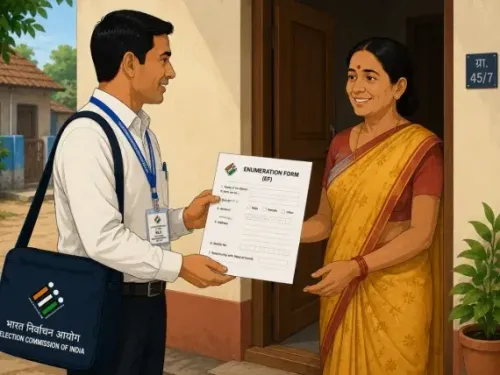
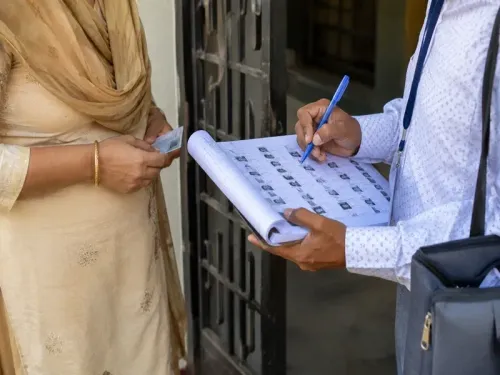
NCP (SP) presented a detailed set of recommendations. On ground verification, the party demanded strict door-to-door checks by BLOs, with a ban on shortcut 'Table Surveys.' Before classifying any voter as shifted, permanently shifted, or untraceable, officers must complete at least two home visits and make mandatory phone or SMS contact attempts.
On technology, the delegation called for mandatory GPS and geo-tagging, timestamps, and photographic evidence for every verification visit. It also sought strict limits on interference by Booth Level Agents (BLA-2) and regular digital audits of BLO logins, devices, IP addresses, and SIR app usage.
The party further proposed a real-time open dashboard at the district level, publishing all additions, deletions, and corrections. Proposed voter deletion lists should be made publicly available for appeals and hearings within three months.
Technology Integration Sought
The delegation urged adoption of OTP-based verification, AI tools, facial recognition, and fuzzy matching algorithms, along with integration with the National Data Integration Model to curb duplicate entries. It also sought district-level monitoring committees, special review mechanisms for wrong-mapping cases, SOP training for BLOs, and the appointment of additional staff.
Accountability Measures
The representation demanded strict administrative and disciplinary action against officers found guilty of negligence, skipped verifications, or incorrect entries. Pawar emphasised that the submission was intended as a constructive effort to improve accuracy and public trust in the electoral system, and not to undermine confidence in it.
This comes amid broader national scrutiny of voter list revisions ahead of upcoming electoral cycles, with opposition parties across states raising concerns about deletions and data integrity in SIR exercises.
Point of View
But opposition parties have used similar representations before without securing structural change. The real question is whether the CEO's office acts on the technology and accountability demands — particularly the open deletion dashboard — or files the submission. With Maharashtra's electoral arithmetic finely balanced, any perception of voter roll manipulation, even if procedural rather than deliberate, carries outsized political risk.
NationPress
2 Oct 2026
Frequently Asked Questions
What is the Special Intensive Revision (SIR) of voter lists in Maharashtra?
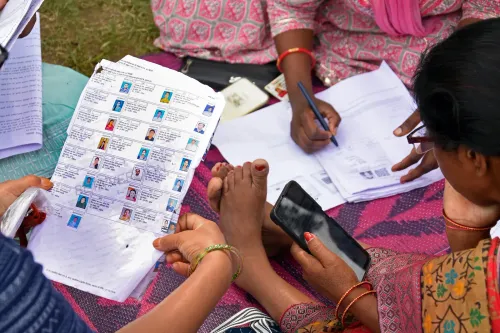
The Special Intensive Revision (SIR) is a periodic exercise conducted by the Election Commission to update, verify, and correct the state's electoral rolls. It involves Booth Level Officers visiting registered voters to confirm addresses and remove outdated or duplicate entries.
Why has NCP (SP) raised concerns about the SIR process?
NCP (SP) flagged multiple discrepancies including data mapping errors, duplicate entries, wrong address assignments, and excessive pressure on BLOs leading to verification lapses. The party also highlighted that 1.08 crore voter names have already been deleted from Maharashtra's rolls during this exercise.
What specific reforms has NCP (SP) demanded from the Maharashtra CEO?
The party has demanded GPS geo-tagging and photographic evidence for every verification visit, OTP-based voter verification, AI and facial recognition tools, a real-time public dashboard for deletions and additions, at least two home visits before classifying a voter as untraceable, and disciplinary action against negligent officers.
Who led the NCP (SP) delegation to the Maharashtra Chief Electoral Officer?
The delegation was led by MLA Rohit Pawar and state unit chief Shashikant Shinde, who submitted the formal representation to Maharashtra CEO S. Chockalingam on 17 August.
What is the significance of 1.08 crore voter deletions in Maharashtra?
The deletion of 1.08 crore names is a significant figure in a state where electoral margins can be razor-thin. Opposition parties argue that without rigorous verification, such large-scale deletions risk disenfranchising legitimate voters, particularly from communities that are harder to reach through standard BLO visits.