India's first Captagon seizure: ₹182 crore 'Jihadi Drug' bust under Operation RAGEPILL
Synopsis
India intercepted Captagon — the synthetic stimulant tied to West Asian conflict zones — for the first time ever, seizing a ₹182 crore consignment bound for the Middle East under Operation RAGEPILL. The bust, confirmed by Home Minister Amit Shah, signals that India's transit corridors have entered the crosshairs of international narcotics networks dealing in a drug enforcement had never previously encountered on Indian soil.
Key Takeaways
India recorded its first-ever seizure of Captagon , a banned synthetic stimulant, valued at ₹182 crore under Operation RAGEPILL .
The consignment was destined for the Middle East ; a foreign national has been arrested.
The bust was carried out by the Narcotics Control Bureau (NCB) and announced by Home Minister Amit Shah on 16 May .
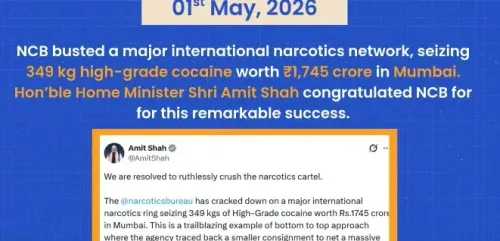
Earlier this month, the NCB also seized 349 kg of cocaine worth ₹1,745 crore in Mumbai .
In 2025 , the NCB seized over 1.33 lakh kg of narcotics worth ₹1,980 crore and arrested 994 traffickers in 447 cases .
The Centre has set a drug-free India by 2047 target, with zero tolerance for transit trafficking through Indian territory.
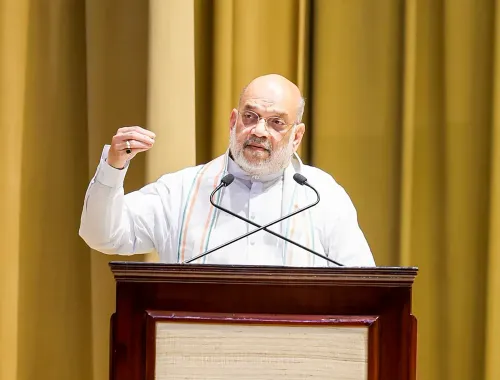
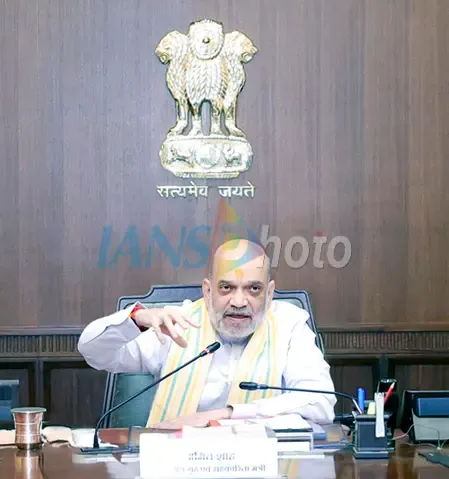
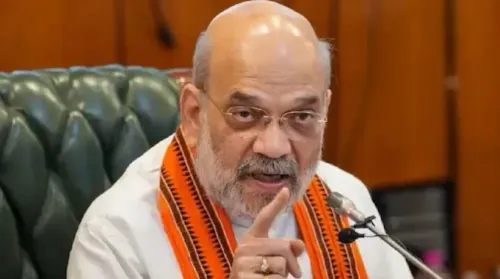
India has recorded its first-ever seizure of Captagon — a banned synthetic stimulant internationally linked to organised crime and conflict zones — valued at ₹182 crore, Union Home Minister Amit Shah announced on Saturday, 16 May. The bust, carried out under Operation RAGEPILL, marks a significant escalation in the Centre's campaign against transnational narcotics trafficking.
Key Details of the Operation
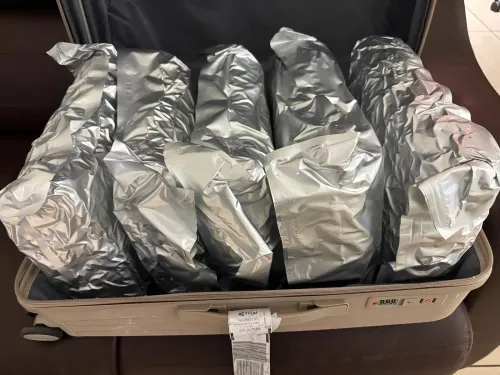
The seized consignment was destined for the Middle East, according to Shah, who confirmed that a foreign national had been arrested in connection with the case. The operation was executed by the Narcotics Control Bureau (NCB), which Shah congratulated for the historic haul.
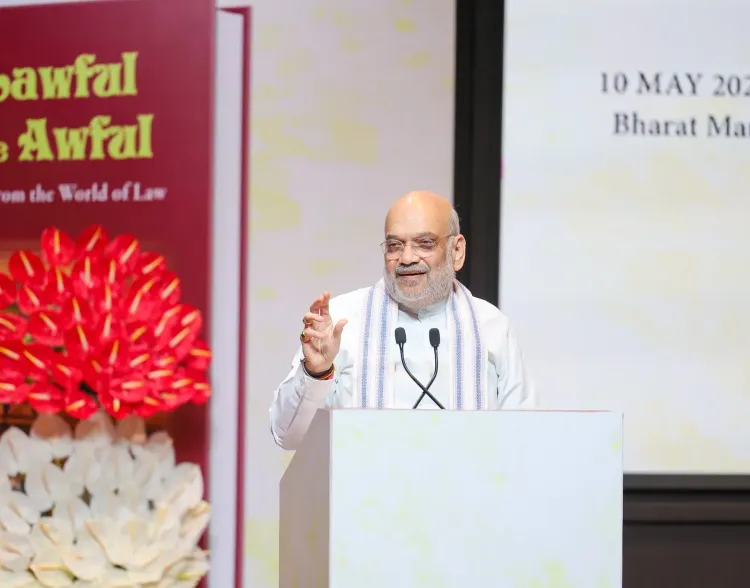
'Modi govt is resolved for a Drug-Free India. Glad to share that through Operation RAGEPILL, our agencies have achieved the first-ever seizure of Captagon, the so-called Jihadi Drug, worth ₹182 crore,' Shah said in a post on X.
What Is Captagon and Why It Matters
Captagon is a potent synthetic stimulant — chemically related to amphetamine — that has been widely linked to armed conflict zones and organised crime networks across West Asia. It is banned in India and internationally controlled. Its appearance in an India-linked smuggling route signals that the country's transit corridors are increasingly on the radar of international narcotics syndicates.
Notably, this is the first confirmed Captagon seizure on Indian soil, suggesting enforcement agencies have detected a new trafficking vector that had not previously been intercepted.
Part of a Broader Anti-Narcotics Push
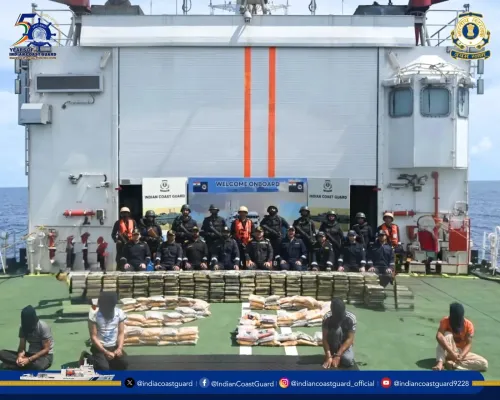
The Captagon bust is the latest in a string of high-profile operations. Earlier this month, the NCB seized 349 kg of high-grade cocaine worth ₹1,745 crore in Mumbai, following a 'bottom-to-top' investigation that traced a smaller consignment to a larger international network. A separate Mumbai operation had previously recovered cocaine, ganja, and cannabis gummies in a haul estimated at ₹200 crore, with investigators pointing to overseas operators and international courier routes.
According to reports, the NCB seized more than 1.33 lakh kg of narcotic substances worth nearly ₹1,980 crore in 2025 and arrested 994 traffickers — including 25 foreign nationals — in 447 cases across the country.
Government's Drug-Free India Roadmap
Speaking at an anti-narcotics event on Friday, Shah reiterated the government's long-term objective: 'The government had prepared a roadmap to make India drug-free by 2047, and no narcotics consignment should be allowed to enter or transit through Indian territory.' He added: 'I repeat we will clamp down on every gram of drugs entering India or leaving the country using our territory as the transit route.'
Indian authorities have in recent years intensified surveillance of synthetic drug flows through maritime and air cargo channels, reflecting a broader recognition that India is not merely a consumption market but an increasingly targeted transit hub for international narcotics networks. The Operation RAGEPILL seizure suggests that monitoring has now extended to stimulants previously unseen in Indian enforcement records.
Point of View
But the recurring presence of foreign nationals in these busts raises a harder question: how many consignments are getting through? The government's 2047 drug-free target is politically useful framing, but the operational test is whether intelligence-led interdiction is outpacing network adaptation — and a single historic first does not yet answer that.
NationPress
2 Oct 2026
Frequently Asked Questions
What is Captagon and why is it called the 'Jihadi Drug'?
Captagon is a banned synthetic stimulant chemically related to amphetamine, widely linked to armed conflict zones and organised crime networks across West Asia. It has been called the 'Jihadi Drug' because of its reported use in conflict theatres in the region, though the label is contested by some researchers.
What is Operation RAGEPILL?
Operation RAGEPILL is an anti-narcotics operation conducted by India's Narcotics Control Bureau (NCB) that resulted in the country's first-ever seizure of Captagon. The operation led to the arrest of a foreign national and the recovery of a consignment worth ₹182 crore that was bound for the Middle East.
Who announced the Captagon seizure and when?
Union Home Minister Amit Shah announced the seizure on Saturday, 16 May, in a post on X. He confirmed the details of Operation RAGEPILL and congratulated NCB officers for the historic bust.
What other major drug seizures has the NCB made recently?
Earlier in May 2025, the NCB seized 349 kg of high-grade cocaine worth ₹1,745 crore in Mumbai, tracing it through a 'bottom-to-top' investigation. A separate operation recovered cocaine, ganja, and cannabis gummies worth around ₹200 crore. Overall in 2025, the NCB seized over 1.33 lakh kg of narcotics worth nearly ₹1,980 crore and arrested 994 traffickers.
What is India's long-term anti-narcotics goal?
The Indian government has set a target of making India drug-free by 2047. Home Minister Amit Shah has stated that no narcotics consignment will be allowed to enter or transit through Indian territory, and that the government maintains zero tolerance against drug trafficking.