Kishan Reddy: Govt approves ₹2,814 cr for lithium, nickel plants
Synopsis
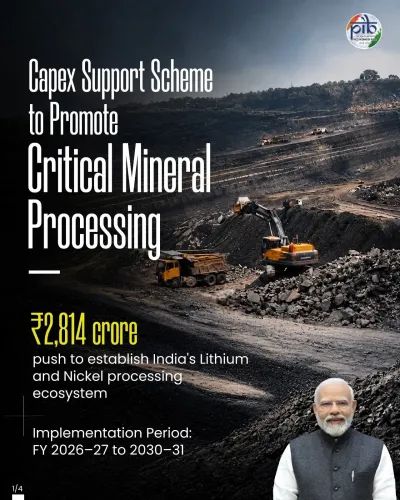
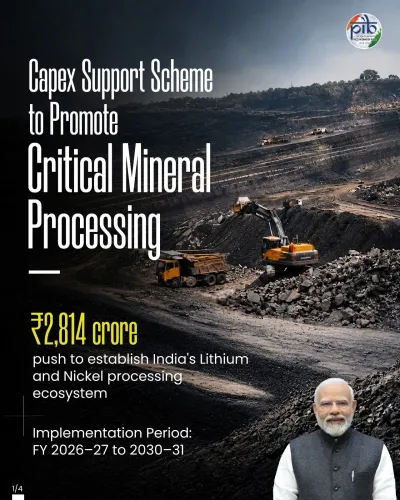
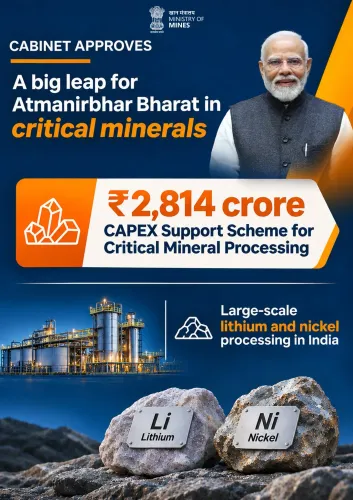
The Union Cabinet has approved ₹2,814 crore in capex support for four domestic lithium and nickel processing plants, targeting annual capacity of 60,000 tonnes and 1 lakh tonnes respectively, with projected investment of ₹9,560 crore and output valued at ₹21,000–28,000 crore.
Key Takeaways
₹2,814 crore approved as capital expenditure support for domestic lithium and nickel processing infrastructure.
Four plants sanctioned — two for lithium, two for nickel — with up to 30 per cent capital support on eligible investment.
Target annual processing capacity: 60,000 tonnes of lithium and 1 lakh tonnes of nickel .
Scheme expected to attract ₹9,560 crore in private investment.
Annual output value projected at ₹21,000–28,000 crore .
Initiative builds on the MMDR Amendment Act 2023 and the PLI for Advanced Chemistry Cells in anchoring India's EV and electronics supply chains domestically.
India just placed a serious bet on its own mineral future. Union Coal and Mines Minister G. Kishan Reddy announced on Saturday, 7 November 2026 that the Union Cabinet has approved ₹2,814 crore in capital expenditure support to build domestic processing capacity for lithium and nickel — two metals that sit at the heart of the global energy transition.
Four plants, two metals, one strategic bet
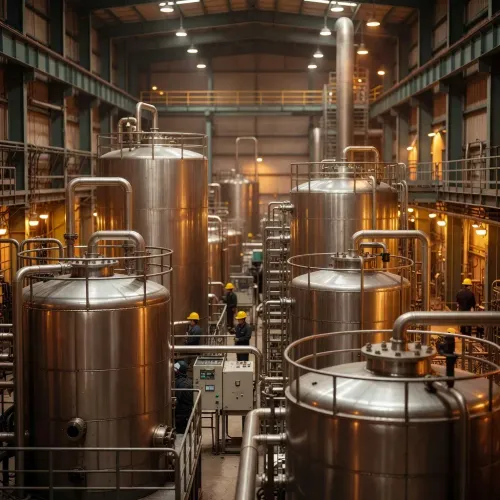
The Cabinet decision greenlit four processing plants — two for lithium, two for nickel — with the government offering up to 30 per cent capital support on eligible investment. At full capacity, the facilities are expected to process 60,000 tonnes of lithium and 1 lakh tonnes of nickel annually. The projected private investment the scheme hopes to unlock: ₹9,560 crore.
The numbers at the output end are even more striking. Annual production value is estimated at ₹21,000–28,000 crore — a multiplier that the government is using to frame this as an industrial catalyst, not just an infrastructure spend. Kishan Reddy described the move as reflecting 'the Modi Government's commitment to advancing Aatmanirbhar Bharat through stronger domestic manufacturing, employment generation and resilient supply chains.'
Why lithium and nickel — and why now
Lithium and nickel are the indispensable inputs for lithium-ion battery cells that power electric vehicles, grid storage, and consumer electronics. India currently has negligible domestic processing for either metal, leaving its EV and electronics ambitions exposed to supply chains dominated by a handful of overseas players. That dependence has been a persistent vulnerability.
The policy scaffolding for this move was laid earlier. The Mines and Minerals (Development and Regulation) Amendment Act, 2023 opened critical mineral blocks — including lithium — to private sector auction and commercial investment for the first time. The Production Linked Incentive scheme for Advanced Chemistry Cells, approved in 2021, had already signalled intent to build battery manufacturing at home. Saturday's Cabinet decision is the processing-capacity piece of that larger puzzle clicking into place.
What the ₹2,814 crore actually buys
Capital expenditure support of this scale is designed to de-risk the first movers. Processing critical minerals domestically is capital-intensive and technically demanding; the 30 per cent capex backstop is meant to tip the investment calculus for private players who might otherwise look abroad. If the ₹9,560 crore in projected investment actually flows, the government's ₹2,814 crore commitment works out to a leverage ratio of roughly 3.4x — a structure familiar from PLI schemes across sectors.
The Ministry of Mines, which Kishan Reddy leads, will now be watched closely on two fronts: how quickly the four plants move from approval to ground-breaking, and whether private investment commitments materialise at the projected scale.
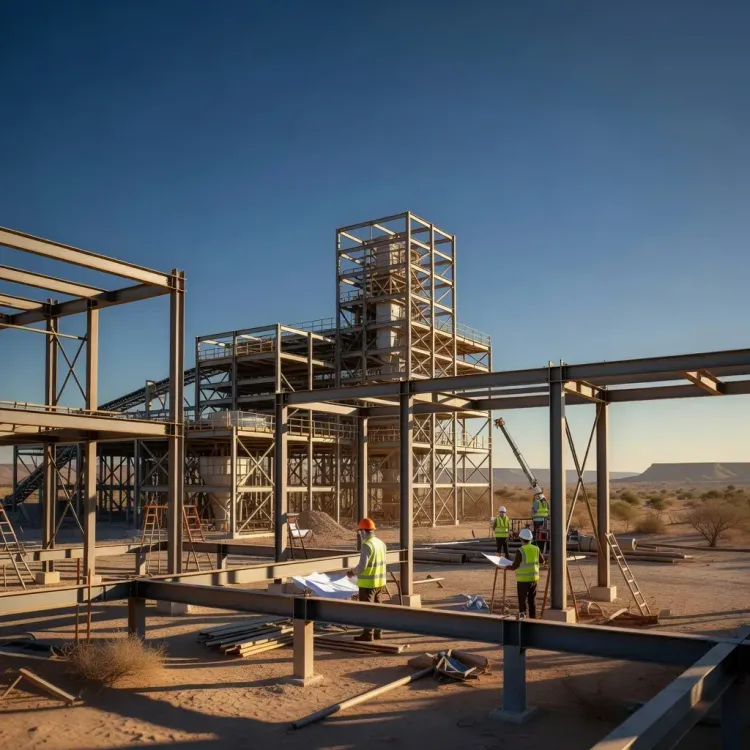
India has spent years articulating an Aatmanirbhar ambition in critical minerals — this Cabinet approval is the moment that ambition meets concrete steel and processing capacity.
Point of View
Using public money as a de-risking lever to crowd in private capital at scale. For the EV and electronics sectors, domestic lithium and nickel processing capacity could meaningfully reduce exposure to concentrated import routes — but the scheme's success will hinge entirely on how fast four plants can be commissioned and whether the ₹9,560 crore investment projection survives contact with ground realities.
NationPress
7 Nov 2026
Frequently Asked Questions
What did the Indian Cabinet approve for lithium and nickel processing?
The Union Cabinet approved ₹2,814 crore in capital expenditure support to establish four domestic processing plants — two for lithium and two for nickel — offering up to 30 per cent capital support on eligible investment.
What will be the processing capacity of the new lithium and nickel plants in India?
The four plants are designed for an annual processing capacity of 60,000 tonnes of lithium and 1 lakh tonnes of nickel.
How much private investment is expected from the critical minerals scheme?
The government projects that the scheme will attract ₹9,560 crore in private investment, with annual output valued at ₹21,000–28,000 crore.
Why is India building domestic lithium and nickel processing capacity?
India relies heavily on overseas supply chains for these metals, which are essential for EV batteries and electronics. Building domestic processing capacity reduces import dependence and supports the Aatmanirbhar Bharat self-reliance initiative.
What is G. Kishan Reddy's role in the critical minerals announcement?
G. Kishan Reddy is the Union Minister of Coal and Mines and announced the Cabinet decision, which falls under his ministry's mandate to develop India's mineral processing sector.