Critical mineral CAPEX scheme to unlock ₹10,000 crore investment in lithium, nickel

Synopsis
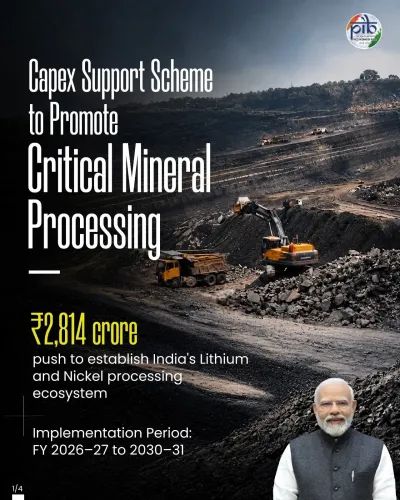
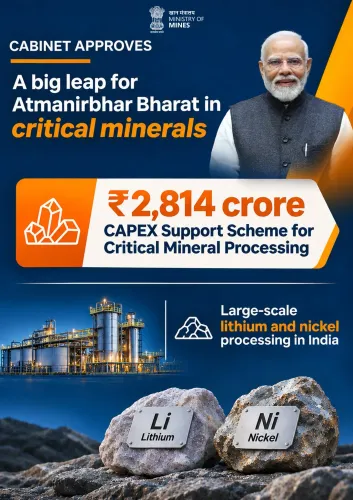
India has approved a ₹2,814 crore CAPEX scheme to build domestic lithium and nickel processing plants, aiming to unlock ₹10,000 crore in total investment and hit 60 kt of lithium and 100 kt of nickel capacity by 2030 — a direct strike at the import dependence that has long left India's EV and defence supply chains exposed.
Key Takeaways
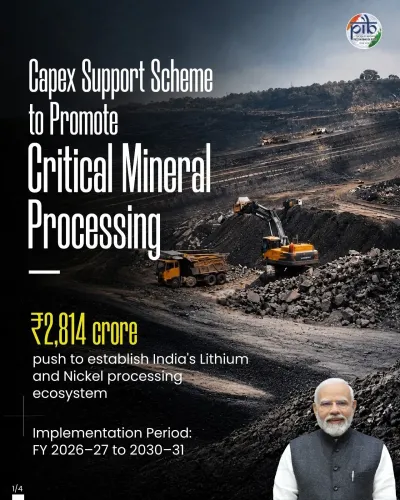
India's CAPEX Support Scheme to Promote Critical Mineral Processing was approved with an outlay of ₹2,814 crore and is expected to catalyse ₹10,000 crore in total investment.
The scheme runs from FY27 to FY31 and offers a 30% capital subsidy for two lithium plants and two nickel plants .
Capital support is capped at ₹500 crore per lithium beneficiary and ₹900 crore per nickel beneficiary .
Target capacities: 60 kilotonnes of lithium processing and 100 kilotonnes of nickel processing to meet domestic demand by 2030 .
Beneficiaries will be selected via a two-stage competitive process ; incentives released in three milestone-linked tranches .
Sectors set to benefit include electric mobility , battery storage , electronics , defence , and speciality steel .
India's newly approved CAPEX Support Scheme to Promote Critical Mineral Processing is projected to catalyse approximately ₹10,000 crore in investment, according to an official factsheet released on Thursday, 5 November 2026. The scheme is designed to build domestic processing capacity for lithium and nickel — two minerals central to India's energy transition — while reducing the country's heavy reliance on imports for refined intermediates and high-purity materials.
Scheme Outlay and Coverage
The scheme carries an approved outlay of ₹2,814 crore and will run from FY27 to FY31. It will provide a 30% capital subsidy for establishing two lithium processing plants and two nickel processing plants across India. The maximum capital support is capped at ₹500 crore per lithium beneficiary and ₹900 crore per nickel beneficiary.
The sectors expected to benefit include electric mobility, battery storage, electronics, defence, and speciality steel — industries that together form a significant slice of India's industrial and energy policy priorities.
Processing Targets and Capacity Goals
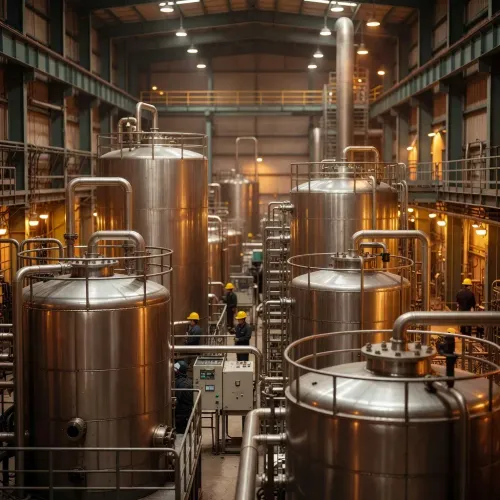
Under the scheme, lithium plants will be mandated to process ores and concentrates into battery-grade products. Nickel plants, meanwhile, will produce Class-1 nickel or battery-grade nickel sulphate with cobalt recovery as a by-product.
The government expects the scheme to create 60 kilotonnes of lithium processing capacity and 100 kilotonnes of nickel processing capacity — enough, according to official projections, to meet anticipated domestic demand by 2030. This comes amid India's accelerating push to localise battery supply chains as EV adoption rises and global competition for critical mineral resources intensifies.
Selection Process and Disbursement Mechanism
Beneficiaries will be chosen through a competitive two-stage process. In the first stage, applicants will be assessed for technical qualification. Only those clearing this threshold will advance to the second stage of financial bidding, where selection will be based on the least-cost criterion — specifically, the lowest capital support sought by each bidder.
Incentives will be disbursed in three tranches, each linked to the achievement of specified project milestones, ensuring accountability and performance-linked fund release.
Employment and Strategic Impact
The scheme is expected to generate both direct and indirect employment in critical mineral processing, the factsheet noted. Additionally, increased manufacturing of end-use products downstream is projected to create further job opportunities, though specific employment figures were not disclosed.
Notably, India currently meets most of its requirements for refined mineral intermediates through imports — a strategic vulnerability that the scheme directly targets. With the global race for lithium and nickel supply chains heating up among major economies, this domestic capacity push positions India to reduce that exposure ahead of its 2030 clean energy milestones.
What Comes Next
With the scheme now approved, the government is expected to open the application window for the two-stage beneficiary selection process. Industry stakeholders in battery manufacturing, EV components, and defence electronics will be watching disbursement timelines closely. The scheme's success will ultimately depend on how swiftly qualifying plants can be commissioned and reach production milestones in the five-year window.
Point of View
But ₹2,814 crore against a ₹10,000 crore investment target reveals how much the scheme depends on private co-investment materialising on cue. The two-plant ceiling for each mineral is pragmatic but thin — if either plant faces delays, domestic supply chain resilience evaporates quickly. The least-cost bidding criterion guards against subsidy capture, yet risks selecting financially stretched players who underbid. The real measure of success will be whether these plants are commissioned before India's 2030 EV and battery storage targets demand the volumes they are meant to supply.
NationPress
5 Nov 2026
Frequently Asked Questions
What is India's CAPEX Support Scheme for Critical Mineral Processing?
It is a government-approved scheme with an outlay of ₹2,814 crore, running from FY27 to FY31, that provides a 30% capital subsidy to set up lithium and nickel processing plants in India. The scheme aims to catalyse ₹10,000 crore in total investment and reduce India's dependence on imported refined minerals for sectors such as EV, battery storage, and defence.
Which sectors will benefit from the critical mineral processing scheme?
The scheme is designed to support electric mobility, battery storage, electronics, defence, and speciality steel sectors. These industries rely on battery-grade lithium and nickel — inputs that India currently sources largely through imports.
How will beneficiaries be selected under the scheme?
Selection follows a two-stage competitive process: applicants first qualify on technical criteria, then compete on financial bidding in the second stage. For each mineral, two beneficiaries will be chosen based on the least-cost criterion — the lowest capital support sought.
What processing capacity does the scheme target by 2030?
The scheme targets 60 kilotonnes of lithium processing capacity and 100 kilotonnes of nickel processing capacity, which the government says is sufficient to meet projected domestic demand by 2030.
How will the capital subsidy be disbursed?
Incentives will be released in three tranches, each tied to the achievement of specified project milestones. This performance-linked structure is meant to ensure funds flow only as construction and production targets are met.