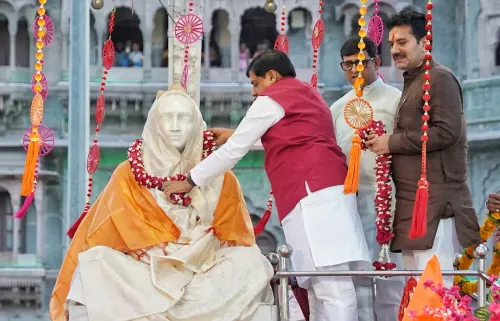
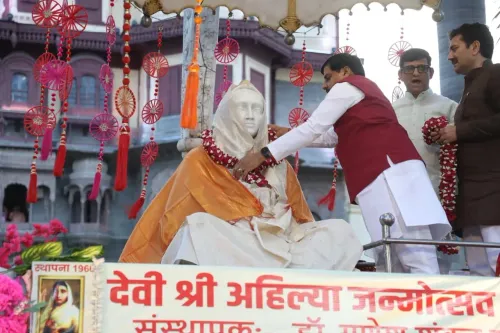
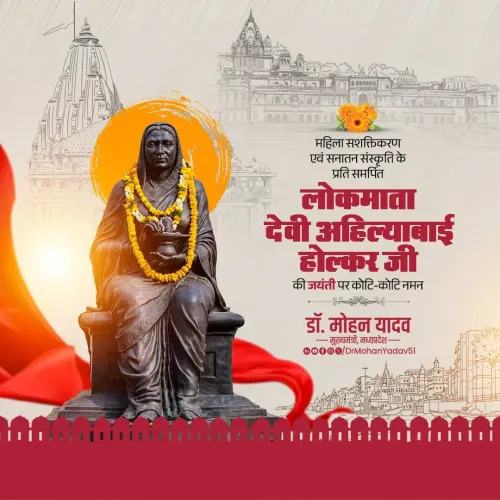
Tharoor visits Maheshwar, Ahilya Bai Holkar's historic capital
Synopsis
Congress MP Dr. Shashi Tharoor visited Maheshwar, the historic Holkar capital in Madhya Pradesh, on November 5, staying at the Fort, visiting the Baneshwar shrine by boat, and meeting Holkar Maharaj — calling the trip 'strongly recommended'.
Key Takeaways
Shashi Tharoor visited Maheshwar, Madhya Pradesh on Tuesday, November 5, 2026 .
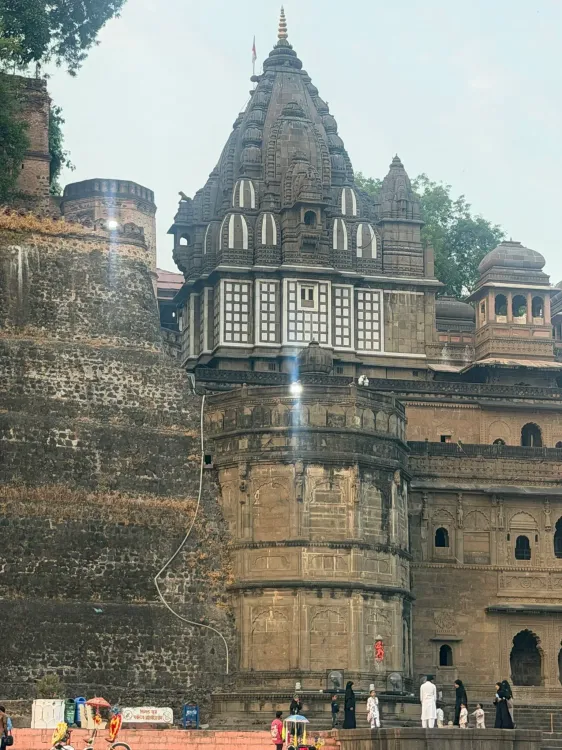
He stayed at the Maheshwar Fort , the seat of Ahilya Bai Holkar's 18th-century Holkar dynasty rule.
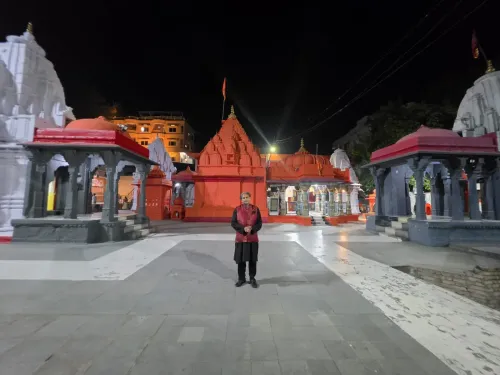
Tharoor crossed the Narmada by boat to visit the partly-renovated Baneshwar shrine and offered prayers at local temples.
He held dinner and breakfast conversations with Holkar Maharaj , the titular head of the Holkar royal family.
Tharoor described Ahilya Bai Holkar as 'unquestionably great' and called Maheshwar 'strongly recommended' for visitors.
A storied fort on the Narmada, an island shrine mid-renovation, and dinner with royalty — Congress MP Dr. Shashi Tharoor made time on Tuesday, November 5, 2026, for a personal pilgrimage to Maheshwar, the Madhya Pradesh town that served as the capital of one of India's most celebrated pre-colonial rulers, Ahilya Bai Holkar.
Tharoor described the visit as one he would 'strongly recommend', taking in the Maheshwar Fort as his overnight base, crossing the Narmada by boat to the partly-renovated Baneshwar shrine, and offering prayers at the town's temples. He rounded the trip with extended conversations over dinner and breakfast with the titular head of the Holkar family, whom he called the 'redoubtable Holkar Maharaj'.
Ahilya Bai's legacy at Maheshwar
Ahilya Bai Holkar, the 18th-century ruler of the Holkar dynasty, governed the Malwa region from Maheshwar and left a legacy that stretches far beyond her state's borders. She commissioned temples, rest-houses, and ghats across the subcontinent — from Varanasi to Dwarka — and is remembered as much for her administrative acumen as for her religious patronage. Maheshwar itself bears the clearest stamp of her vision: the fort complex overlooking the Narmada, the riverside ghats, and a cluster of temples that still draw pilgrims and heritage tourists alike.
The Baneshwar shrine, situated on a small island in the Narmada and long associated with Holkar patronage, is among the sites currently undergoing renovation — a wider pattern of private and state-led restoration efforts being rolled out across Madhya Pradesh's riverine temple circuit.
Political figures and India's pre-colonial heritage
Tharoor's visit fits a recognisable pattern: Indian political leaders across party lines have increasingly made public pilgrimages to sites linked to pre-colonial regional rulers, using them as moments to acknowledge the country's layered cultural and architectural inheritance. For Tharoor — a former Union Minister and former UN Under-Secretary-General who has written extensively on Indian history and civilisation — a stop at Ahilya Bai's capital carries its own intellectual resonance. He called her 'unquestionably great', a phrase that carries weight from someone rarely given to unqualified superlatives.
The Maheshwar Fort, now partly operated as a heritage stay, allows visitors to lodge within the same complex where the Holkar court once functioned — placing history not behind a rope barrier but underfoot at the breakfast table.
Point of View
On his own initiative and in effusive terms. It reflects a broader bipartisan convergence around India's pre-colonial heritage, where leaders across ideological lines compete to claim historical legitimacy through site visits and tributes. For Tharoor specifically, whose public brand rests on articulating a pluralist, civilisational India, the choice of Ahilya Bai — a figure revered across caste and regional lines — is entirely consistent. The nod to ongoing restoration at Baneshwar also quietly positions heritage conservation as a cross-party concern, not a ruling-dispensation monopoly.
NationPress
5 Nov 2026
Frequently Asked Questions
Where is Maheshwar located and why is it historically significant?
Maheshwar is a town in Madhya Pradesh , situated on the banks of the Narmada river . It served as the capital of the Holkar dynasty under Ahilya Bai Holkar in the 18th century and is renowned for its fort, ghats, and temple architecture.
Who was Ahilya Bai Holkar?
Ahilya Bai Holkar was an 18th-century ruler of the Holkar state in Malwa. She is celebrated for her administrative reforms, wide-ranging temple construction across India, and public infrastructure works, and is considered one of India's most revered pre-colonial rulers.
What is the Baneshwar shrine at Maheshwar?
The Baneshwar shrine is a temple complex located on a small island in the Narmada river near Maheshwar. It has long been associated with Holkar patronage and is currently undergoing partial renovation.
Who is Holkar Maharaj?
Holkar Maharaj is the titular head of the Holkar royal family , a descendant of Ahilya Bai Holkar , and is associated with the Maheshwar Fort .
Why did Shashi Tharoor visit Maheshwar?
Congress MP Dr. Shashi Tharoor visited Maheshwar on November 5, 2026 for a personal heritage and devotional trip — staying at the fort, visiting the Baneshwar shrine , offering prayers at local temples, and meeting Holkar Maharaj .